André Henri Dargelas-E

Bordeaux, October 11th 1828 – June 18th 1906, Ecouen

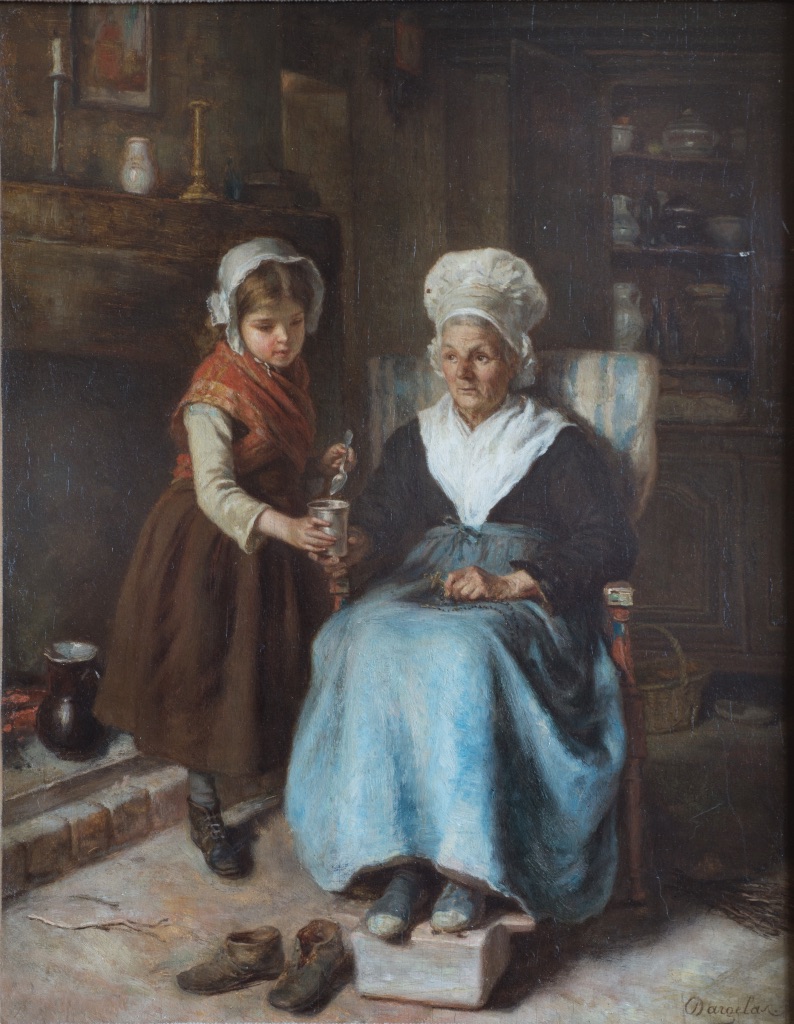
Several names of painters of the Ecouen School remain unknown, however Dargelas was indeed part of the circle. He was a student of François Edouard Picot at the Ecole des Beaux Arts in Paris, where he entered on April 6, 1854.
In the early 1850’s, the famous English art critic John Ruskin wrote an enthusiastic article about his sentimental visions of childhood and thus increased the demand for Dargelas’ work in England. Dargelas exhibited at the Paris Salon in 1857 for the first time and continued thereafter.
The theme of childhood innocence is the main subject of his paintings. He is loved for his humorous, mischievous and tender observation. The spirit of the time is particularly sensitive to the simple virtues of domestic life. His work is widely admired and can be found in many English and American collections.
He was the son of Jean Baptiste Dargelas and Jeanne Virginie Mimandre. On February 2, 1866, he signed a marriage contract before a notary and on February 10, he married Catherine Etienne Gabrielle Duverger, born in Bordeaux on January 9, 1846. He thus became the son-in-law of the painter Théophile Emmanuel Duverger. That same year, he left Sarcelles to settle in Ecouen, at 9, rue de la Beauvette (place Le-Vacher), where their three daughters were born.of their marriage remains a particular testimony, a song composed by a friend, Mr. Chéreau, on the air undoubtedly very known at the time of « J’ai vu le parnasse des dames« .
The war of 1870 made him leave Ecouen. He took refuge in Bordeaux with his family (including his father-in-law, the painter Théophile Emmanuel Duverger). They both applied for a passport to go to Spain and England. They returned to Ecouen after the departure of the Prussian troops.
At the beginning of the rue Jacques-Yvon, the painter’s house, with its double stoop, is covered with a large glass roof still visible today on the façade.


For further information, please read the book “L’Ecole d’Ecouen, une colonie de peintres au XIXe siècle” (bilingual French-English).
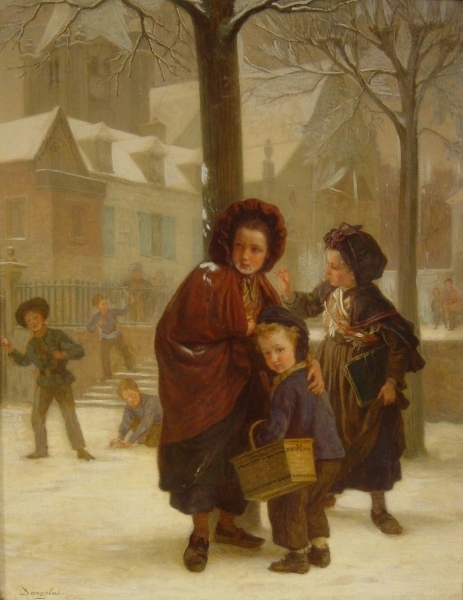
Léon Marie Constant Dansaert-E

Bruxelles, October 2nd 1830 – August 30th 1909, Ecouen

In 1861 or 1862, Léon Marie Constant DANSAERT settled in Ecouen, coming from Belgium, and became a naturalized French citizen under the name Dansart but he always signed and wrote Dansaert with an E.
He exhibited in Brussels and Paris in 1863 and was invited there until 1889. His paintings, in a realistic style, offer historical scenes and then he evolves by treating more intimist scenes. This was undoubtedly due to the influence of his master, Pierre Edouard Frère and his friends. This tendency is very much felt in his painting representing this interior of a workshop where a locksmith works, visible in the town hall of Ecouen. He also worked in Italy and Germany, where he traveled for some time. He exhibited at the Antwerp Salon (1864) and at the Paris Universal Exhibition (1867). From 1868 to 1889, he presented paintings of the familiar life of the 17th century, where he became immersed in the painting of that period. He also painted scenes of the Revolution. In 1880, he participated in the Belgian Art Exhibition in Brussels.
Although often praised, appreciated for his « softness » or his « finesse of brush acquired at the school of Mr. Edouard Frère », the critics do not spare him. « The Petit journal » praised his style « lively, animated, brilliant and with a spiritual touch for his paintings Sale at the auction and the Pigmen, in 1868″. But he was sometimes criticized for « lack of authority » in his design, so not all critics gave the same judgment on his paintings. He was named knight of the order of Saint Maurice and Lazarus in 1861 (honorary order that helps the needy and the sick). During the council meeting of March 26, 1871, he proposed to approach the Bread Committee in Brussels to obtain aid for the wounded and victims of the war.
He took over as mayor of the City of Ecouen between 1879 and 1895. With the rank of lieutenant, he led the firemen to fight against the disasters in the village, and was part of the firemen’s recruitment commission in 1878. He was awarded several medals as a rescuer. Moreover, he regularly participated in the Antiquities Commission of Seine-et-Oise County from 1883 to 1908.
On July 11 and 12, 1863, Noël Philippe Gaché and Victorine Marguerite Cloux sold to Léon Marie Constant Dansaert, a painter, and Henriette Tassain, his wife, a house located at 18 rue d’Ezanville, comprising, on the ground floor, two rooms and an attic above, a small woodshed, a garden with a small alley on one side, in exchange for 1500 F, paid cash.
Married to Henriette Joséphine Agathe Louise Tassain, three of their children were born in Ecouen and had as witnesses: Philippe François Sauvage, a painter living in Villiers-le-Bel, and Arnoux Auguste Michel, a painter living in Ecouen.

The inventory drawn up on October 30, 1876, after the death of his wife, leaves him with five living minor children to support. In his house, rue d’Ezanville, the artistic works are estimated at 1750 F, they are: a marine of Vernier, 50F; a landscape of Léonide Bourges, 100 F; a landscape of Desmarquais, 100 F; and four unfinished paintings: « Le jeu de boules« , « l’Etape« , « la Conservation« , and « Variable« , 1500 F. His name is evoked in the words of a character in Elizabeth Champney’s novel: « Do I not pose? What would become of the artists, that’s what I’d like to know, if we don’t do it? There’s Monsieur Dansaert, I’ve posed for every one of his drunken characters. I wear this old dented silk hat for that purpose. I sweep his studio, clean his brushes and all he has to do is spread his paint on the canvas. I think he owes most of his success to me and I’m glad I helped him… »
For the anecdote, we can point out that several private individuals granted him loans, in particular on December 30, 1877, 2 000 F of Marie Catherine Lacourte, of Presles and on May 12, 1891, it is 5 000 F of another lender.
Towards the end of his life, Léon Dansaert donated one of his works, « the Locksmith in his workshop« , to the City of Ecouen. The council was unanimous in its acceptance.

For further information, please read the book “L’Ecole d’Ecouen, une colonie de peintres au XIXe siècle” (bilingual French-English).
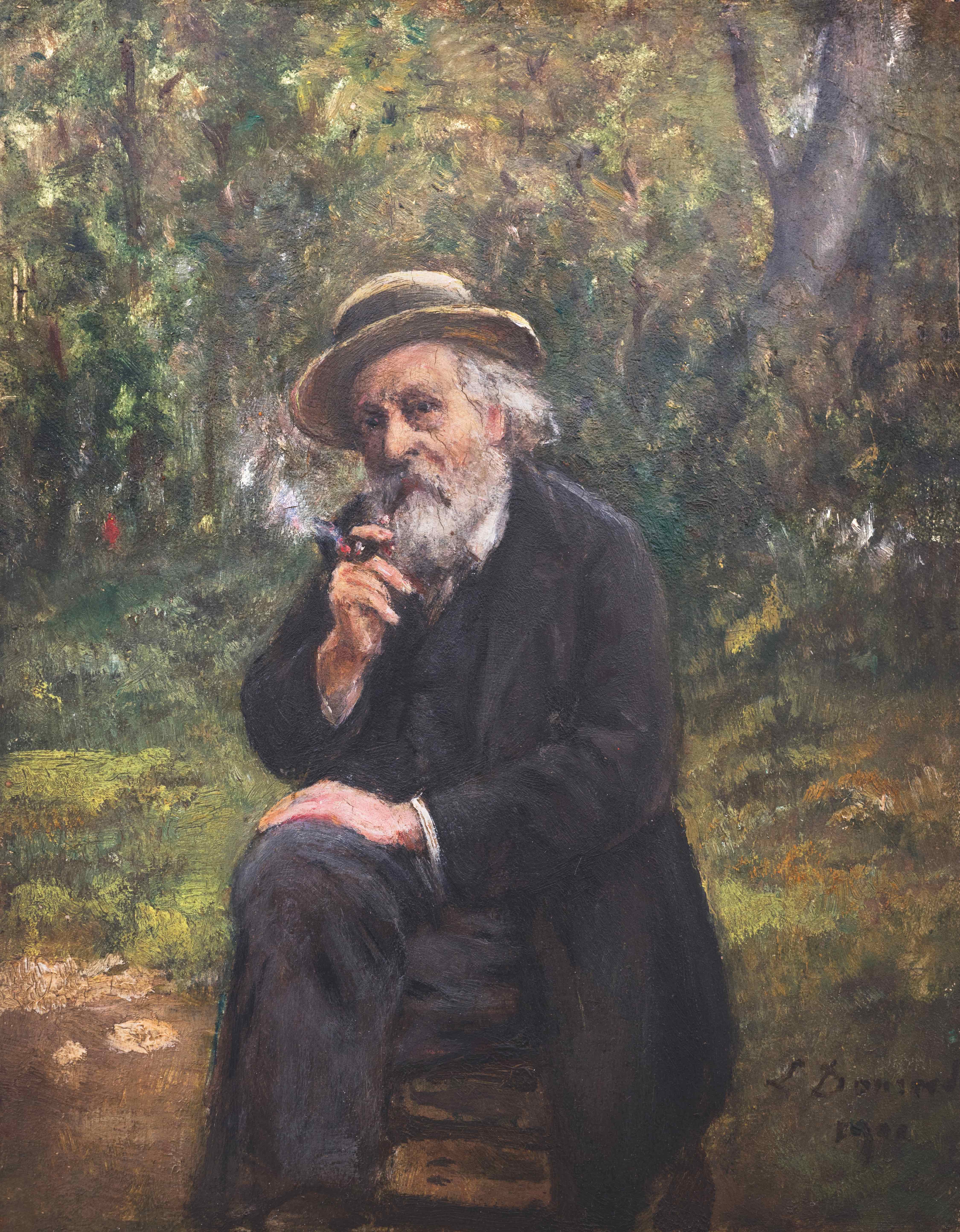
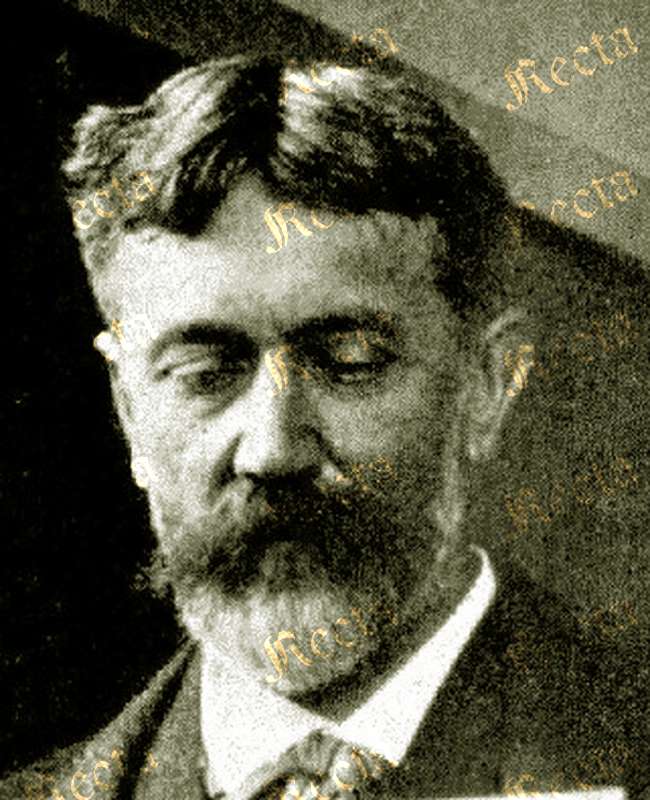
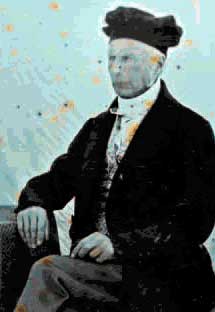
Léon Dansaert self-portrait
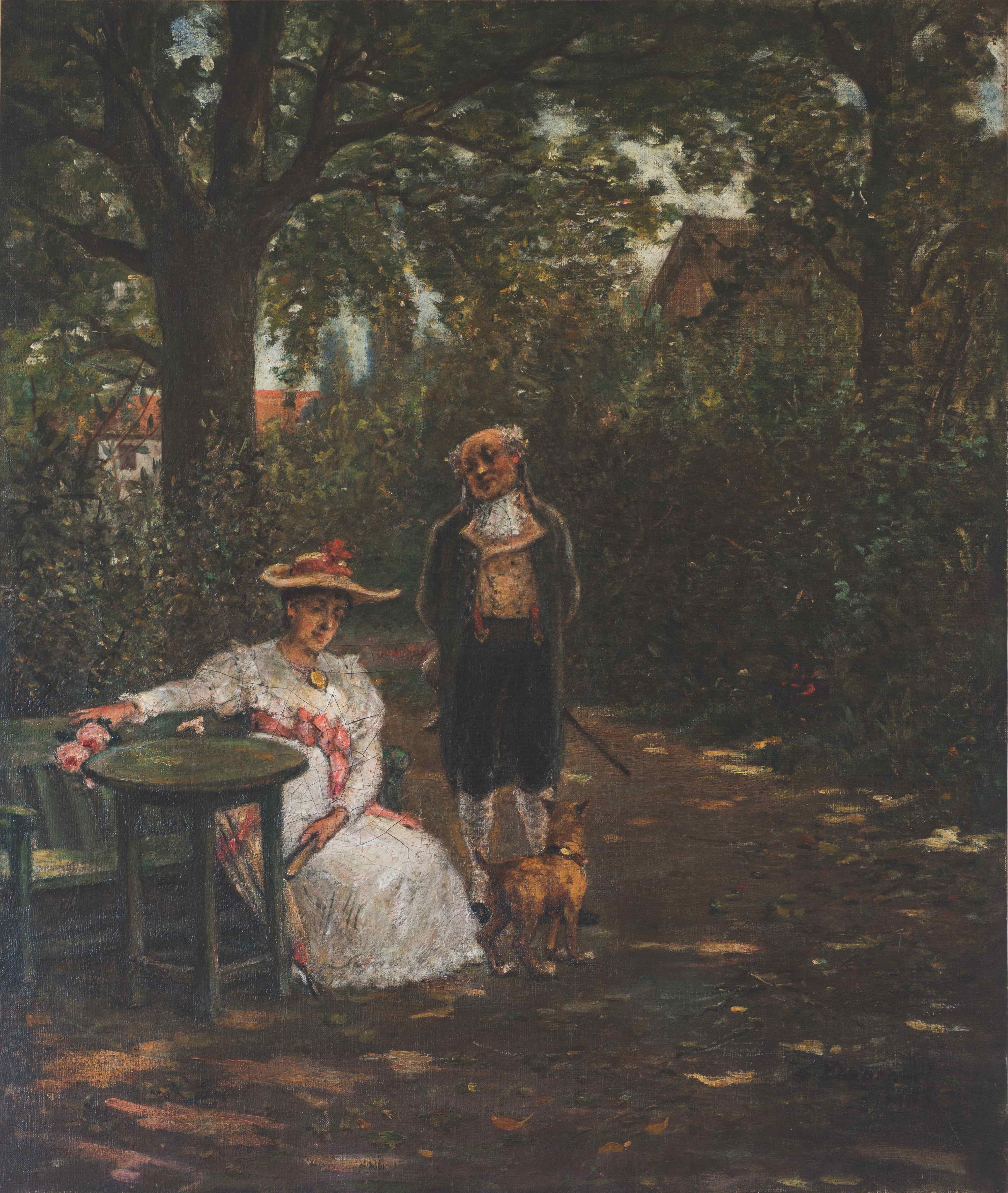
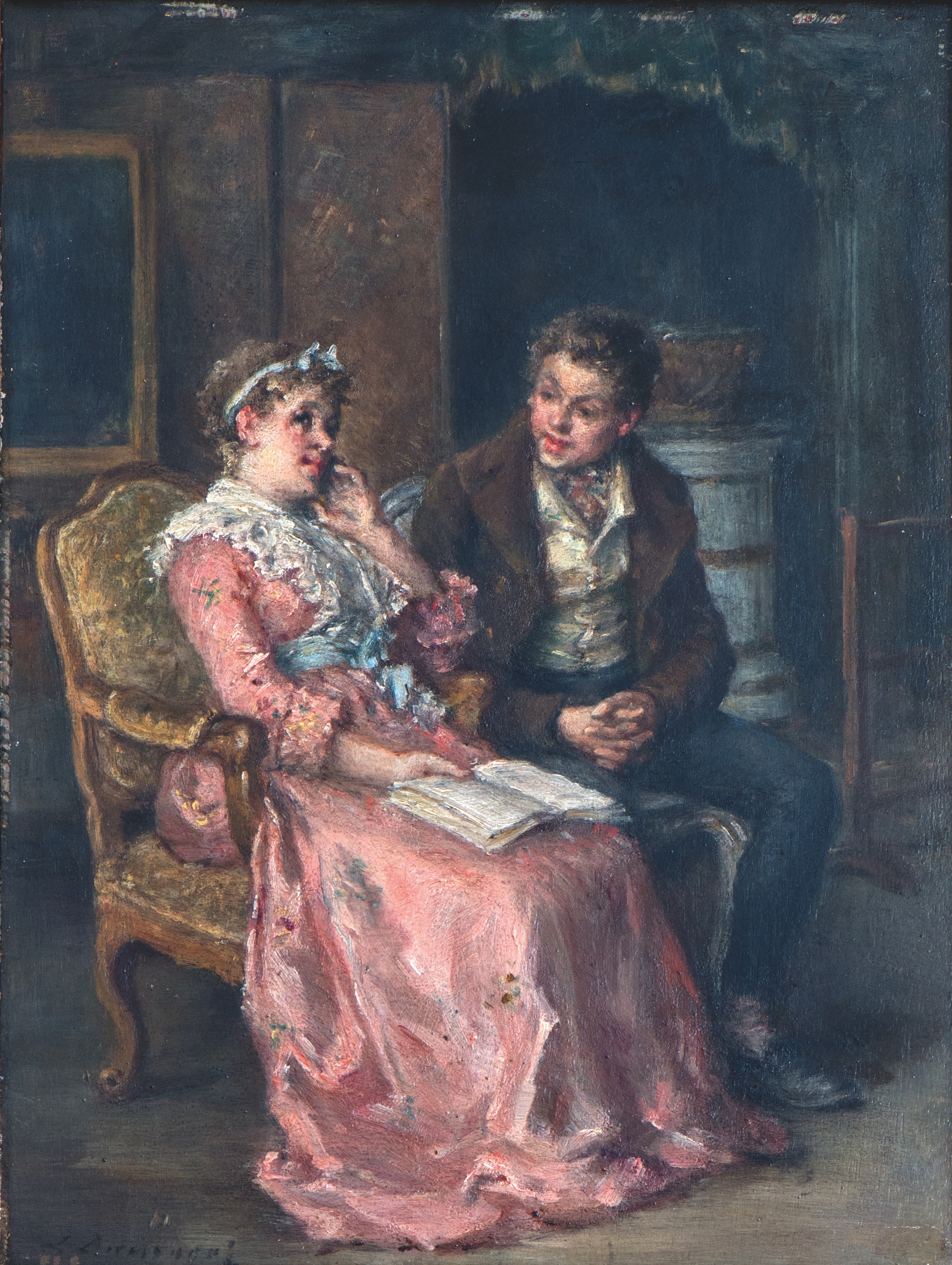
Under the shades
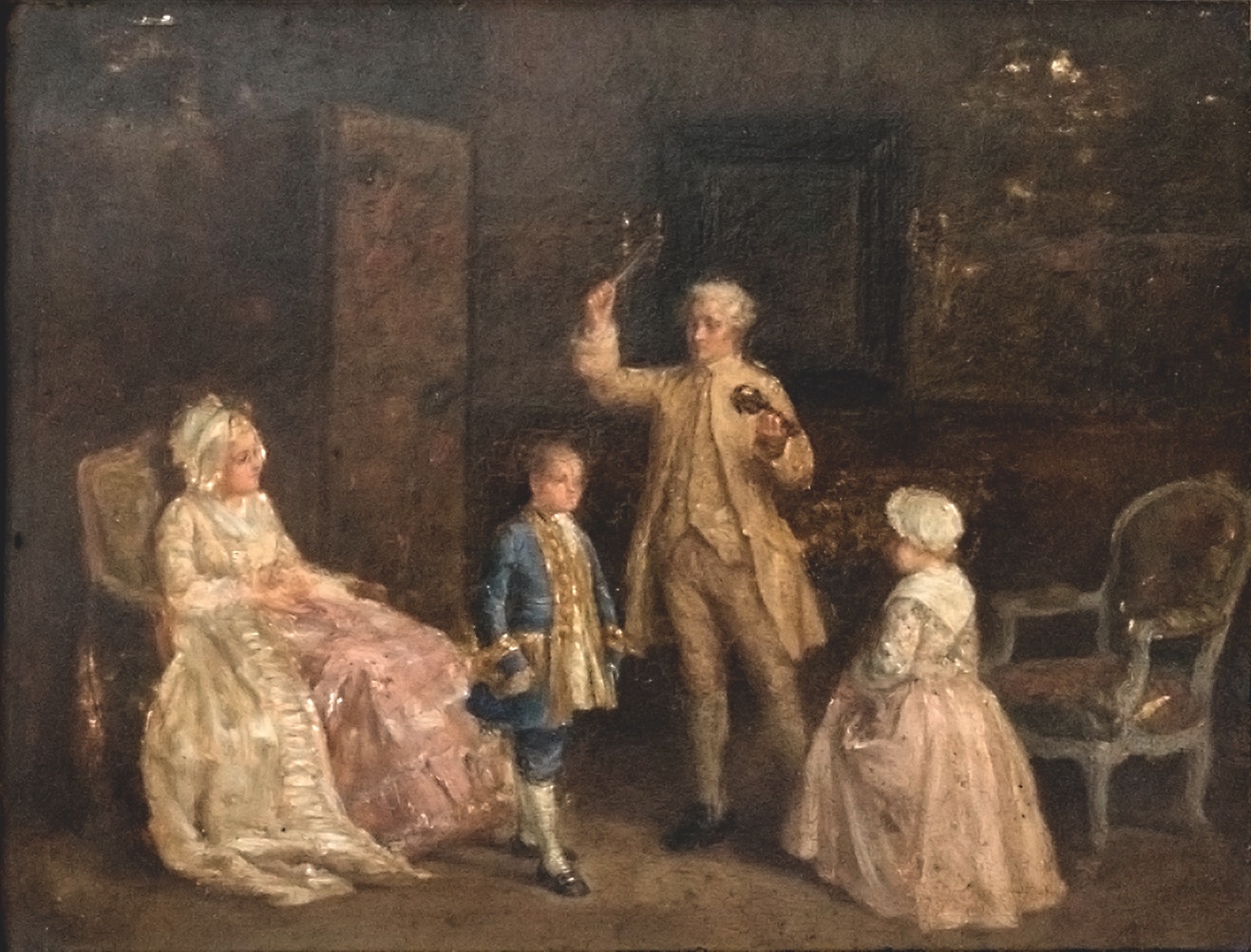
The music lesson
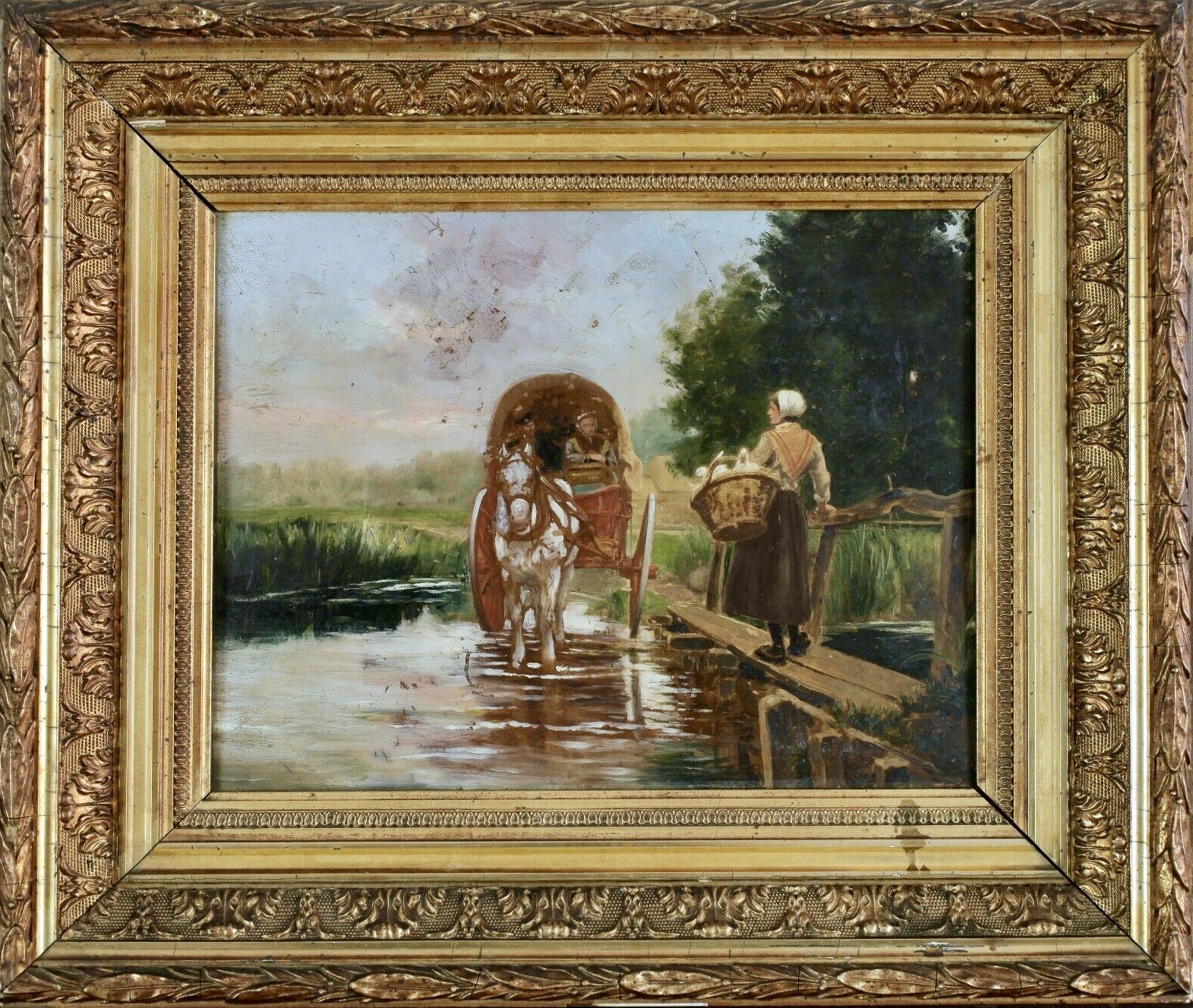
Country scenery
Brother and sister
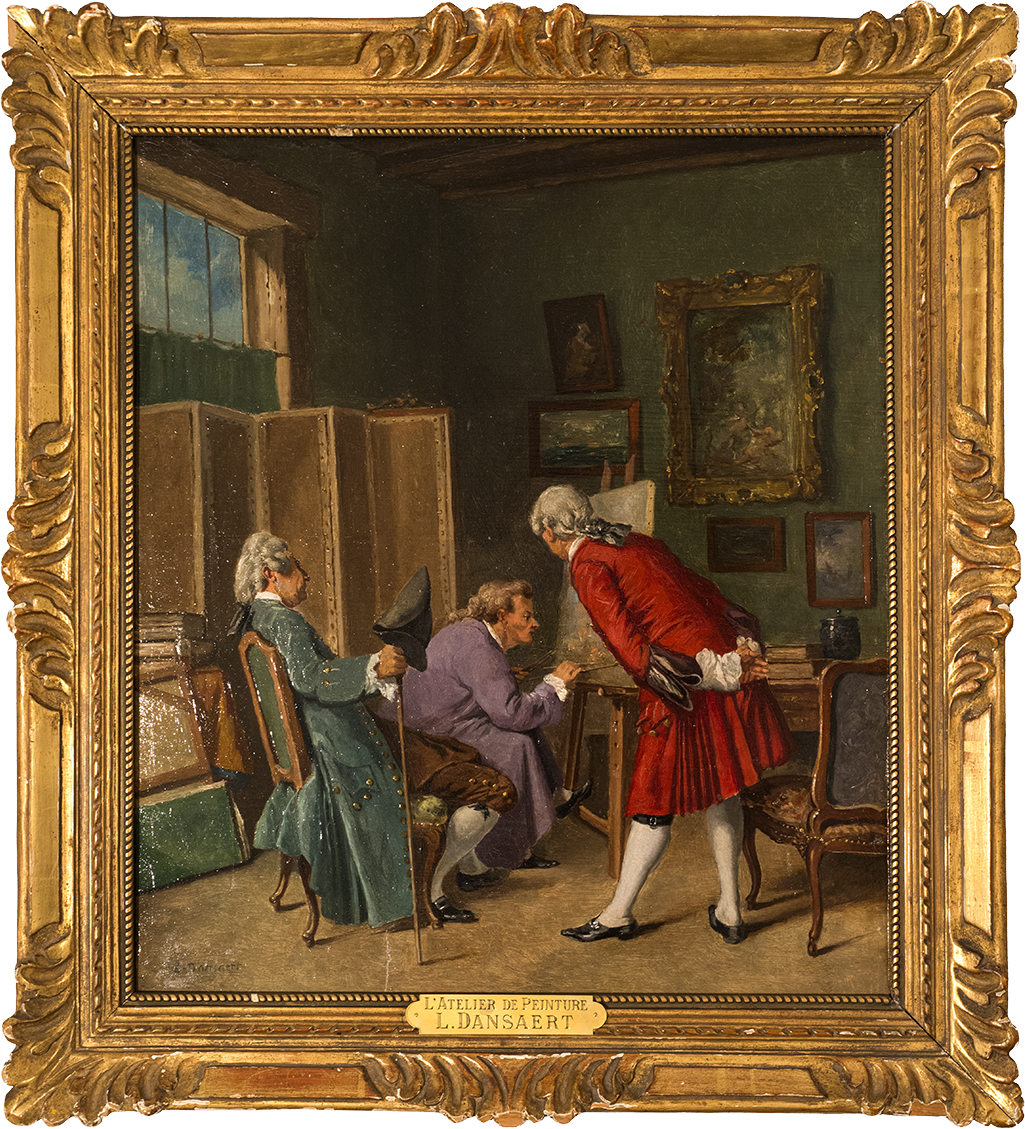
In the artist's workshop

Luigi Chialiva-E

Suisse, Caslano, July 16th 1841 – April 1914, Paris

Born in Lugano, Switzerland, in the Italian-speaking part of the country, Luigi Chialiva is the son of Abbondio Chialiva and Maria Medina. His family, quite wealthy, was very involved in political life and was forced to go into exile in Mexico before returning to Italy. From 1842 to 1865, he lived in the Villa Tanzina in Lugano, where he met influential politicians such as Mazzini and Cattaneo.
At a very young age, he became a student of Gottried Semper, a political refugee in Switzerland. Between 1859 and 1861 he attended the Polytechnic Institute of Zurich and the studio of the landscape painter Antonio Fontanesi from 1861 to 1863 in Milan. During this stay, he met Richard Wagner who made a strong impression on him and whom he admired. This taste for architecture led him, a few years later, to join the Sézille house project, a house that still exists on rue du Maréchal-Leclerc in Ecouen, to ensure its decoration.
Although he was an architect in 1861, he gave up this profession in 1864 and became passionate about painting. He attended the classes of Carlo Mancini in 1863 and 1864 (although there is no record of his enrolment, no doubt because of the private nature of this teaching) and those of the Academy of Brera in 1864, where he exhibited that year. He participated in exhibitions in Milan and Turin. He presented his first painting, « The Herb Market« , in Castello Square in Milan, followed by fifteen others between 1865 and 1870. After having started as a landscape painter, he turned to animal painting.
In 1867, he enrolled at the Royal Academy of Milan to study the nude, a course that was to be very useful to him. It was also in 1867 that he discovered France, when he went to visit the Universal Exhibition in Paris with Ferdinand Heilbuth, an already renowned painter he had met in Rome in 1865. He would be one of his teachers from 1874 and also one of his executors.
Very gifted for painting, he obtained in 1868 the first prize of the Mylius foundation, where he exhibited a painting representing his farmyard. The death of his father, at the end of 1870, accelerated his desire to leave for France. It is known that he visited the exhibition in Turin with his friend Ferdinand Heilbuth. His arrival in Paris was around 1872. He became a friend of Edgar Degas, of Italian origin through his grandfather, with whom he had made friends in Rome. He was influenced by his painting and, as a proof of his know-how, he restored two accidentally damaged paintings « Interior » and « The Rape« .
Among his friends, he frequented a circle of Italian artists called Circula della polenta, which included, among others, Guiseppe De Nittis, who was sometimes joined by Emile Zola and the Goncourt brothers. It also rubs shoulders with Guiseppe Verdi.

For further information, please read the book “L’Ecole d’Ecouen, une colonie de peintres au XIXe siècle” (bilingual French-English).
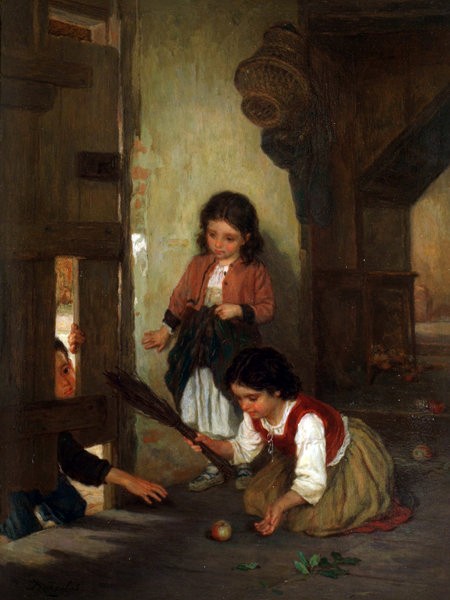
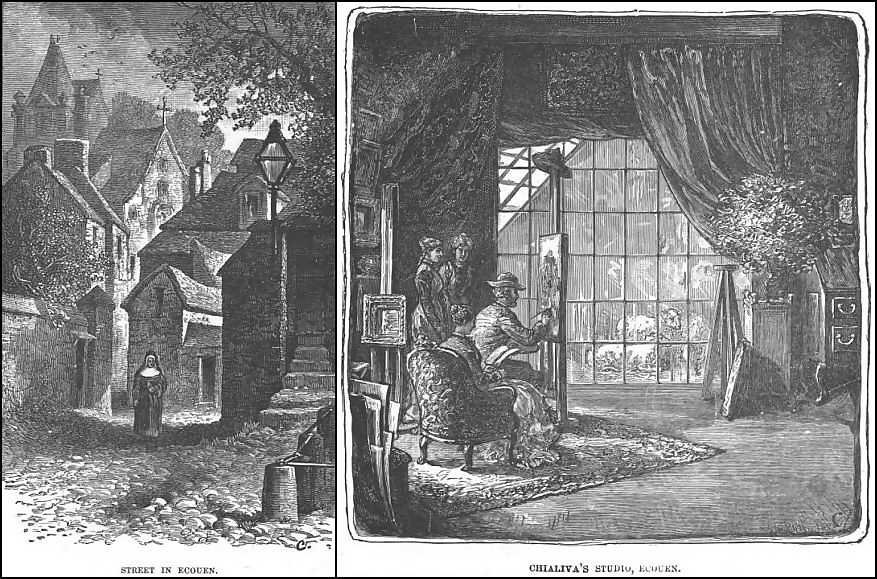
Chialiva in his workshop & Ecouen street
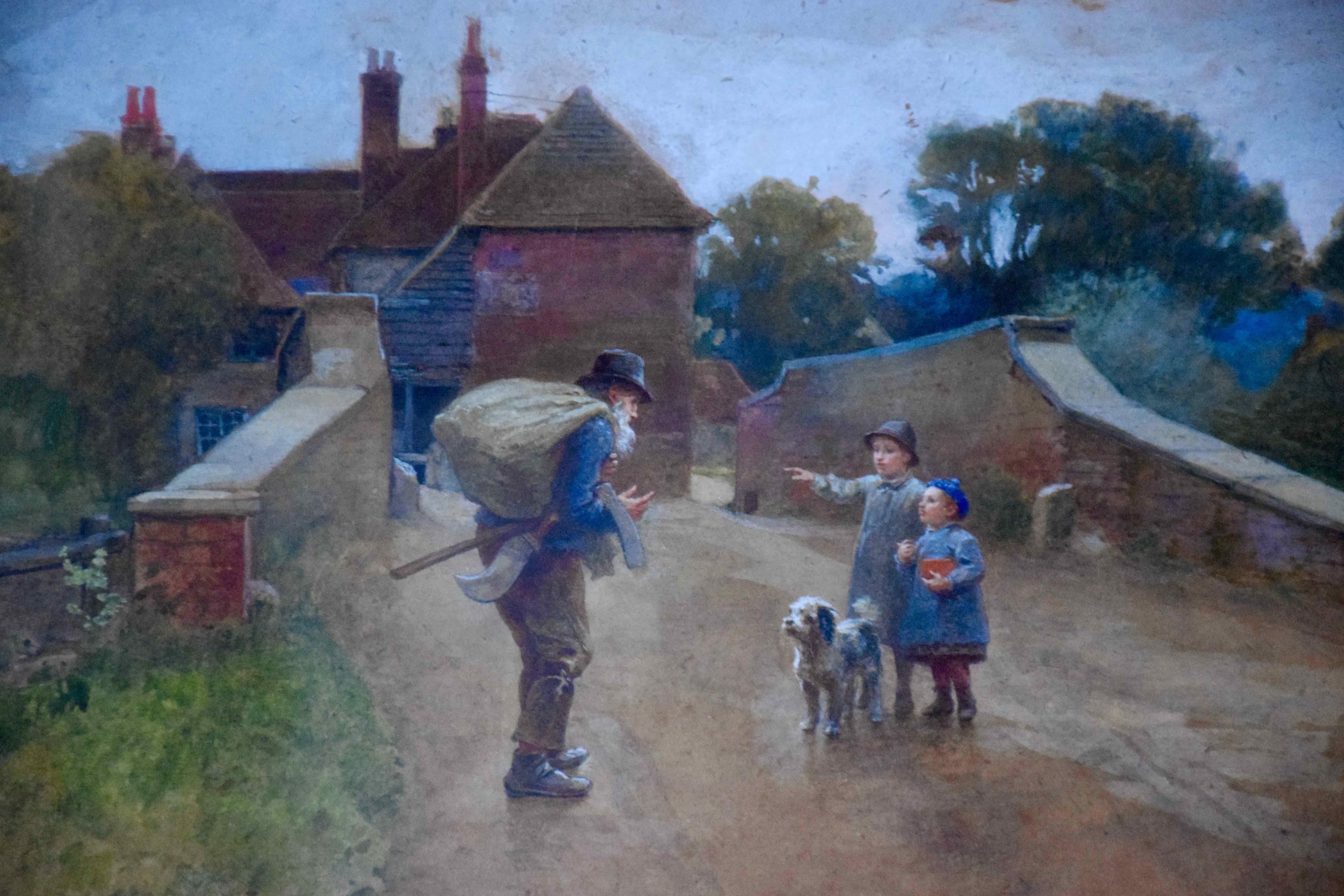
A vagabond and two children
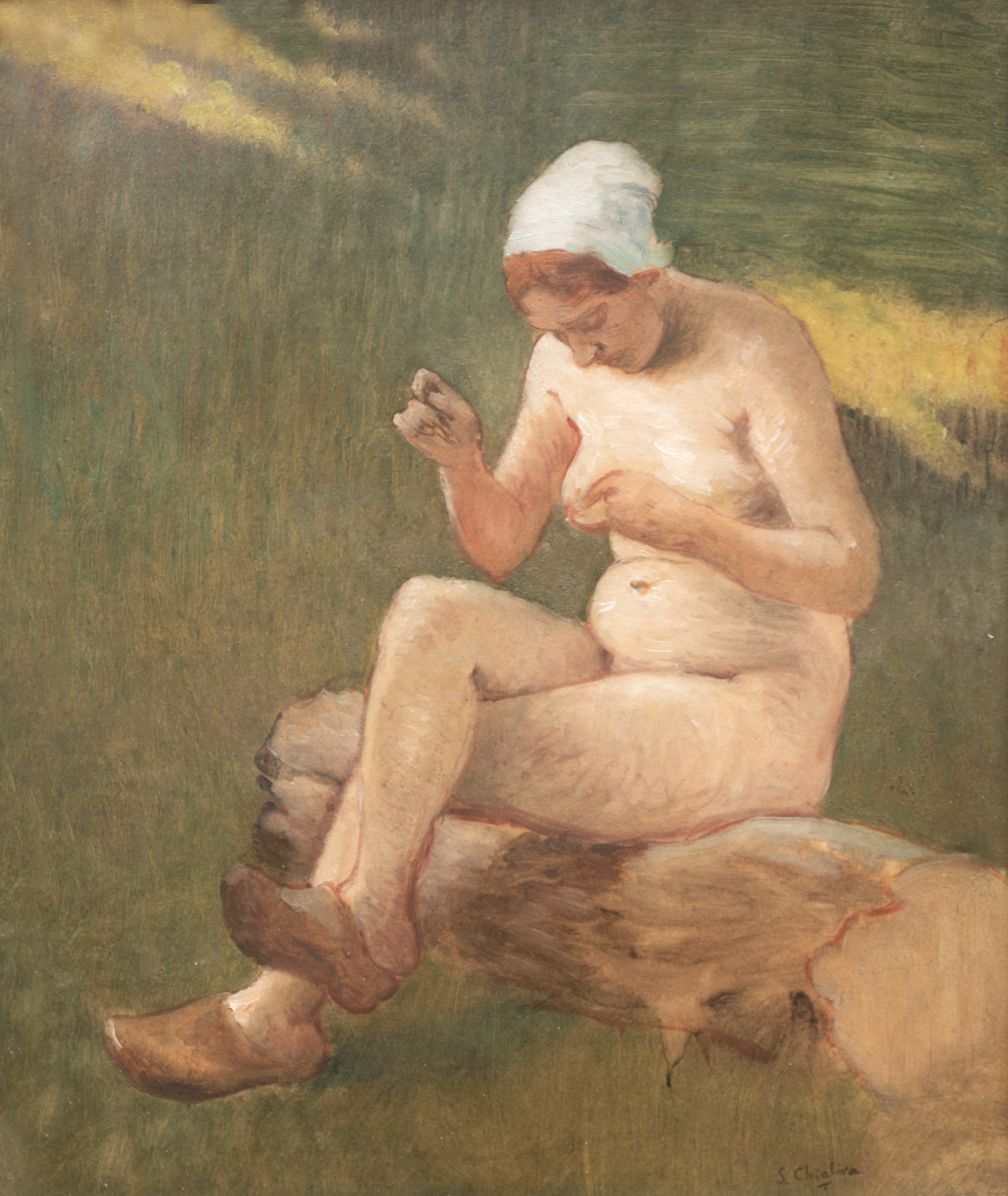
Naked sewing lady with clogs (preparatory work)
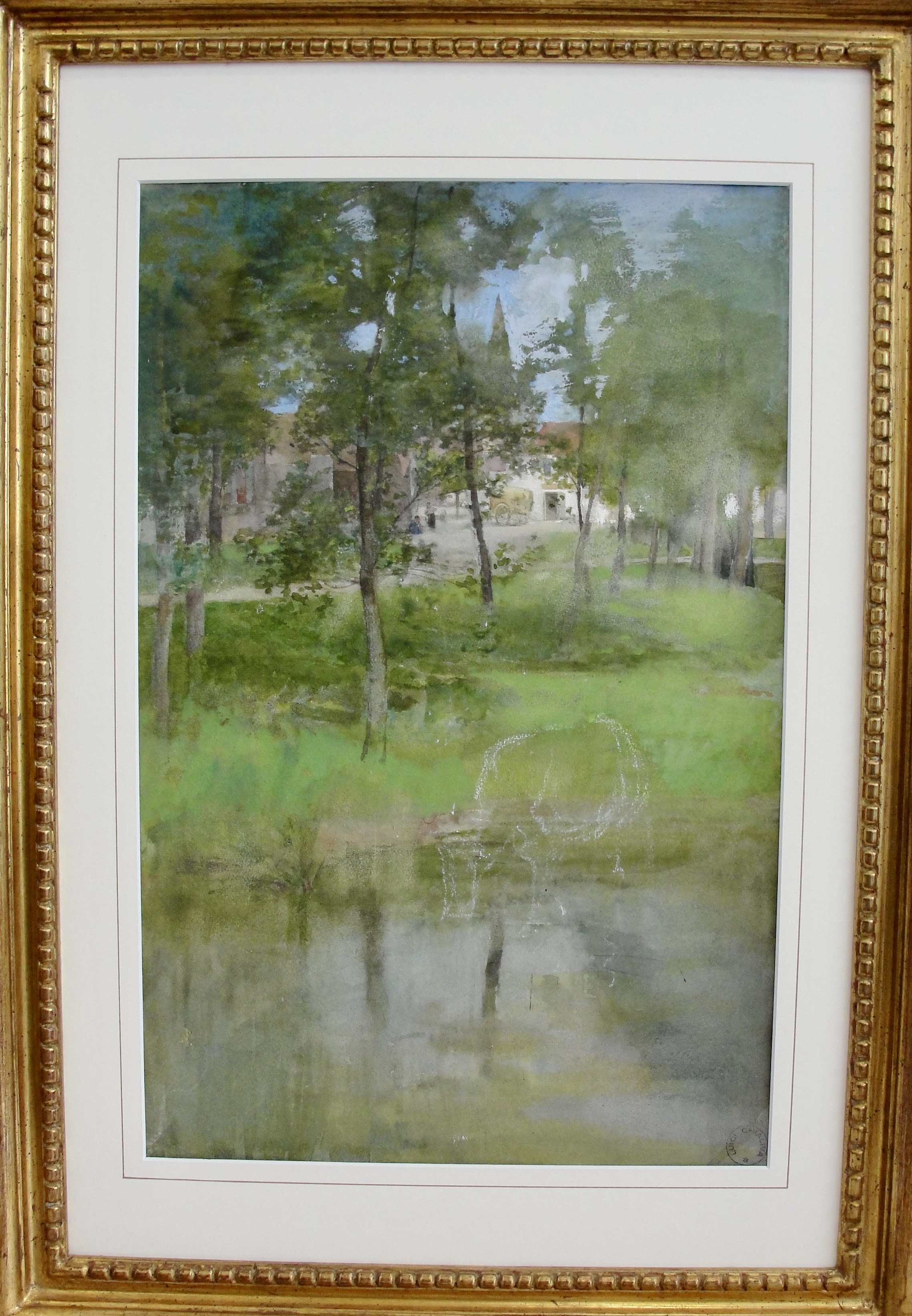
Farm with a pond

Camille Léopold Cabaillot-Lassalle (Camille Léopold Cabaillot, said)

Paris, September 8th 1839 – January 7th 1902, Paris

Camille Léopold Cabaillot-Lassalle wanted to distinguish himself from his father, Louis Simon Lassalle known as Cabaillot, also a painter, by taking both names together for his signature. He was, of course, influenced by the artistic environment in which he lived and, very quickly, he followed in the footsteps of his father, whose pupil he had been and, after the latter’s arrival in Ecouen in 1878, was subjected to the strong attraction of Pierre Edouard Frère, whose lessons he followed.
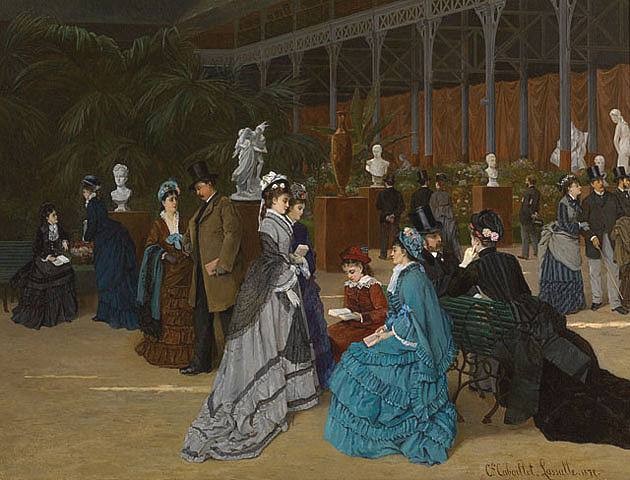
From 1868 to his death, he multiplied his appearances in the Paris Salons.The painting that made him definitively famous was the one he exhibited at the Salon of 1874. It is precisely the painting entitled « Salon of 1874″. Cabaillot-Lassalle has, indeed, the original idea to represent on his canvas the interior of this salon, with works hanging on the wall contemplating visitors. Now, these, in reduced format, of course, were painted by the artists themselves, as the magazine « La Fantaisie Parisienne » reports.
These artists are not the least: Henriette Browne, Jean Baptiste Corot, Jules Jacques Veyrassat, Léon Richet and Gustave Achille Guillaumet, who lend themselves to this little game of mischief, which astonishes, charms and arouses admiration even today, to the point that the painting was recently sold at auction for 100,000 Euros.
The theft of one of his paintings in Toronto, at the Odeon Wagner Gallery, estimated at 2,800 dollars a few years ago, proves the interest in this painter if it were necessary.

For further information, please read the book “L’Ecole d’Ecouen, une colonie de peintres au XIXe siècle” (bilingual French-English).
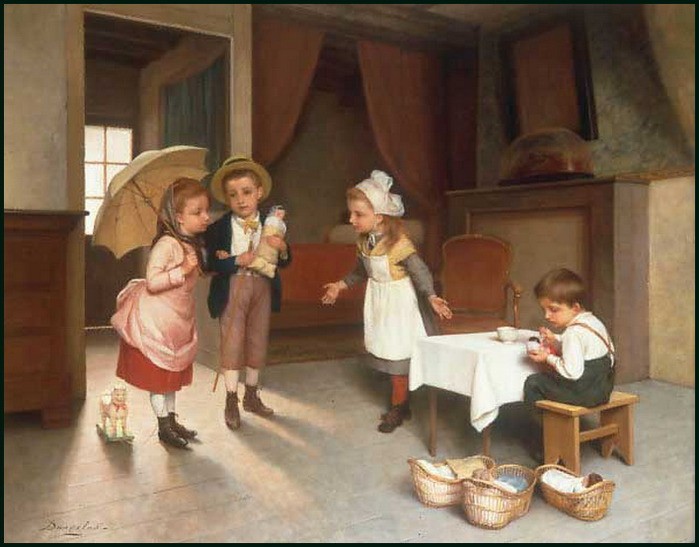
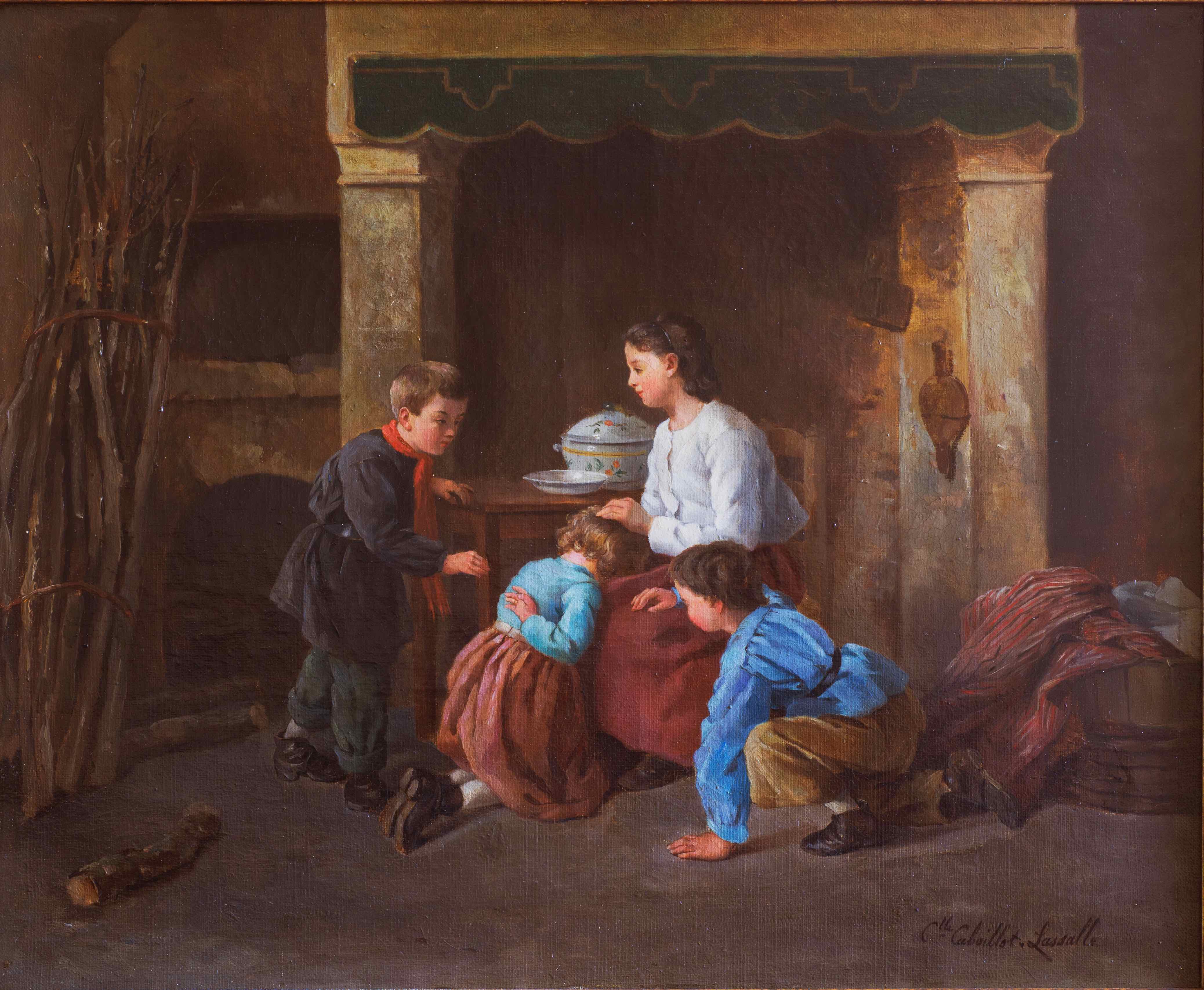
Camille CABAILLOT LASSALLE_The big sorrow
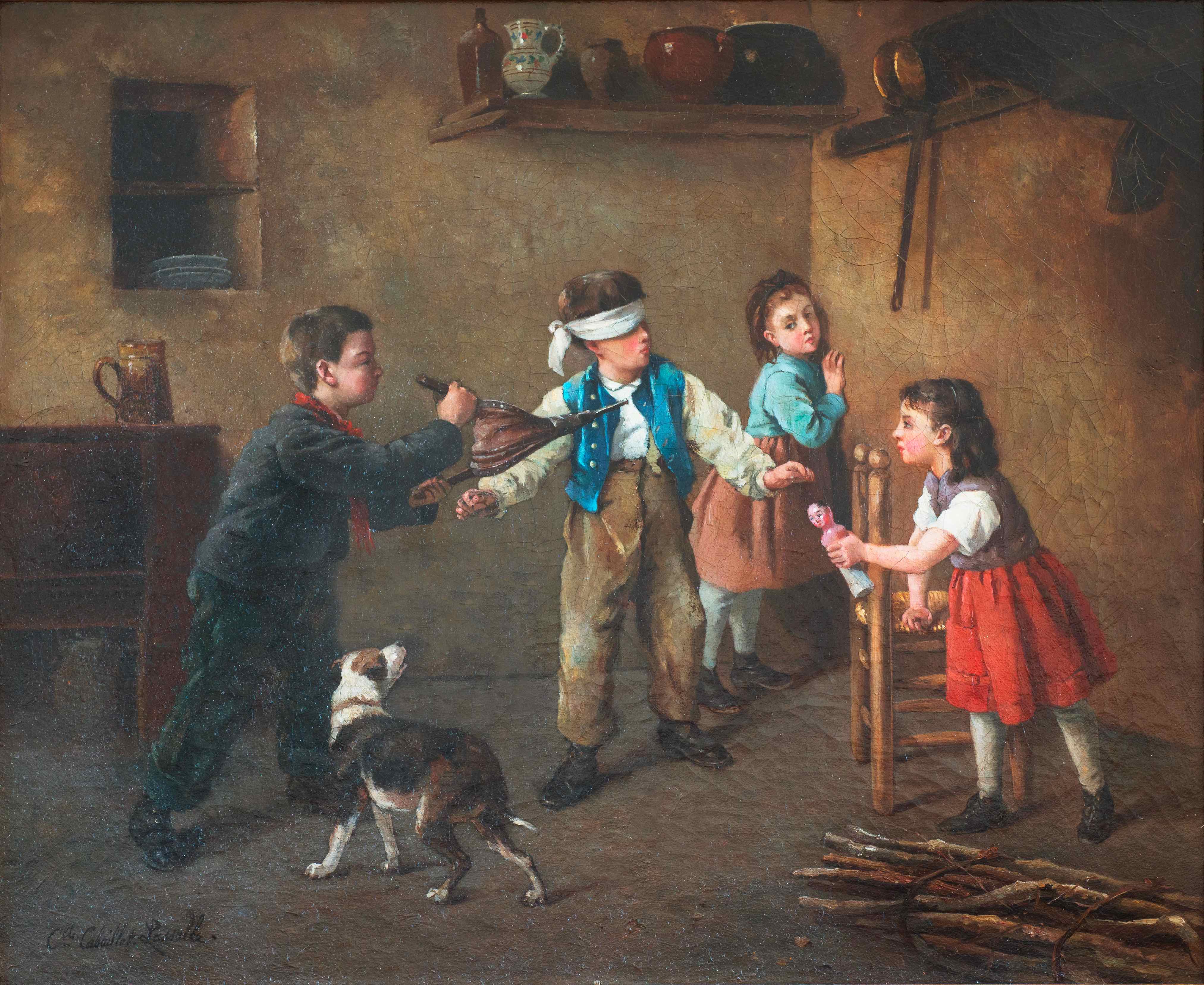
Camille CABAILLOT LASSALLE_A children game
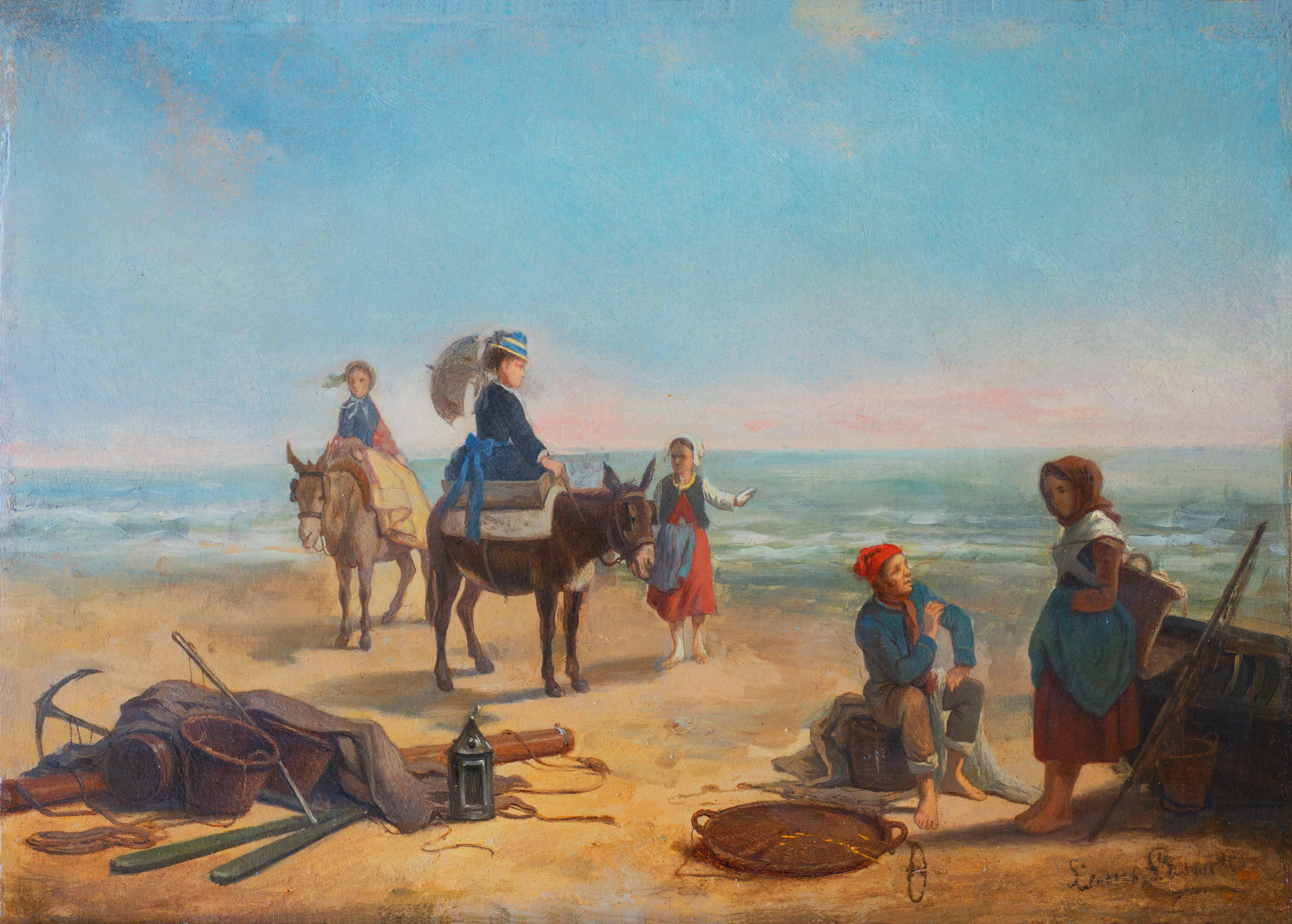
Camille CABAILLOT LASSALLE_On the beach

Pancrace Bessa-E

Paris, January 1st 1772 – June 11th 1846, Ecouen

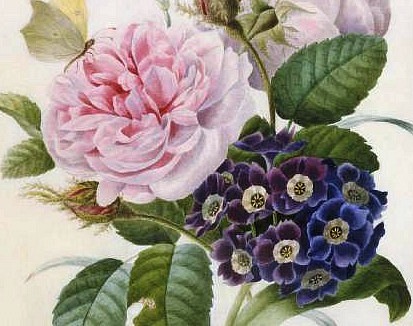
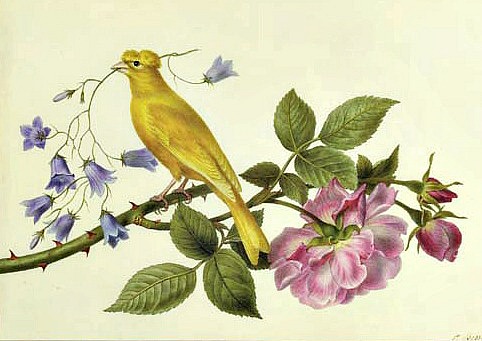
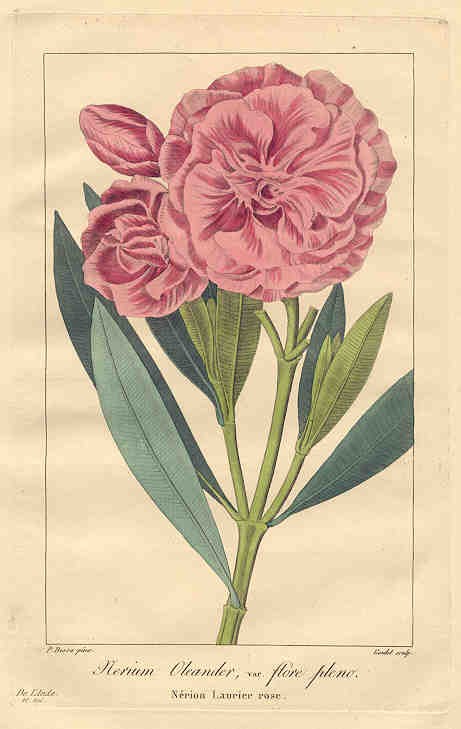
Pancrace Bessa was not part of the Colony but showed the way to Ecouen to the artists involved. He was the precursor.
Pancrace Bessa was the son of Nicolas François Bessa, controller at the general farm. He studied in Montaigu and worked as an employee in his father’s office.
Still a teenager when the Revolution broke out, his aptitudes for gymnastics and fencing encouraged him to join the National Guard and this is how he witnessed the storming of the Bastille. On August 10, 1792, he participated with the National Guard in the defense of the Tuileries and the massacres he witnessed led him to give up his position and join the army.
He was part of the Dutch campaign under the command of Charles Pichegru. It was there that his vocation was born; he discovered the beauty of flowers and became interested in the representation of nature through painting. He studied botany and zoology and became a student of Gérard van Spaendonck (1746-1822), then of Pierre Joseph Redouté (1759-1840), with whom he later collaborated.
Already known for his pictorial works, he accompanied Napoleon Bonaparte with Dominique Vivant Denon (1747-1825) in his campaign in Egypt between 1798 and 1801. He brought back many specimens of shells, crustaceans, etc. which give matter to superb plates in Description de l’Egypte: histoire naturelle.

Pour plus d’informations, nous vous invitons à lire le livre « L’Ecole d’Ecouen – une colonie de peintres au XIXe siècle »