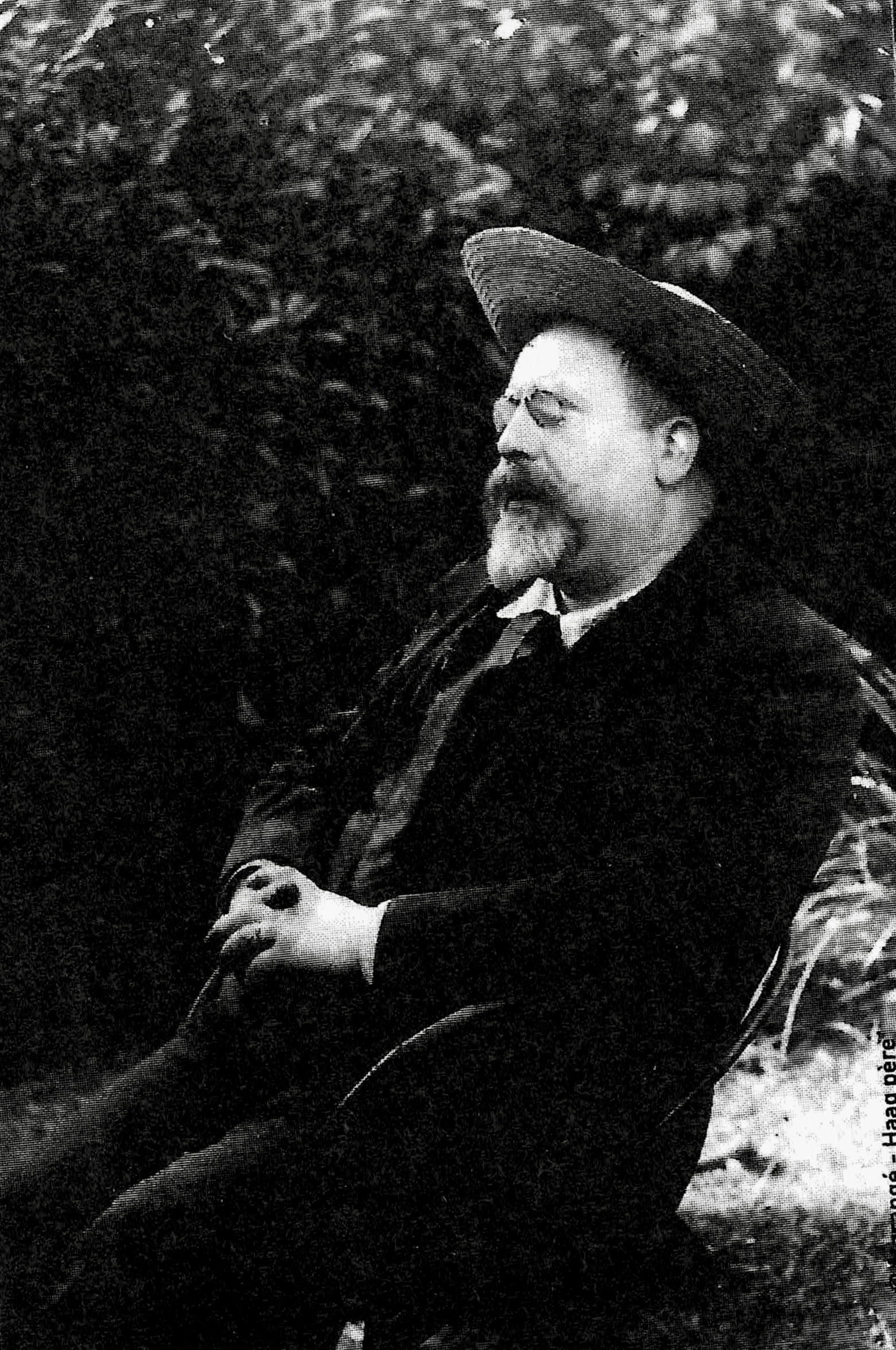
Jean-Pierre Haag-E

Elbeuf, November 5th 1842 – March 5th 1921, Ecouen

Jean-Pierre Haag is the son of Jean Haag, a German mechanic established in Elboeuf and Geneviève Maloizel. He was initially a member of the Norman painters; he also kept a property in the region.
He joined the Ecouen School in 1870 and settled at 29 rue de Paris (now rue du Maréchal Leclerc). He became a student of Pierre Edouard Frère and Léon Dansaert. Shortly afterwards he married Ernestine Juliette Confais. They had several children including Gaston. At their baptism, we find as witnesses the names of Théophile Emmanuel Duverger, Auguste Schenck or Charles Edouard Frère.
He exhibited in Paris for the first time in 1870, with a painting entitled « Interior of a forge in Villiers-le-Bel » and became known there especially from 1877. He was invited there until 1895. He also painted rural life, small trades, scenes of daily life. One of his works, « Gardeuse d’enfants en Normandie » was exhibited in 1980 at the Paris’s Grand Palais. It is now in the Louviers museum along with « Jeu de dominos » which was exhibited in London in April 1989.
In October 1875, with his wife, he rented a house at 36 Route de Paris – Amiens, where a painter’s studio already existed, adjoining the « alley to Boudet ». According to a journalist of the Journal du dimanche of July 17, 1902, he was also very erudite and interested in the heritage of his town: « He possesses precious documents on the castle which raises its imposing mass not far from his home ».
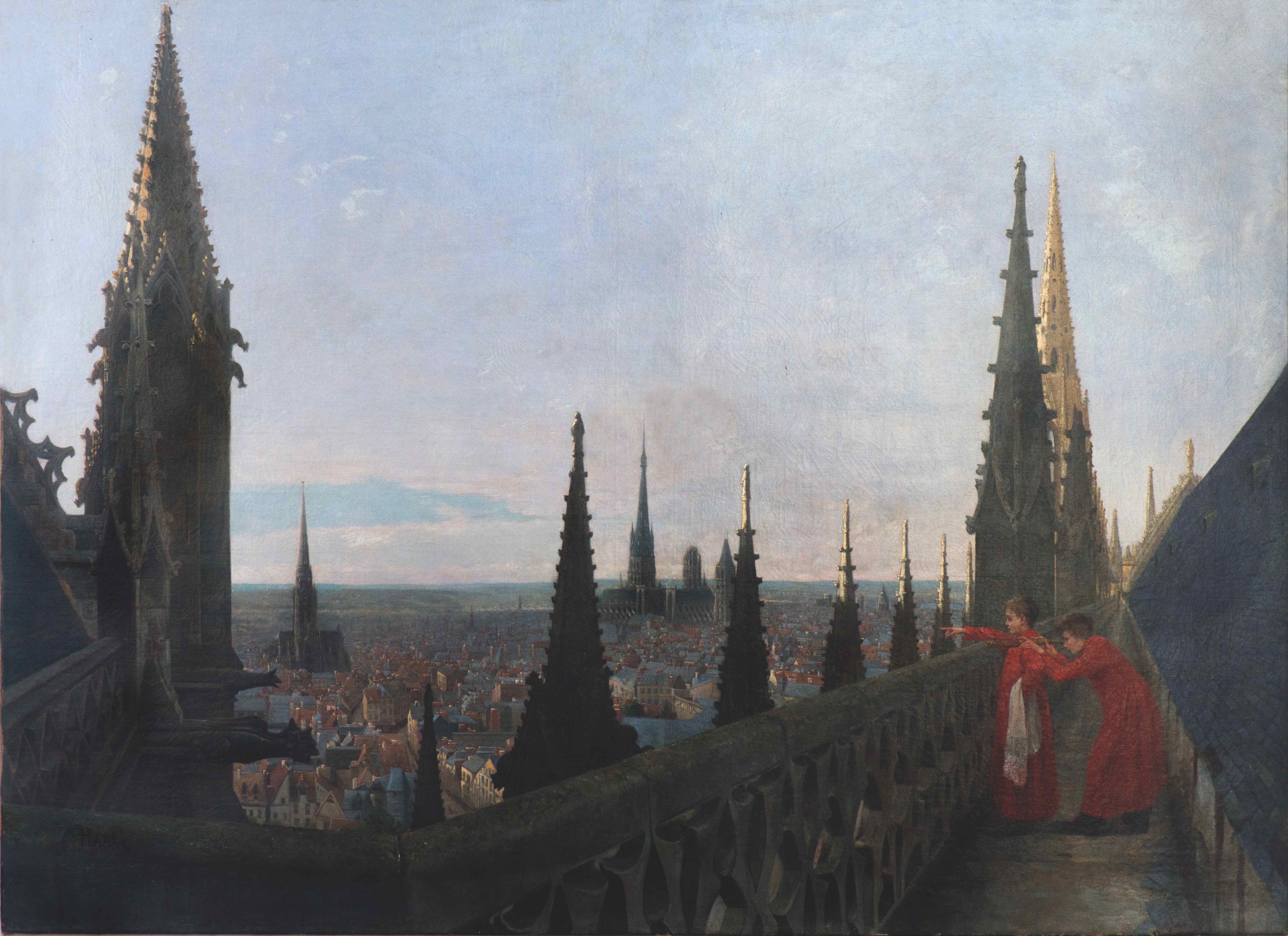
The painting « View of the galleries of the church of Saint-Ouen » was offered by his son to the city of Ecouen.

For further information, please read the book “L’Ecole d’Ecouen, une colonie de peintres au XIXe siècle” (bilingual French-English).
Jean-Pierre Haag
St Ouen church in Rouen

Félix Justin Gardon-E

Choisy-le-Roi, November 21st 1852 – November 25th 1921, Ecouen

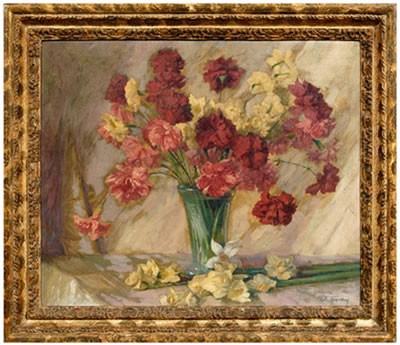
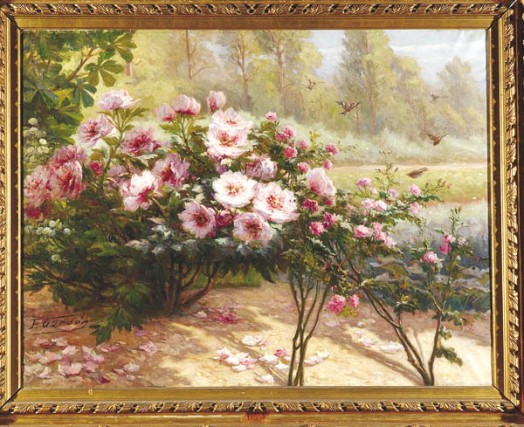
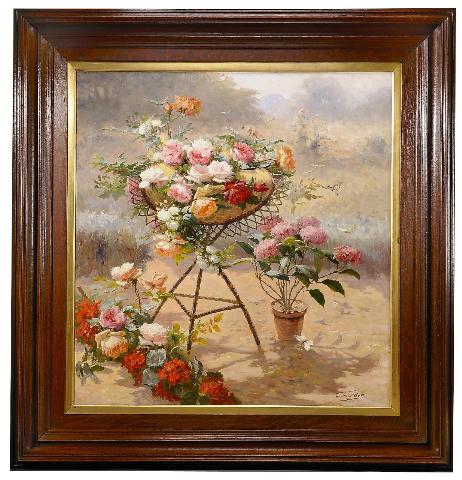
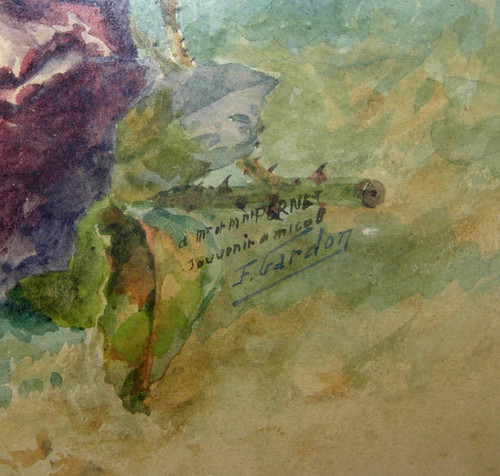
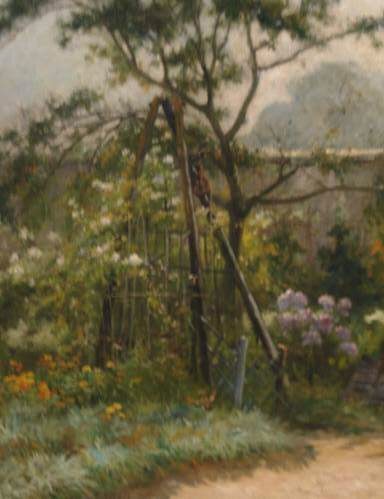
Born into a family of glass and earthenware workers established in Choisy-le-Roi, he began his artistic career as a ceramic painter in Choisy-le-Roi and went to Limoges, his main theme being flowers, where he excelled. He became a student of Emile Bellet and Justin Marie Lequien (1796-1882). He came to Ecouen late, at a time when the artistic movement had lost much of its strength and, as a result, he was not the best known.
He presented still lifes painted on earthenware at the Paris salons in 1882 and 1883. These compositions are six in number. Each real one consists of four tiles aligned horizontally and illustrated with floral motifs. He then exhibited at the salons from 1890 to 1907 paintings and watercolors devoted almost exclusively to floral representations.
Remaining in Paris with his wife Anna Clauss, they moved to Ecouen in 1906, at 10, rue Jacques-Yvon, where one can see tiles with slightly faded colors decorating the top of the windows. That same year, he participated in the Salon des Artistes Français with the Coin de Parc, which earned him honors and remains the most famous of his paintings.
During his lifetime, Gardon offered to donate one of his works to the city, and the council accepted. Later, in 1922, his wife offered a watercolor and his portrait painted by Duffaud to the town of Ecouen.

For further information, please read the book “L’Ecole d’Ecouen, une colonie de peintres au XIXe siècle” (bilingual French-English).
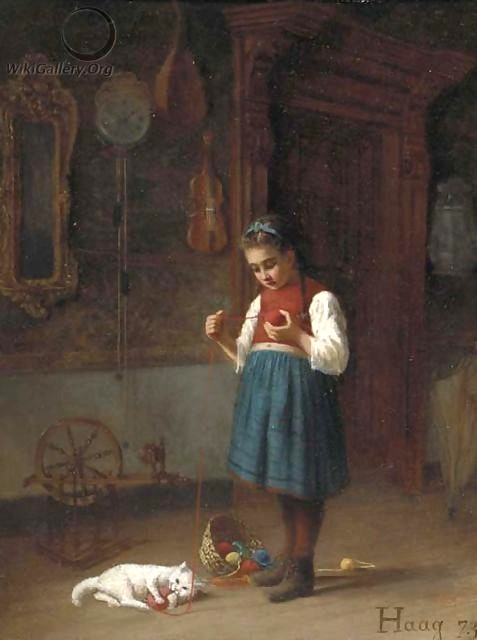
Charles Edouard Frère-E

Paris 2°, July 10th 1837 – November 2nd 1894, Ecouen

Son of Pierre Edouard Frère and Suzanne Gabrielle Bosquet, he studied first with his father then with Thomas Couture and Alexandre Defaux. He was also the nephew of Théodore Frère, the orientalist.
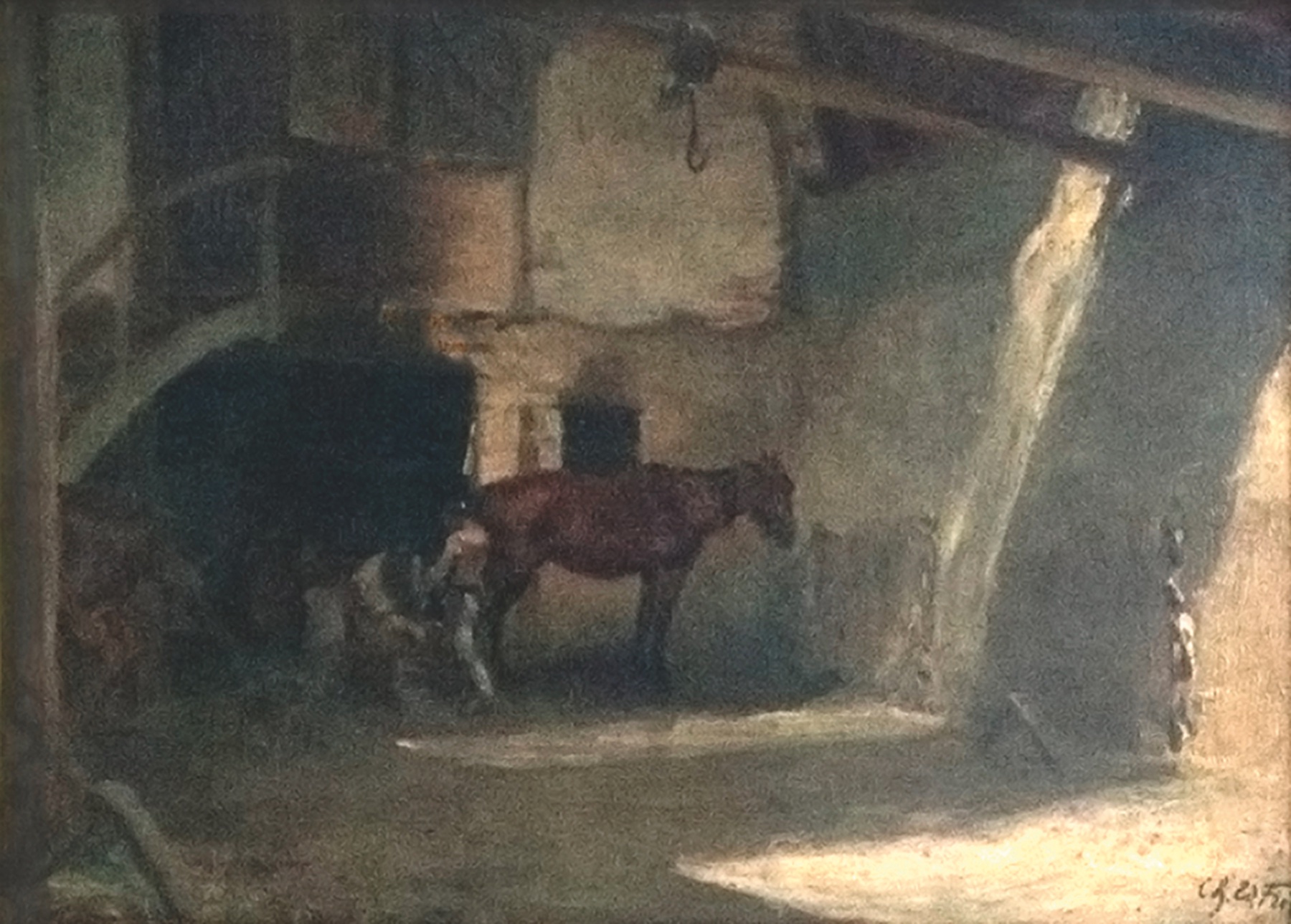
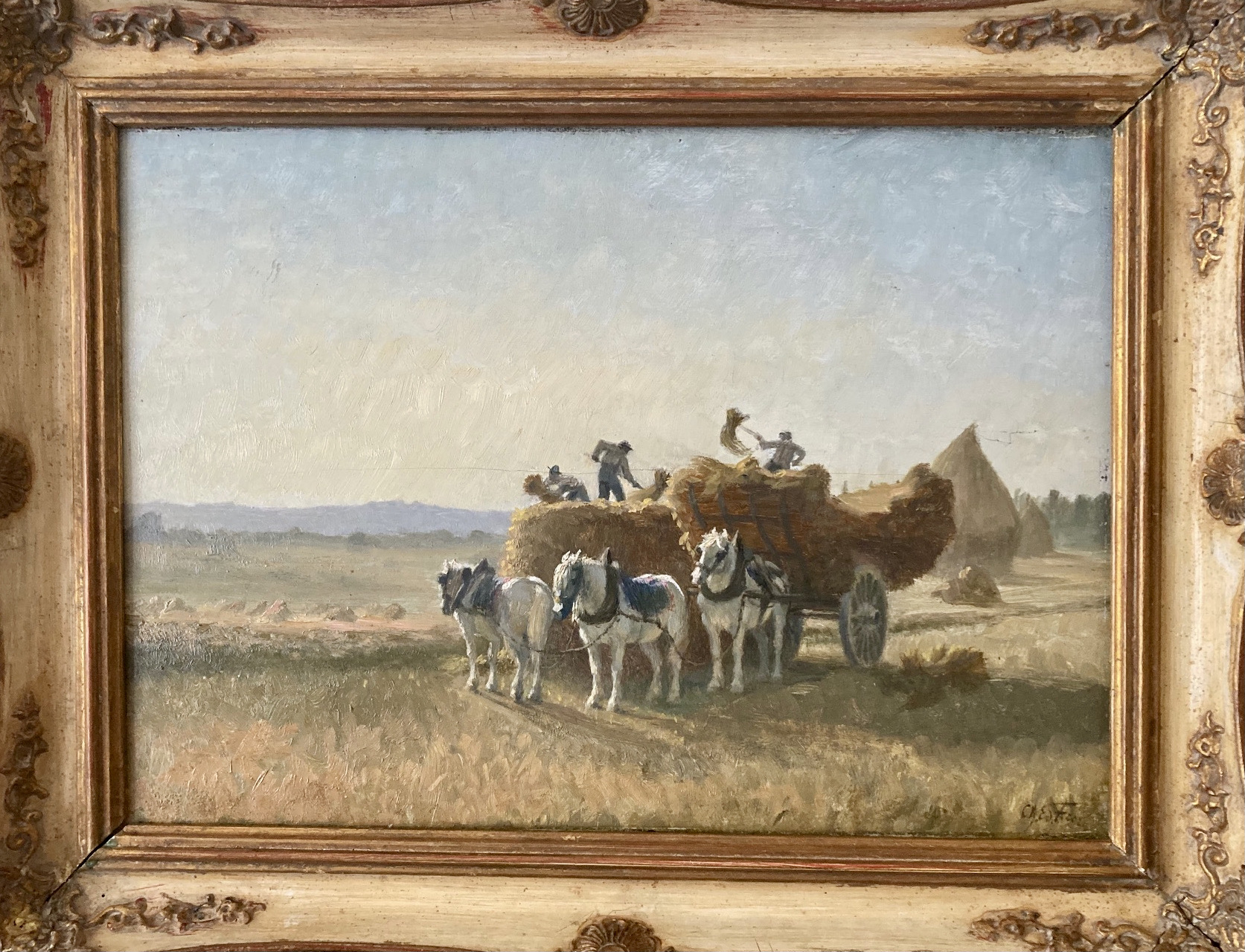
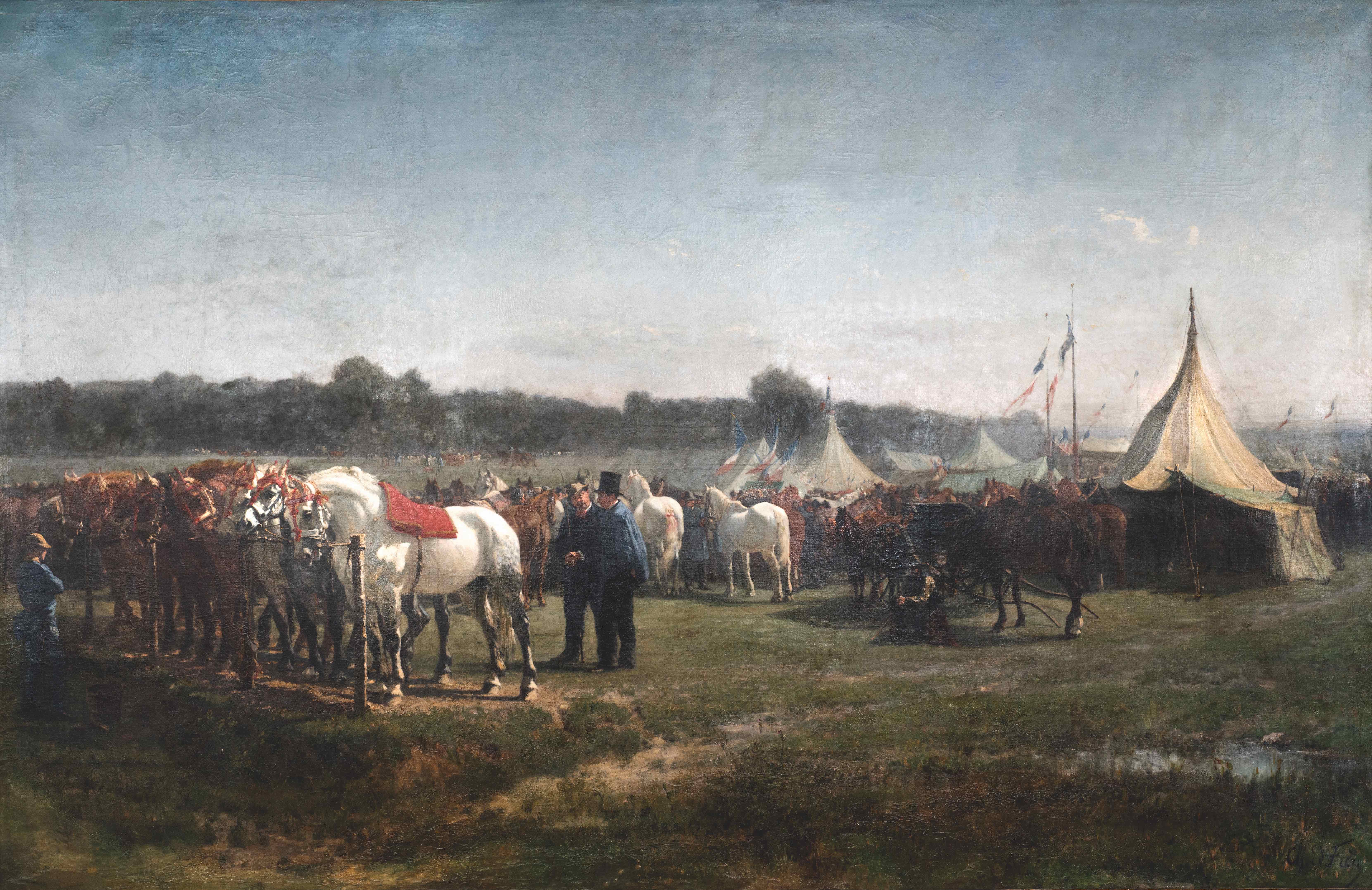
He exhibited at the Paris Salon from 1861 to 1893 where he won two second class medals. He chose landscapes as his themes, then horses in all their attitudes, notably in the farrier’s workshop. His paintings are a mine of information on the farriery from which he drew his inspiration.
In the years 1857,Charles Edouard Frere , with his father, frequented Charles François Daubigny. They often met on the island of Vaux, near Auvers-sur-Oise and on his boat. Moreover, Léonide Bourges, who passed through Ecouen, represents him on an etching aboard Daubigny’s Bottin. He was also a regular at the salons.
On January 8, 1874, by marriage contract, he brought six paintings, a house located at the corner of the rue du Château and the rue de la Beauvette, of 34 a and 19 ca, and another one, ruelle du Frou. His wife brought a trousseau of 12 000 F and an annuity. On January 20, 1874, he married Giulia Augustina Maria Robecchi, born on December 3, 1855 in Paris 2nd district, daughter of Henry Robecchi, a painter and decorator, and Géromina Peviani, living in Paris.
In 1879, he was elected city councilor and was very active in proposing, among other things, an omnibus between the station and the city hall. His father retired from the municipal council at that time.
Near Ecouen, while returning from a work session, Charles Edouard Frère died tragically when he fell from a horse-drawn carriage with horses at full gallop. His death heralded the end of the Ecouen School.

For further information, please read the book “L’Ecole d’Ecouen, une colonie de peintres au XIXe siècle” (bilingual French-English).
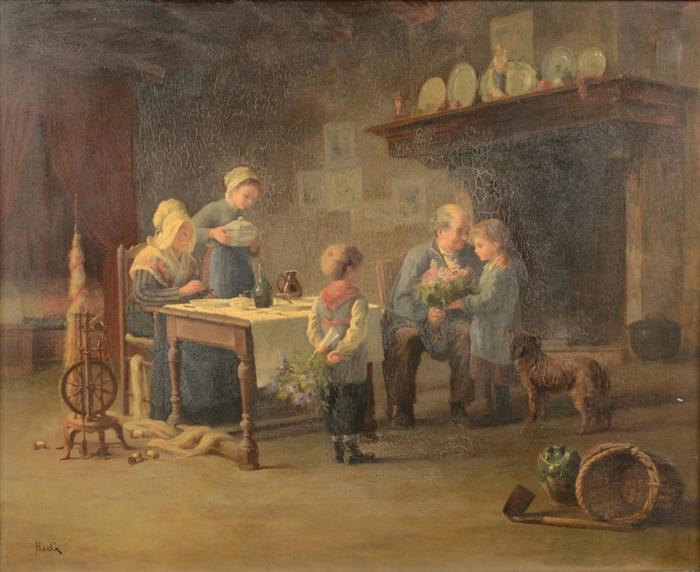
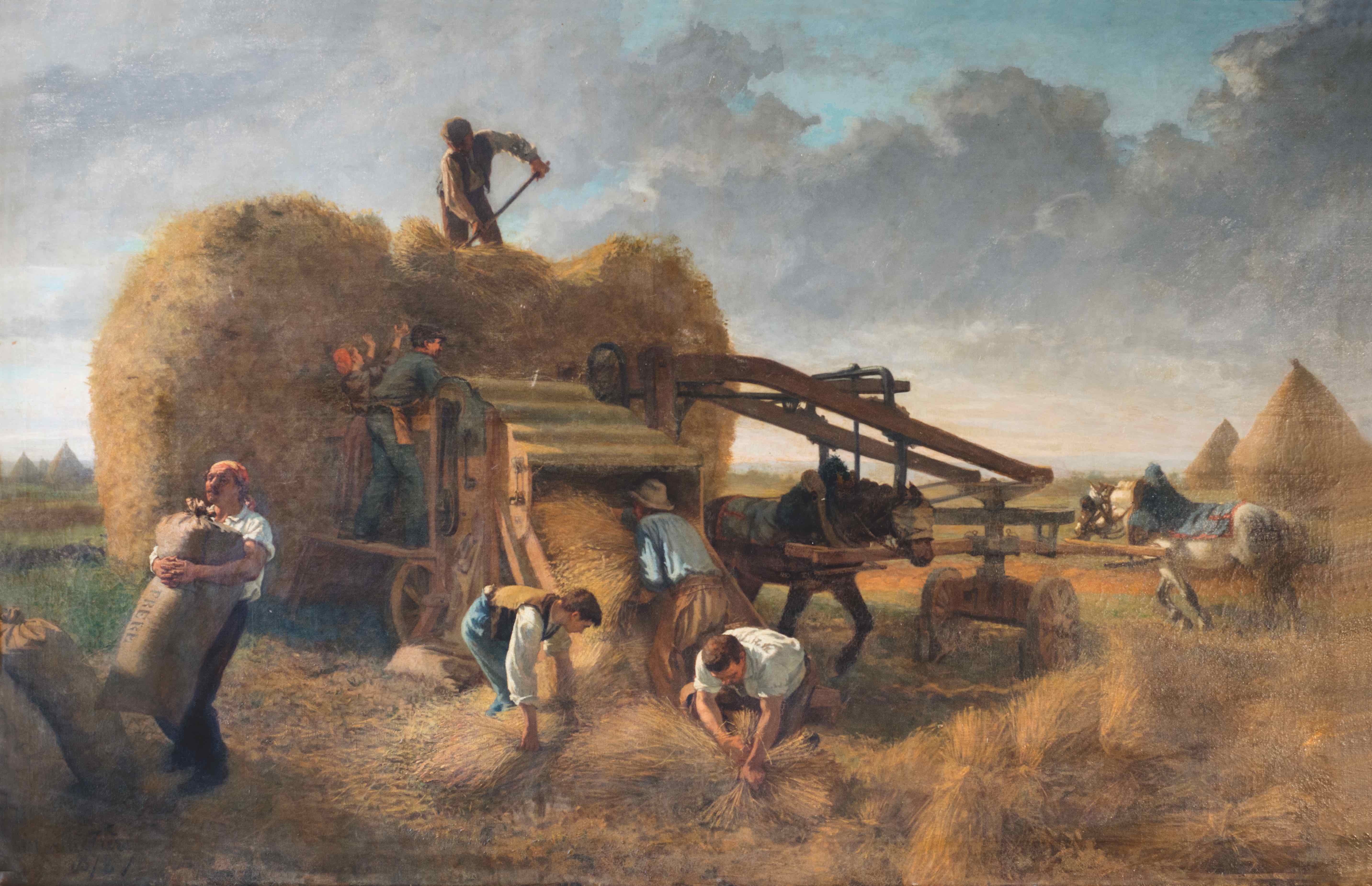
Threshing in Frépillon
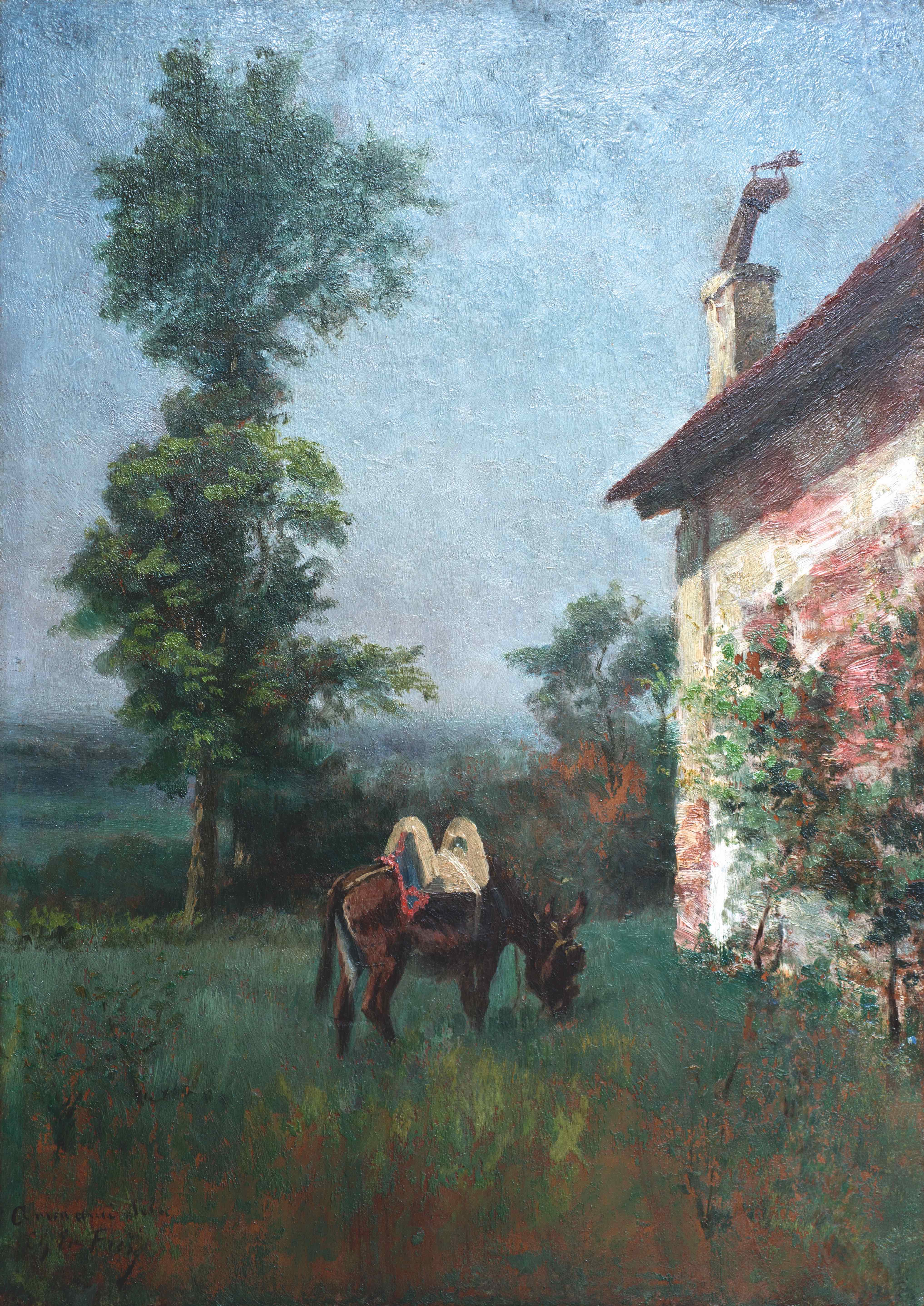
Donkey
Shoeing-smith
The harvest
Horses fair

Charles Bertrand d’Entraygues-E

Brive, July 14th 1850 – February 11th 1929, Biot

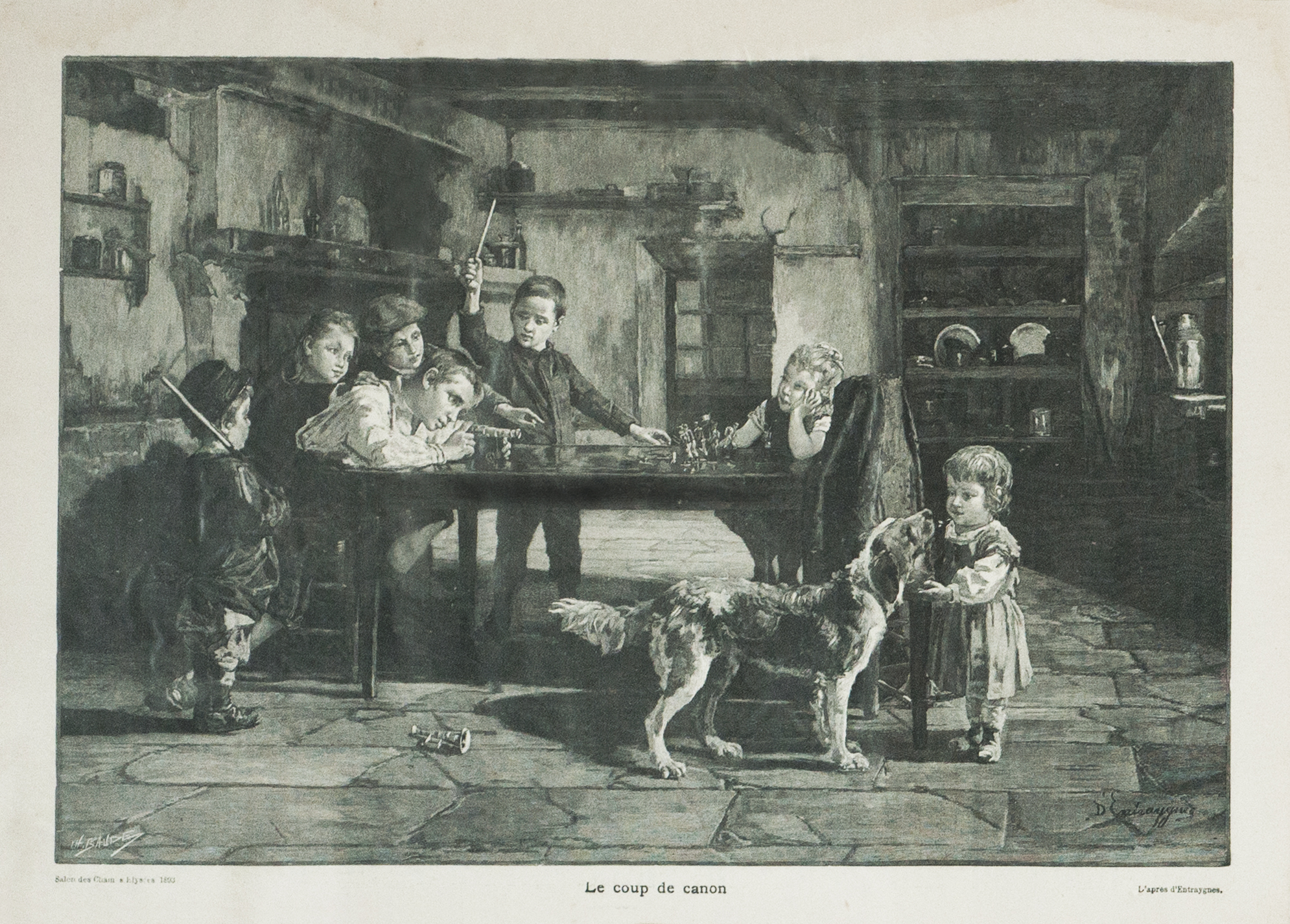
Charles Bertrand d’Entraygues was born in Brive (Corrèze County), in the heart of peasant France, whose atmosphere and décor would be decisive in the evolution of his artistic career. All his work will be centered, indeed, on the representation of modest interiors, family scenes and children’s games.
Altar boys, in particular, inspired him to paint many pictures in which gaiety and mischievousness are in dispute.
He acquired the first bases of his training at the Beaux-Arts of Toulouse before entering the workshop of Isidore Pils, in Paris. Pils was one of the artists who illustrated the horrors of the bloody siege of Paris and the destruction caused by the war. When he arrived, the city was still shaken by the Franco-German conflict.
After the death of Pils, d’Entraygues moved to Ecouen, where he lived for more than twenty years, for a time at 29, rue d’Ezanville, before moving to 5, rue de l’Union (now rue Aristide-Briand). He joined the painters’ colony (it is not known whether this was the reason for his choice of Ecouen). At the same time, he married Caroline Monnet, born in Villiers-le-Bel, next to Ecouen, around 1853, and had four children.
From the 1880’s, his reputation was based on his numerous representations of children, full of charm, humor and lightness. Like many of his colleagues, he also courted American collectors who represented a lucrative outlet for French genre painters.
There is one subject he is particularly fond of and which he treats many times with great happiness, that of altar boys.
In 1906, he left Ecouen to settle in Vernon, in Normandy, for a while and then moved to Biot, Alpes-Maritimes, where he died.

For further information, please read the book “L’Ecole d’Ecouen, une colonie de peintres au XIXe siècle” (bilingual French-English).
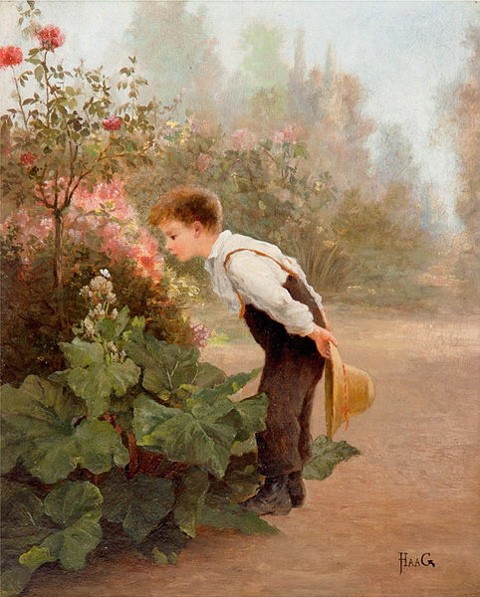
The canon shot
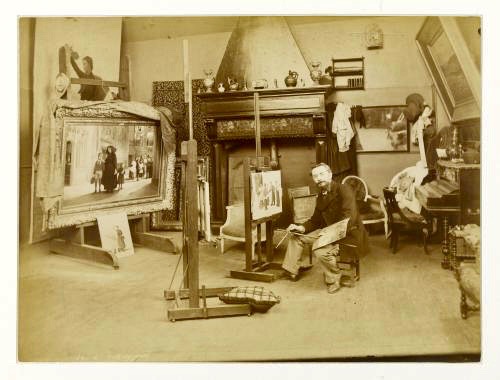
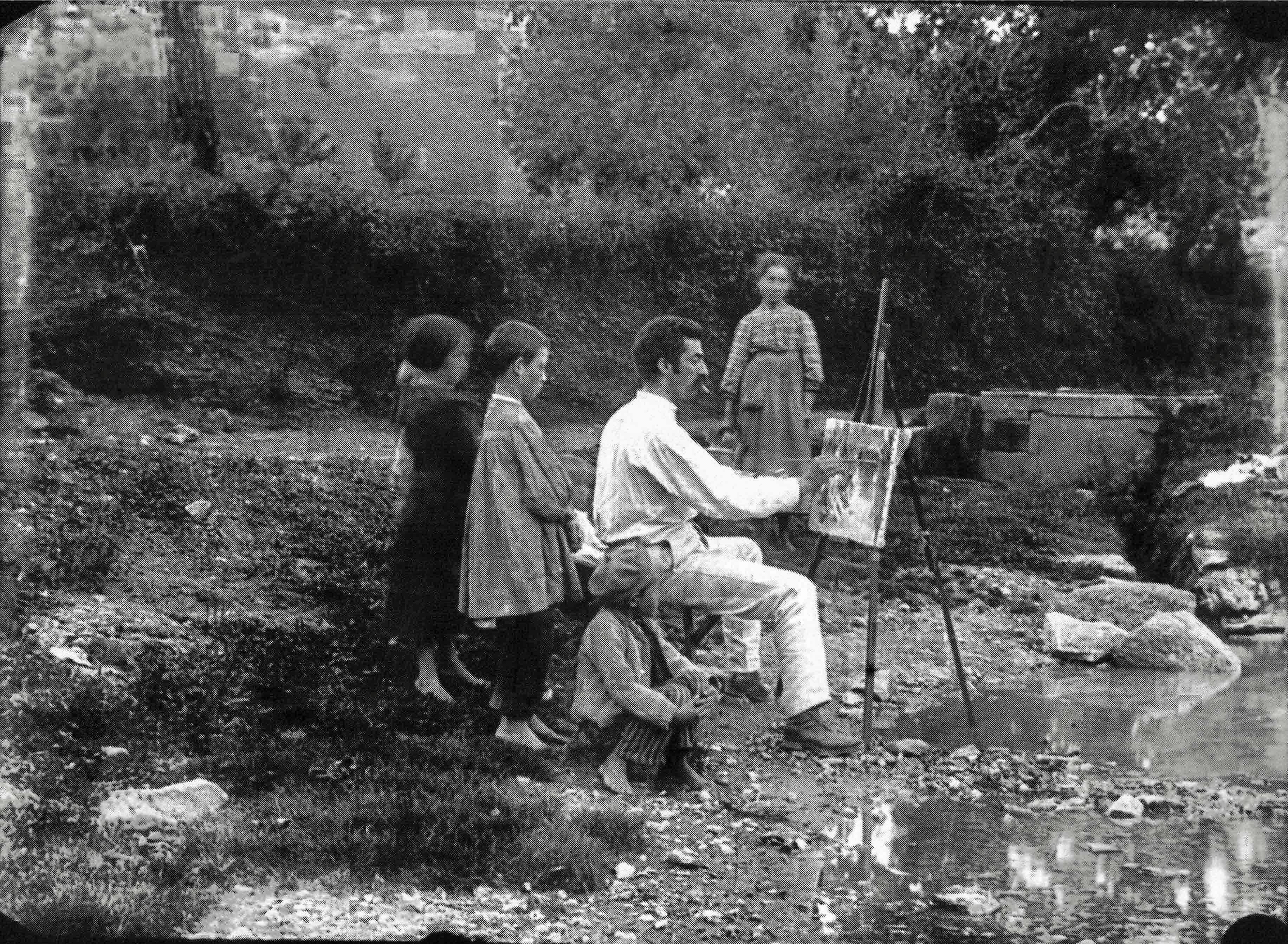
d'Entraygues in his workshop
d'Entraygues painting
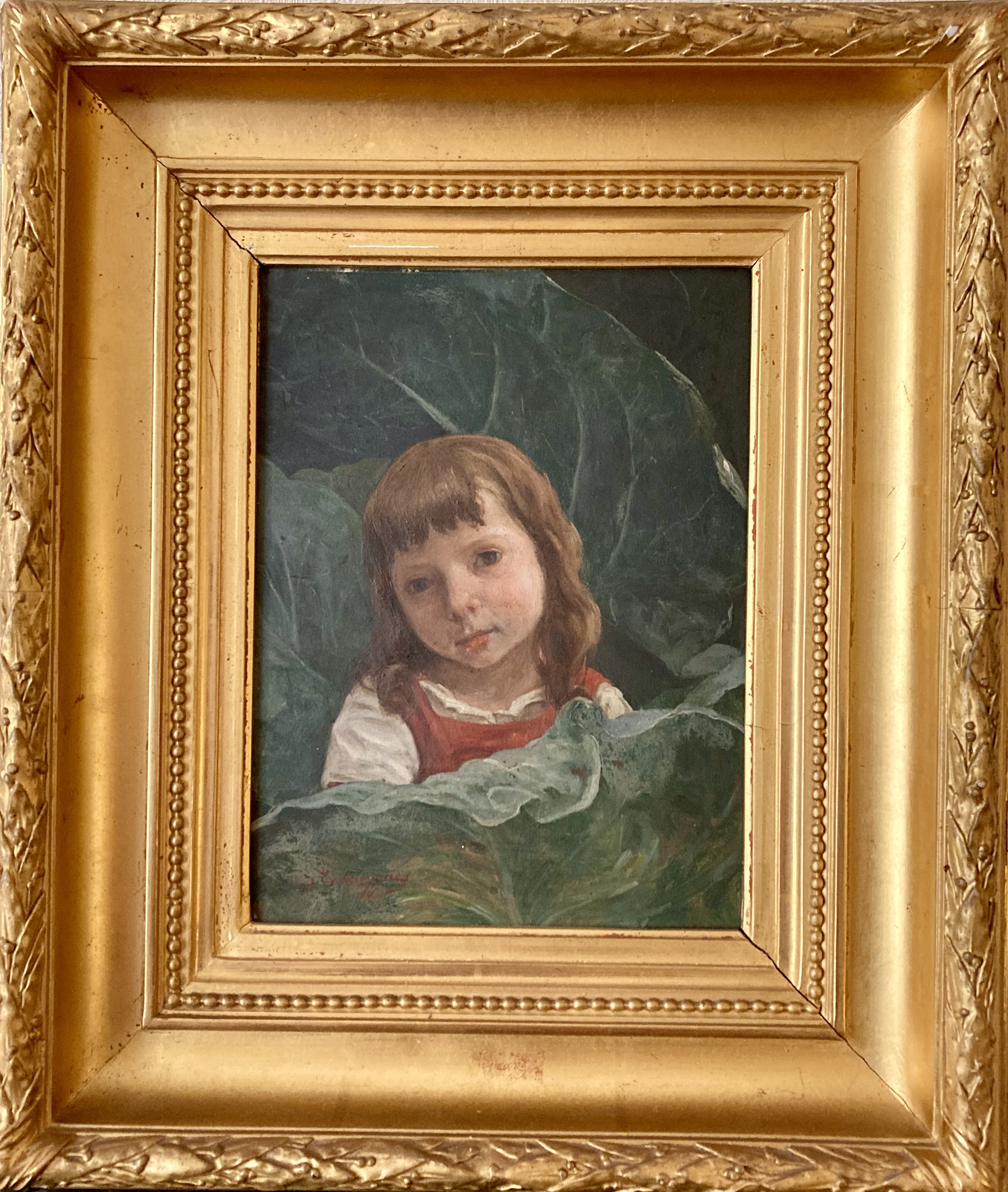
Boys are born in cabbages
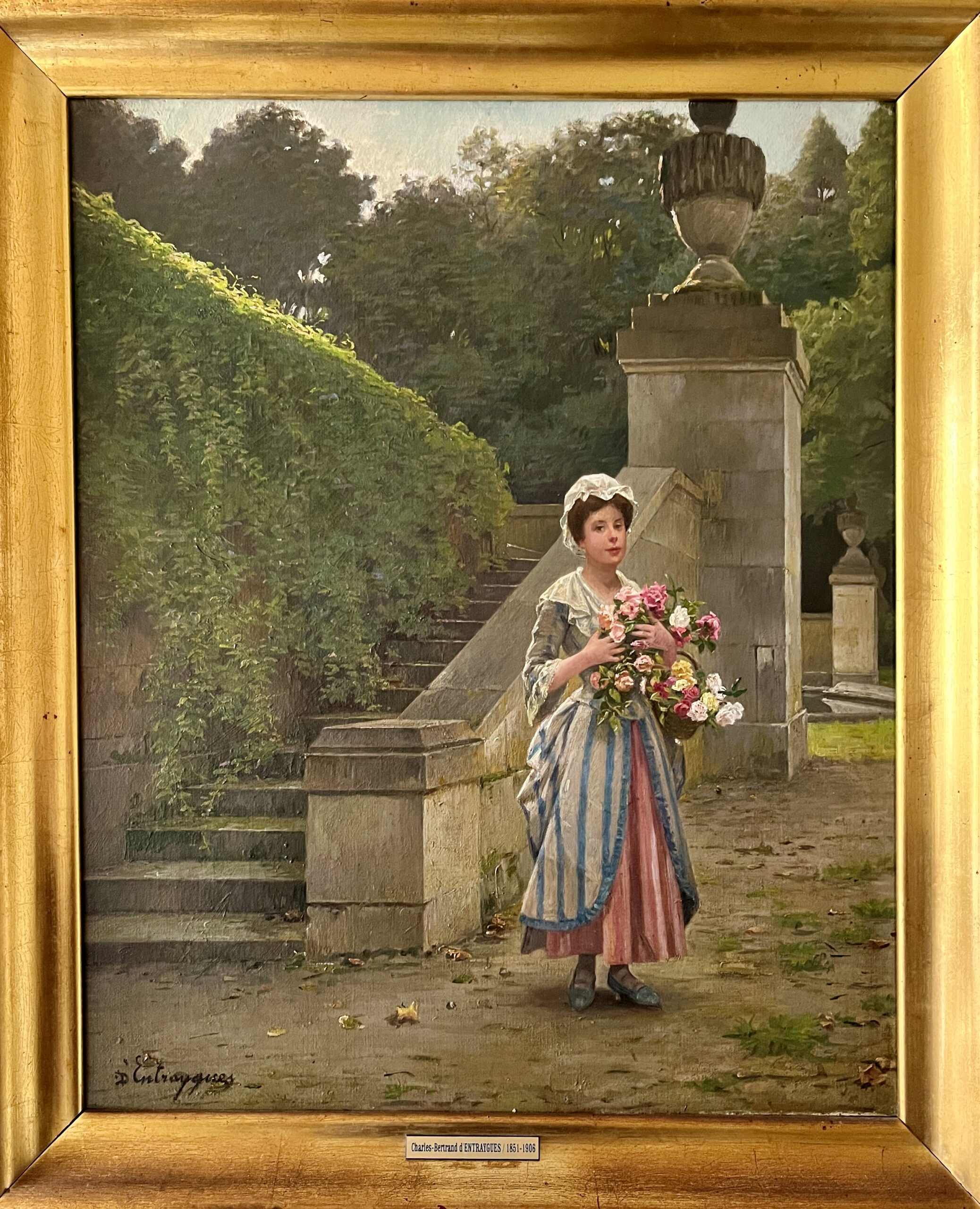
Young lady with flowers
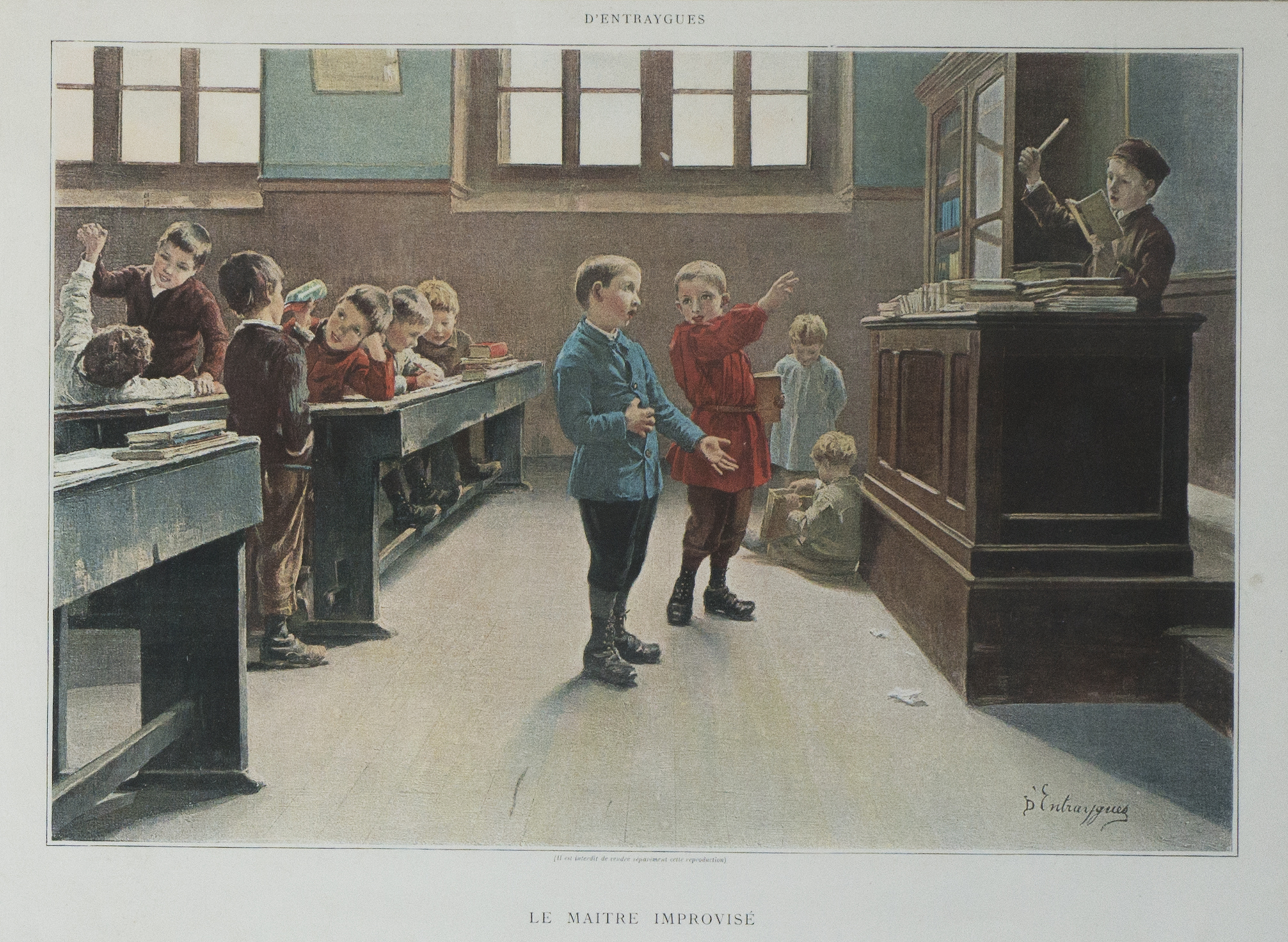
The improvised teacher
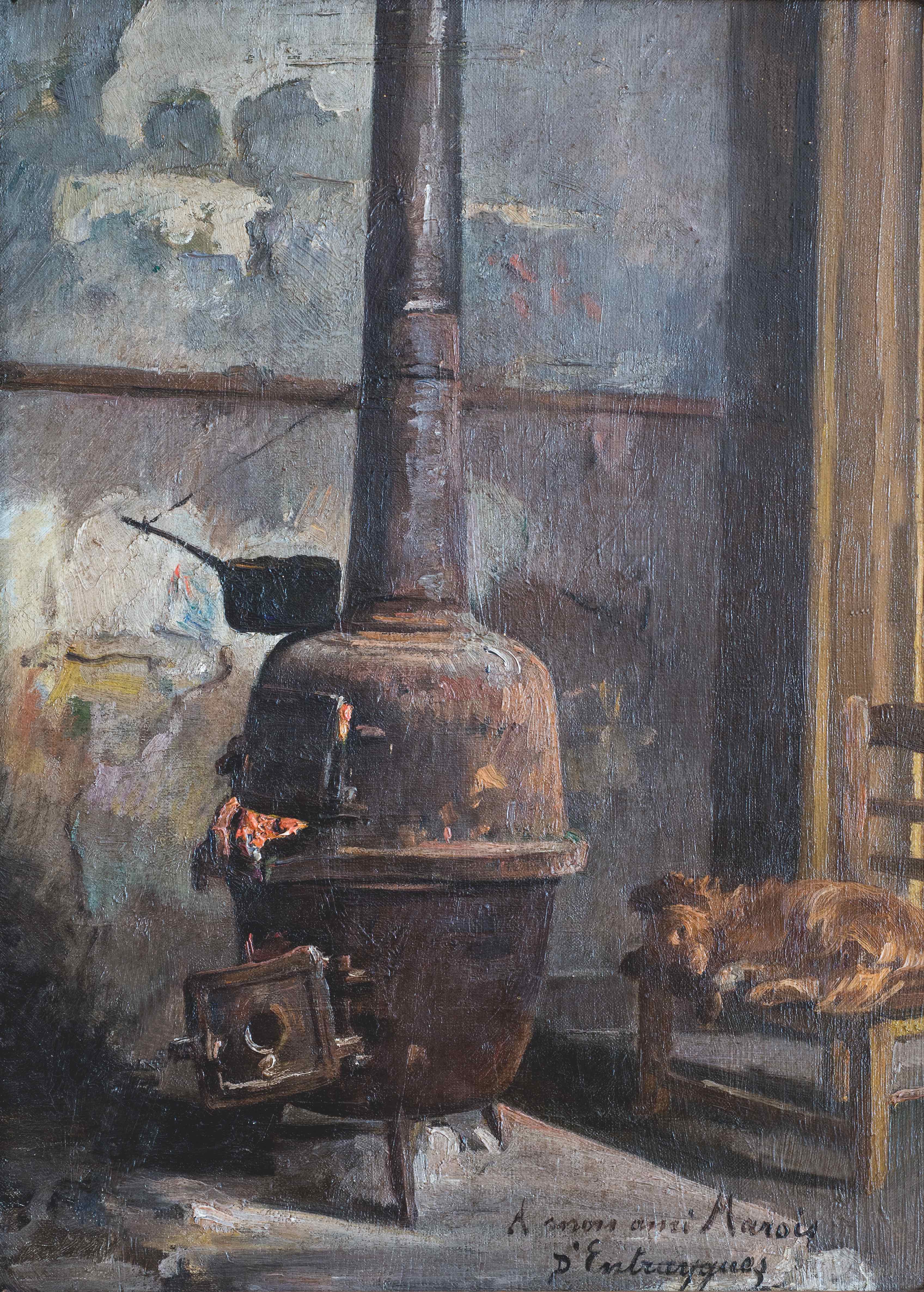
d'Entraygues_The stove

Théophile Emmanuel Duverger-E

Bordeaux, September 17th 1821 – August 25th 1898, Ecouen

His birth in a large city like Bordeaux could have facilitated his access to artistic training, yet Théophile Emmanuel Duverger was self-taught. He obtained his training first by a thorough and attentive observation of nature, then by studying the works of the great masters in museums and galleries, their technique, their colors, their play of light.
This personal apprenticeship had the advantage of allowing his art and his inspiration to evolve freely, outside the constraints that are generally attached to the workshops, especially in Paris, and perhaps this is one of the particularities that shines through in the paintings of Théodore Emmanuel Duverger.
He arrived in Ecouen in 1860 with his wife, Elisabeth Seignac, also born in Bordeaux on December 7, 1814. The discovery of this small village not far from Paris will bring him to enrich his experience with nature. In any case, it allowed him to meet the Colonie des peintres d’Ecouen, born under the impulse of Pierre Edouard Frère, and which he joined immediately.
During the Second Empire in particular, genre painting was able to seduce a bourgeois clientele, tired of historical or mythological painting, which ensured comfortable incomes for the artists, those of the Ecouen School, among others. The United States also presented an outlet that the painters of Ecouen worked hard to develop.
In addition to painting, Duverger, like his friends Paul Seignac and Andre Dargelas, produced numerous drawings which pleased an American, William Walters of Baltimore. In 1861, he came to Ecouen several times and was seen walking through the streets of the village in the company of Duverger before meeting up with other artists of the Colony to discuss commissions.

In 1860, Emmanuel Duverger and his wife, Elisabeth Seignac, bought a house in Ecouen overlooking the rue de la Beauvette and the place de la Beauvette (place Jean Le-Vacher), for the sum of 20,000 francs. Then on October 18, 1869, they bought, at 22 rue de la Beauvette, a vast residence of ten rooms, embellished with a garden with numerous paths and terraces full of flowers and equipped with all the comforts (of the time…) for 11 000 F.
Duverger’s last painting, « Going to the fields« , was exhibited in 1895. He died three years later and was buried in the local cemetery.
In 1906, a painting by Emmanuel Duverger, « La bénédiction du pain« , was offered to the City of Ecouen which exhibited it in the council room. Following this donation, the street of La Châtaigneraie became rue Emmanuel Duverger. In 2010, the commune of Ecouen acquires a work of this painter: « the Dog trainer« , which shows a view of the castle and the Manoir des Tourelles.

For further information, please read the book “L’Ecole d’Ecouen, une colonie de peintres au XIXe siècle” (bilingual French-English).
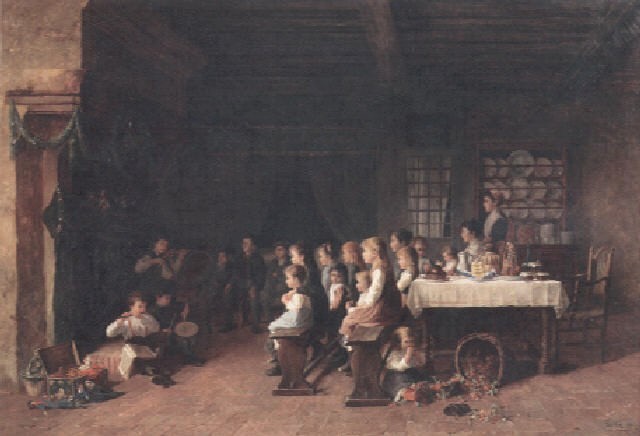
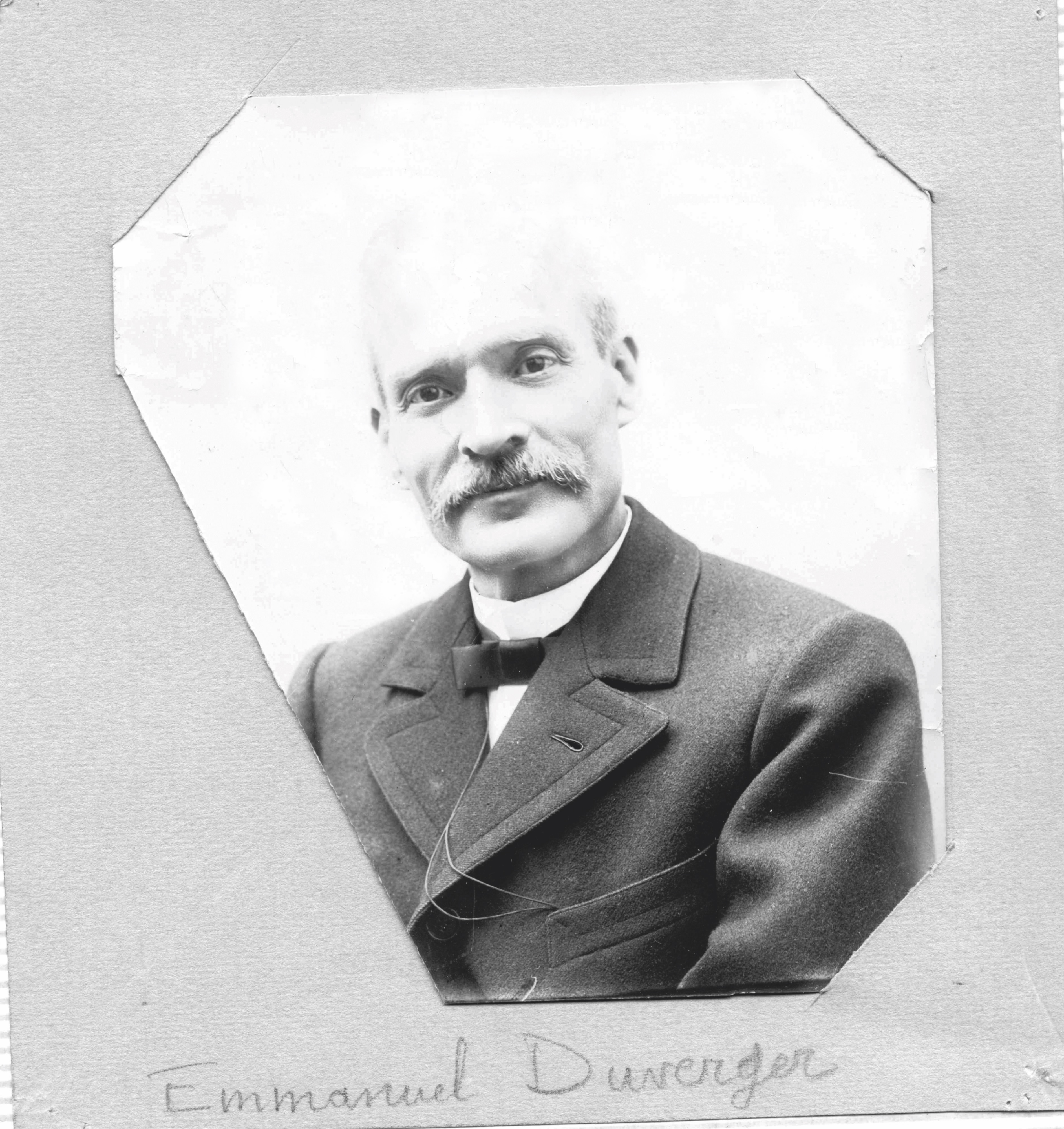
Duverger_picture portrait
The little cheater
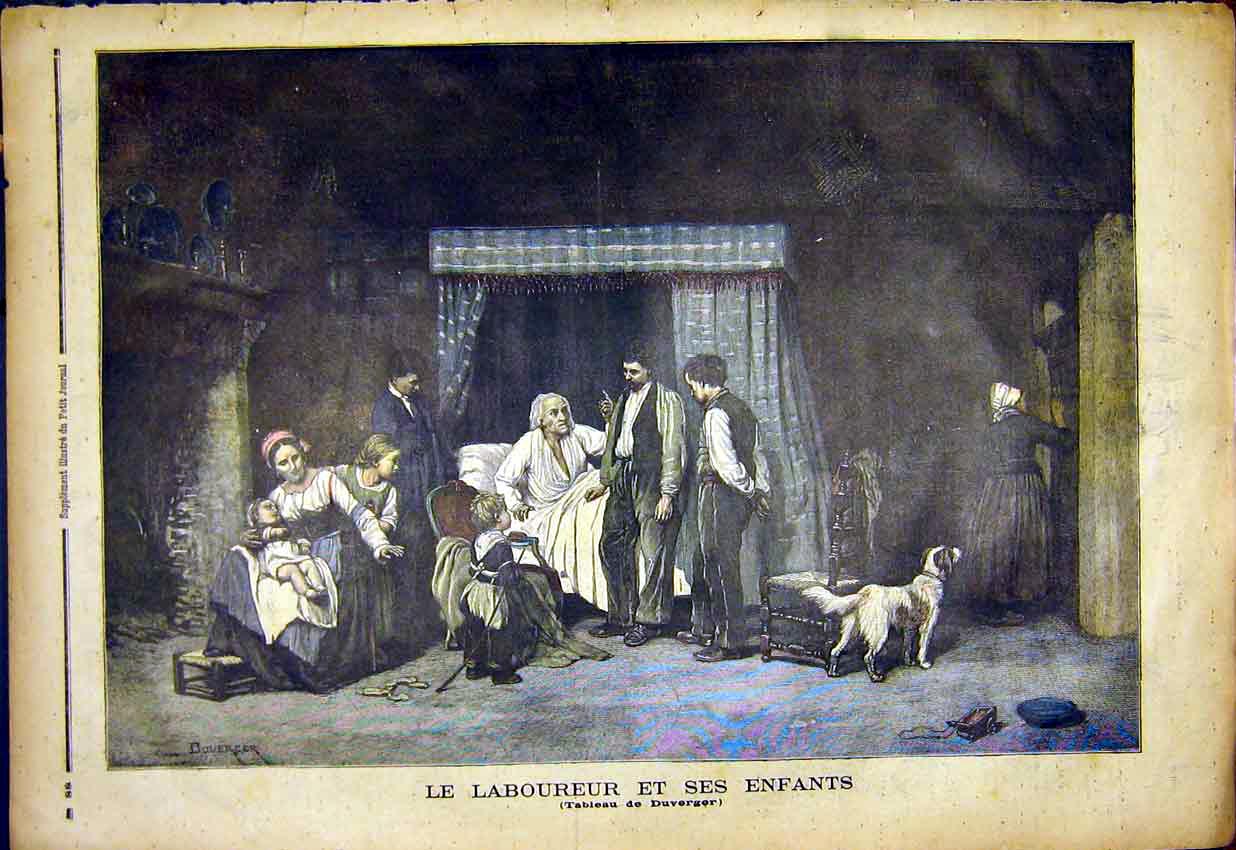
The ploughman and his children
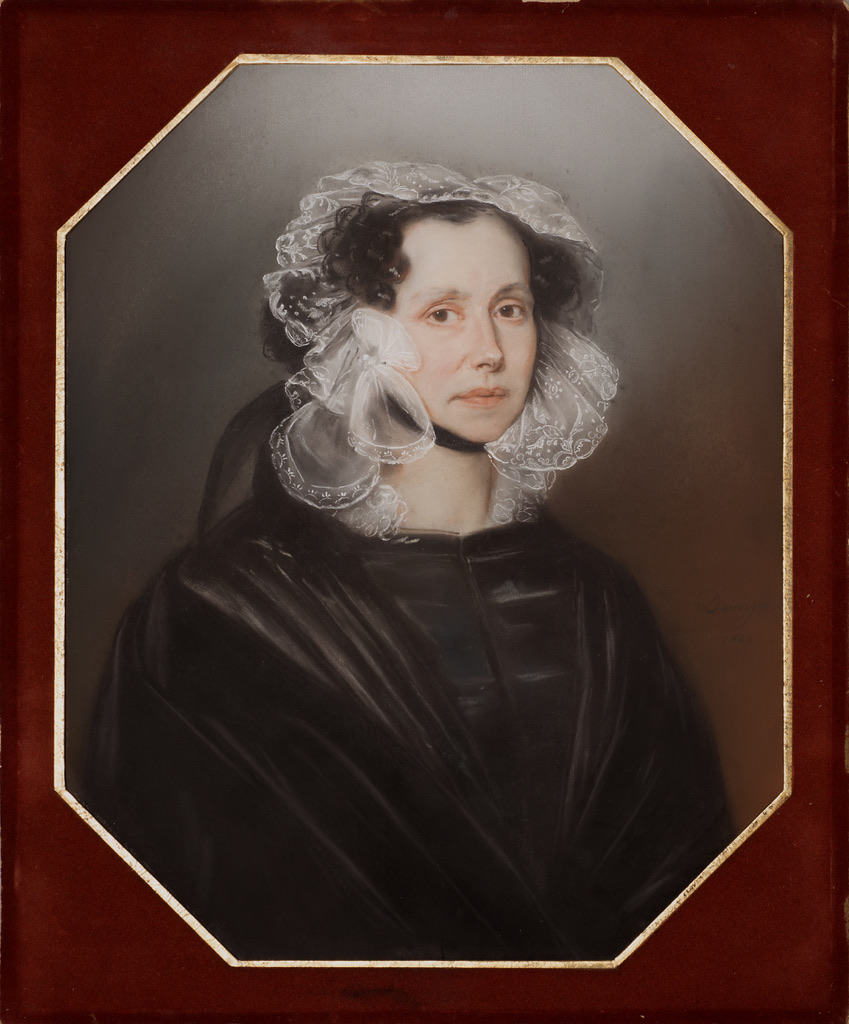
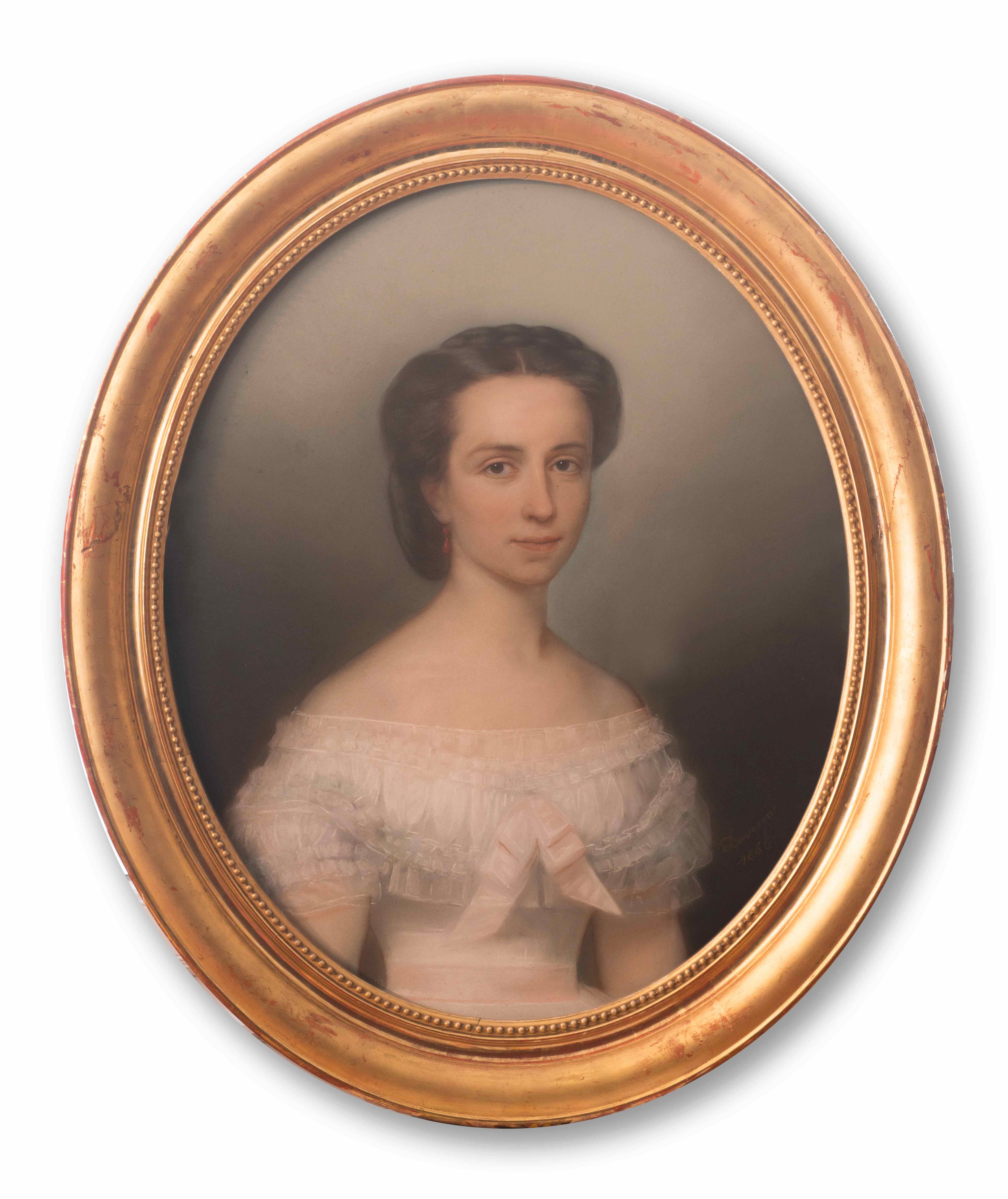
Portrait of a Lady
Portrait of a woman
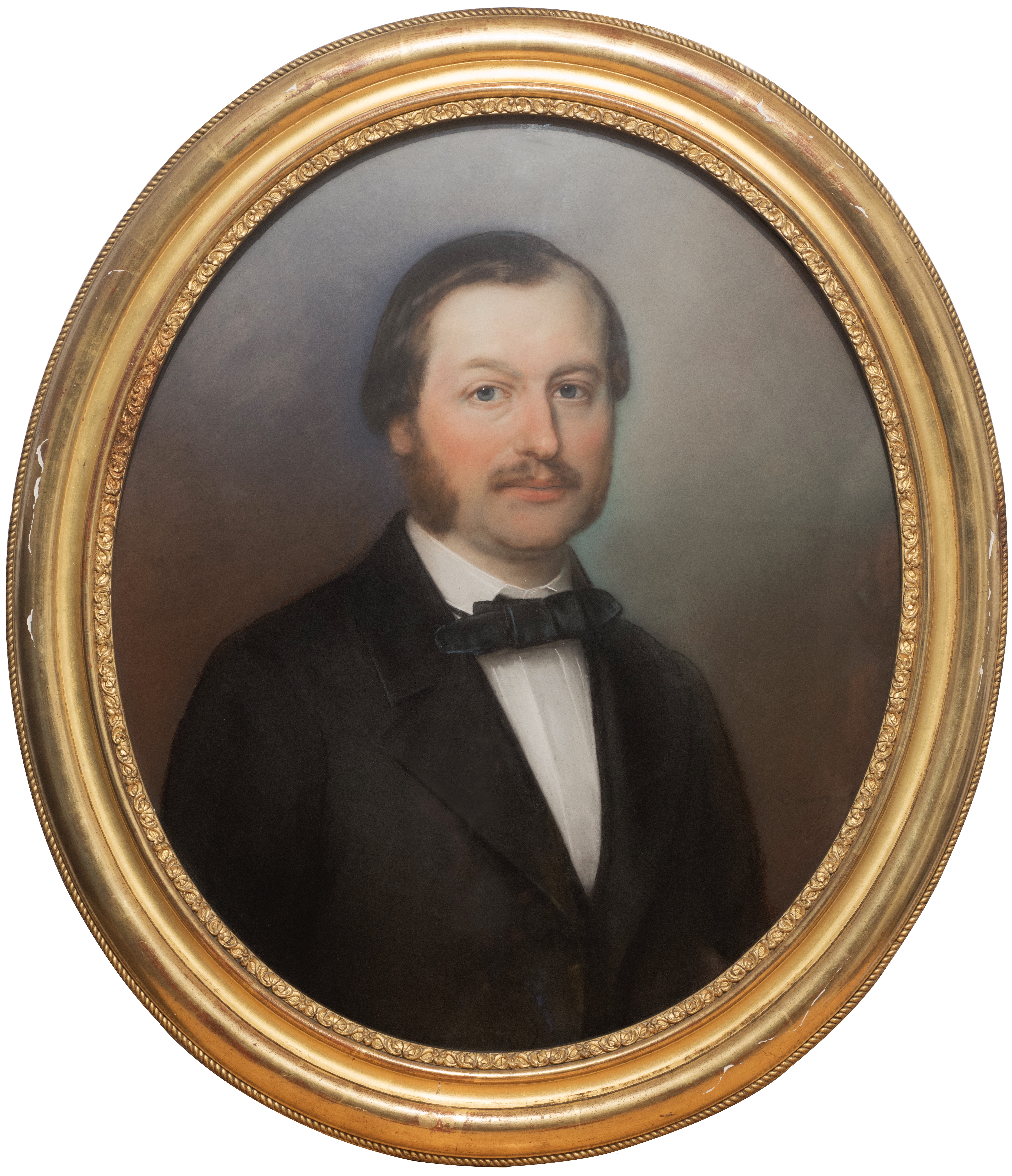
Portrait of a man