Joseph Foxcroft Cole E

Jay (Maine, USA), 1837 – 1892, Winchester (Massachussetts, USA)


From 1860 to 1863, Joseph Foxcroft Cole was a student of Emile Lambinet in France and during the winters he studied drawing in public schools. In late 1863, after a trip to Italy, Joseph Foxcroft Cole established a studio in Boston. With the active support of William Morris Hunt, by 1865 he had sold enough work to return to Paris, where he was a student of Charles Jacque.
With the exception of William Morris Hunt, few Americans knew the artists of Barbizon more intimately than joseph Foxcrof Cole where he had frequent contact with Troyon, Corot, Daubigny and Diaz. In 1872, he painted several canvases depicting the village of Ecouen, including a street scene and a barn. See attached representations.
Joseph Foxcroft Cole exhibited at the 1866 and 1867 Salons, as well as at the 1867 Exposition Universelle in Paris. He spent his summers painting in Normandy and Belgium. At the end of 1870, he returned to Boston, but returned to France in 1872 to stay for five years. During this time he exhibited at the Salons from 1873 to 1875, and often at the Royal Academy in London.
Joseph Foxcroft Cole received a medal at the 1876 Centennial Exhibition in Philadelphia. He returned to Massachusetts in 1877, living in Winchester Mystic Lakes, where, except for brief trips to California and Europe, he spent the rest of his life.

For further information, please read the book “L’Ecole d’Ecouen, une colonie de peintres au XIXe siècle” (bilingual French-English).
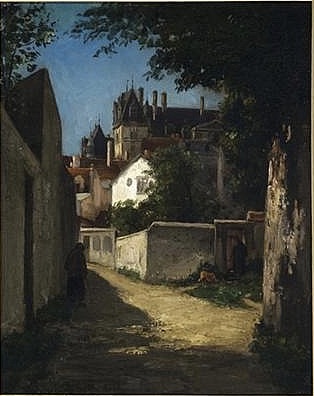
View of Ecouen (Vue d'Ecouen)
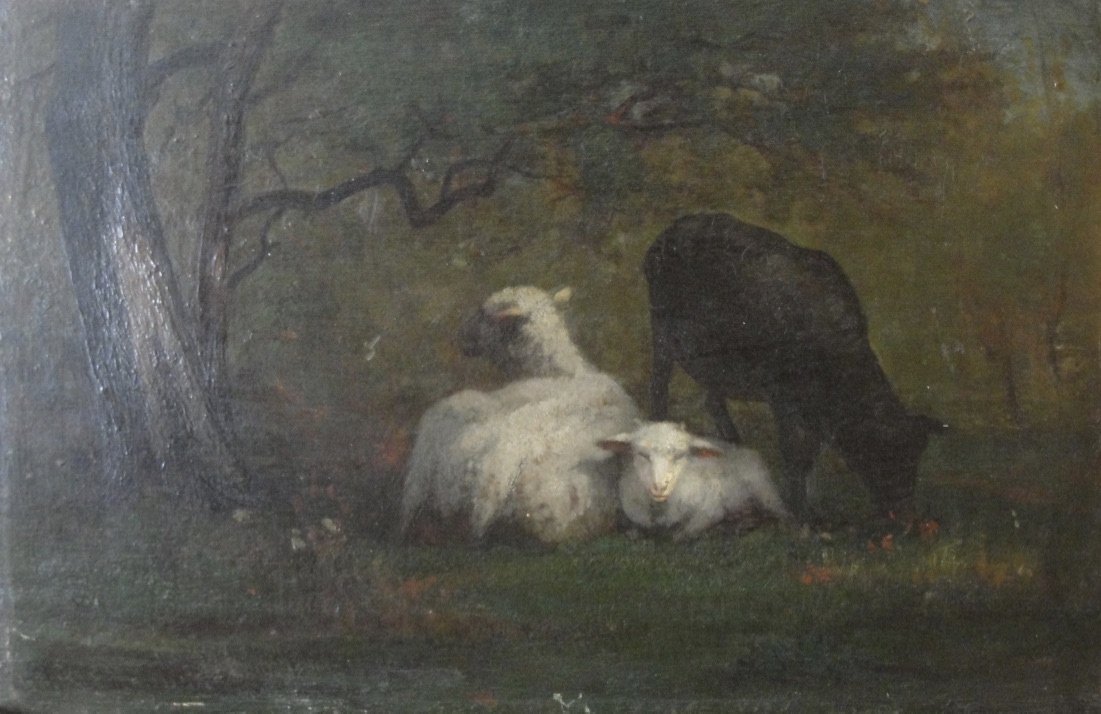
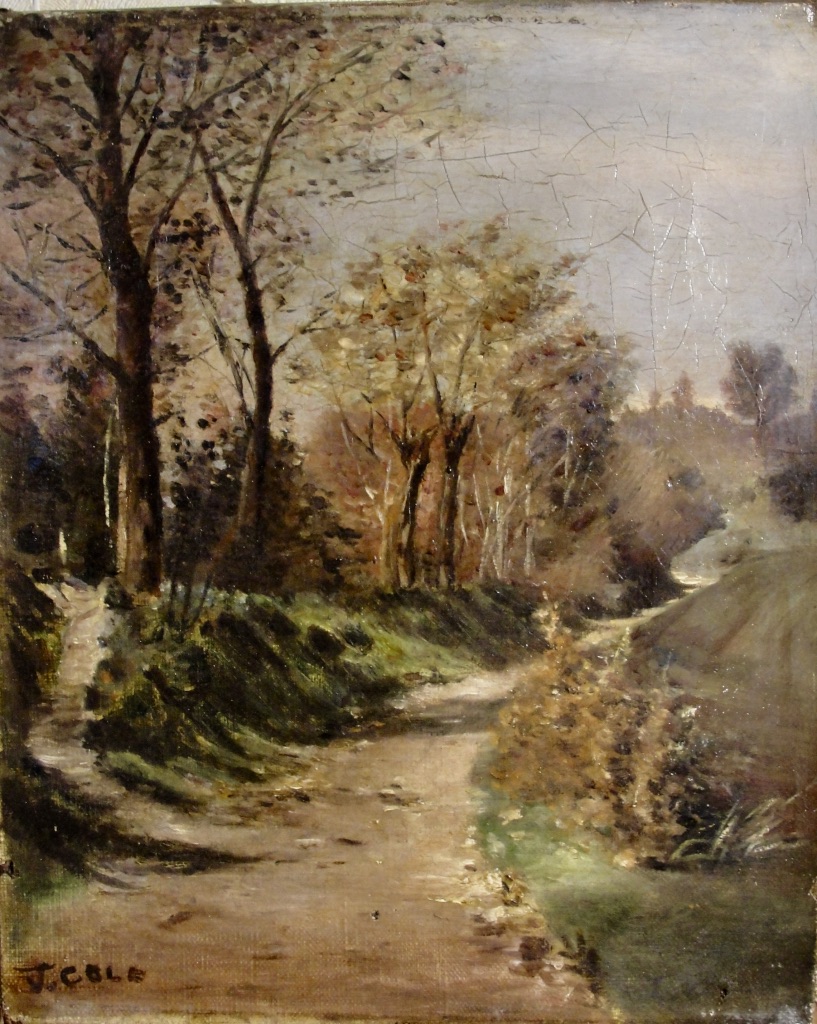
Trail in a forest

Joseph Foxcroft Cole

Jay (Maine, USA), 1837 – 1892, Winchester (Massachussetts, USA)


De 1860 à 1863, Joseph Foxcroft Cole a été, en France, un élève dÉmile Lambinet et pendant les hivers, il a étudié le dessin dans les écoles publiques. A la fin de 1863, après un voyage en Italie, Joseph Foxcroft Cole a créé un atelier à Boston. Avec le soutien actif de William Morris Hunt, en 1865, il avait vendu assez d’œuvres pour retourner à Paris, où il a été l’élève de Charles Jacque.

À l’exception de William Morris Hunt, peu d’Américains connaissaient les artistes de Barbizon plus intimement que Joseph Foxcroft Cole, où il avait de fréquents contacts avec Troyon, Corot, Daubigny et Diaz. En 1872, il a peint plusieurs toiles représentant le village d’Ecouen dont une scène de rue et une étable. Voir représentations ci-jointes.

Joseph Foxcroft Cole exposa dans les Salons de 1866 et 1867, ainsi qu’à l’Exposition universelle de 1867 à Paris. Il a passé ses étés à peindre en Normandie et en Belgique. À la fin de 1870, il est retourné à Boston, mais est revenu en France en 1872 pour y rester pendant cinq ans. Pendant cette période, il a exposé aux Salons de 1873 à 1875, et souvent à l’Académie royale de Londres.

Joseph Foxcroft Cole a reçu une médaille à l’Exposition du centenaire de 1876 de Philadelphie. Il est de retour dans le Massachusetts en 1877, vivant à Winchester Mystic Lakes, où, sauf pour de brefs voyages en Californie et en Europe, il a passé le reste de sa vie.

Pour plus d’informations, nous vous invitons à lire le livre « L’Ecole d’Ecouen – une colonie de peintres au XIXe siècle »

Chemin dans la forêt

David Ossipovitch Widhopff-E

Odessa (Russia), May 5th 1867 – 1933, St-Clair-sur-Epte

Graduated from the Royal Odessa Academy, David Ossipovitch Widhopff studied at the Royal academy of Munich, learning from Max Herterich (1880-1952).
In August 1887, David Ossipovitch Widhopff arrived in Paris, went to the academy of Rodolphe Julian (1839-1907), and became a student of Tony Robert-Fleury (1837-1911) and Jules Joseph Lefebvre (1836-1911). He exhibited at the Salon de Paris of 1888, 1891 and 1893, and at the Tuileries exhibition. He traveled to Brazil and founded an Arts school in the Parà State.

Back in Paris, David Ossipovitch Widhopff lived in Montmartre and becomes friend with Alfons Mucha (1860-1939) and Leon Dechamps (1864-1899), Director of “La plume” (The Feather) magazine.
In 1908, he became illustrator when he met Hugues Delorme (1864-1942) and Jules Roques at the “Courrier Français” (the French mail) magazine. With his colleague, Adolphe Willette (1857-1926), he worked a long time for this magazine.

Starting in 1896, David Ossipovitch Widhopff became the primary supplier of drawings and portraits for the people of Arts and Shows.
Fot the “Manufacture des Gobelins” (National tapestry workshop), he made drawings for posters and tapestry patterns.

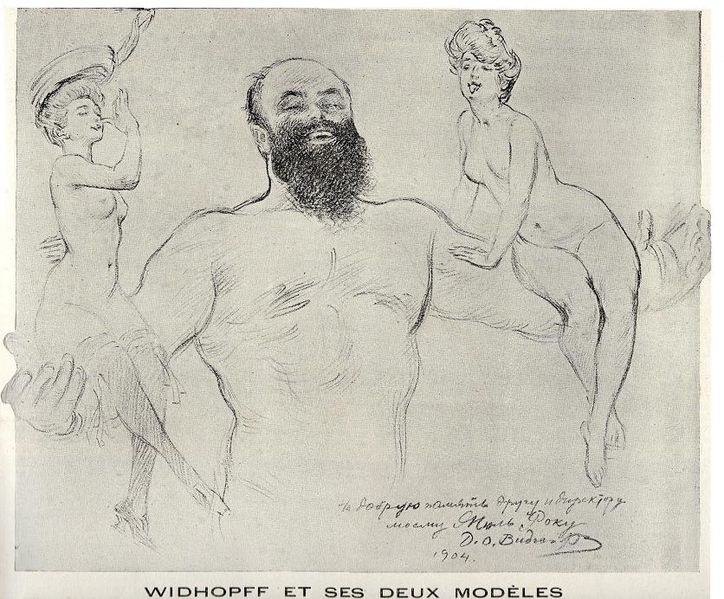
His friends gave David Ossipovitch Widhopff the nickname of “Hercules” and said: “as powerful from his soul than his torso …. he has enchanted Paris with his power, his goodness, his indefatigable heart, his indefatigable talent …. having the taste for health and for women power…. his physical power did not prevent him to show delicacy, enormity and grace”.

With his friend Linna, the lived in Ecouen, rue Adeline (Adeline street).


For further information, please read the book “L’Ecole d’Ecouen, une colonie de peintres au XIXe siècle” (bilingual French-English).
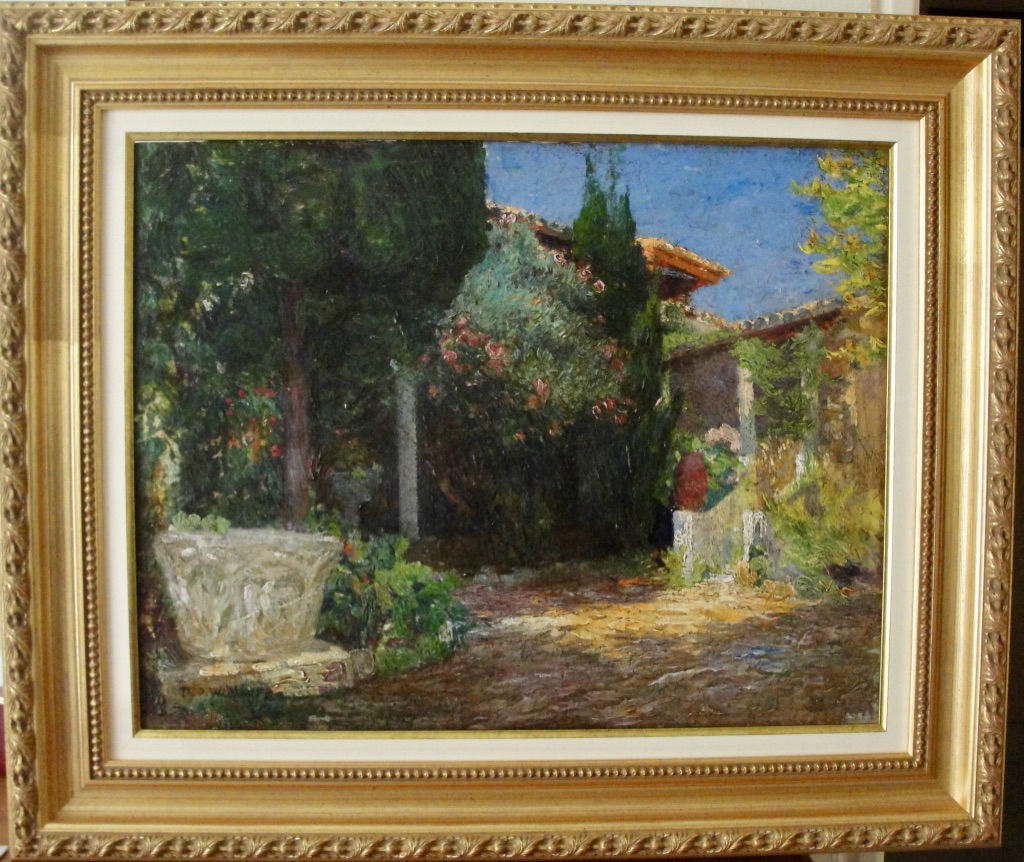
Mediterranean house
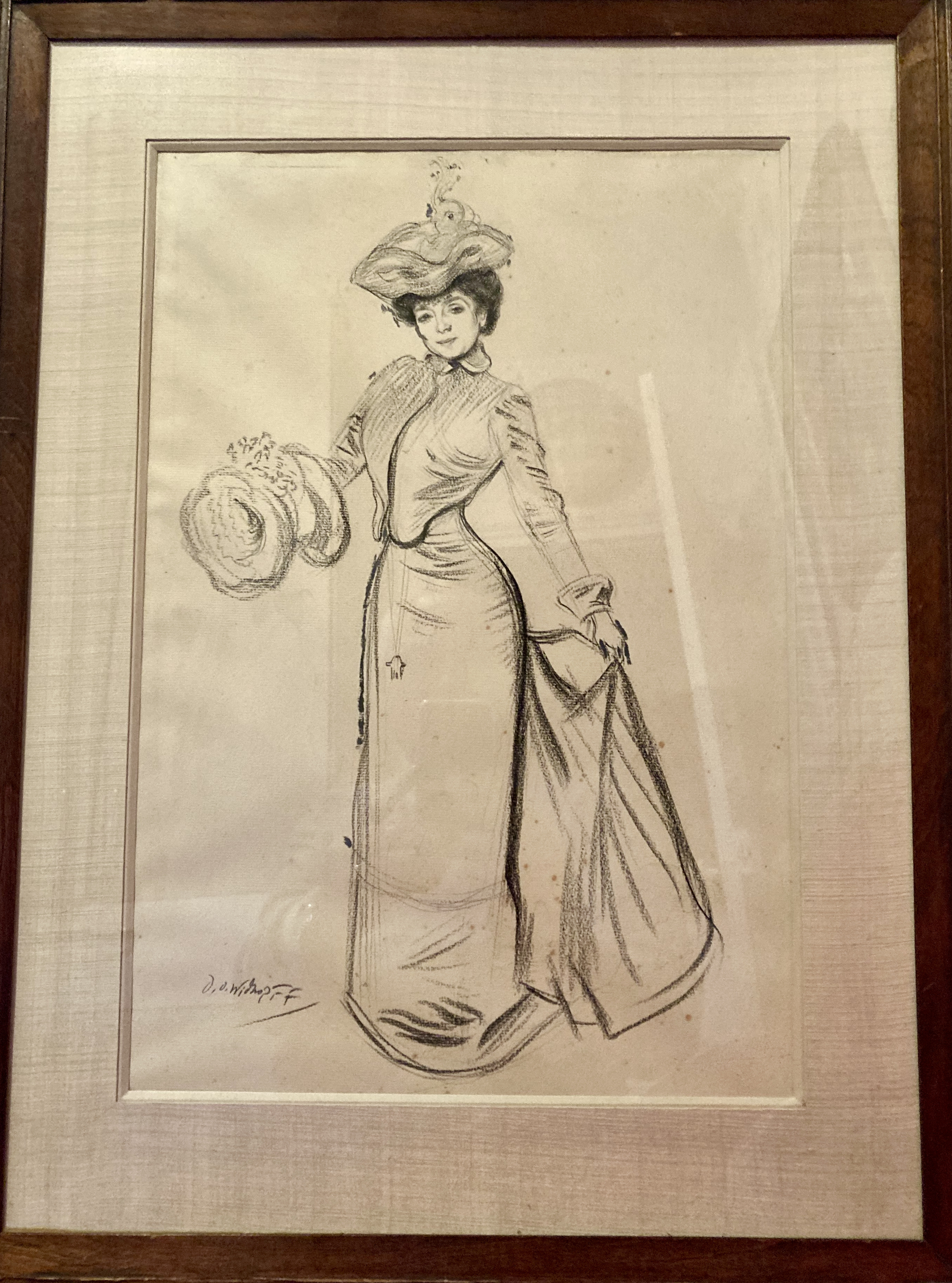
 Lady with a hat
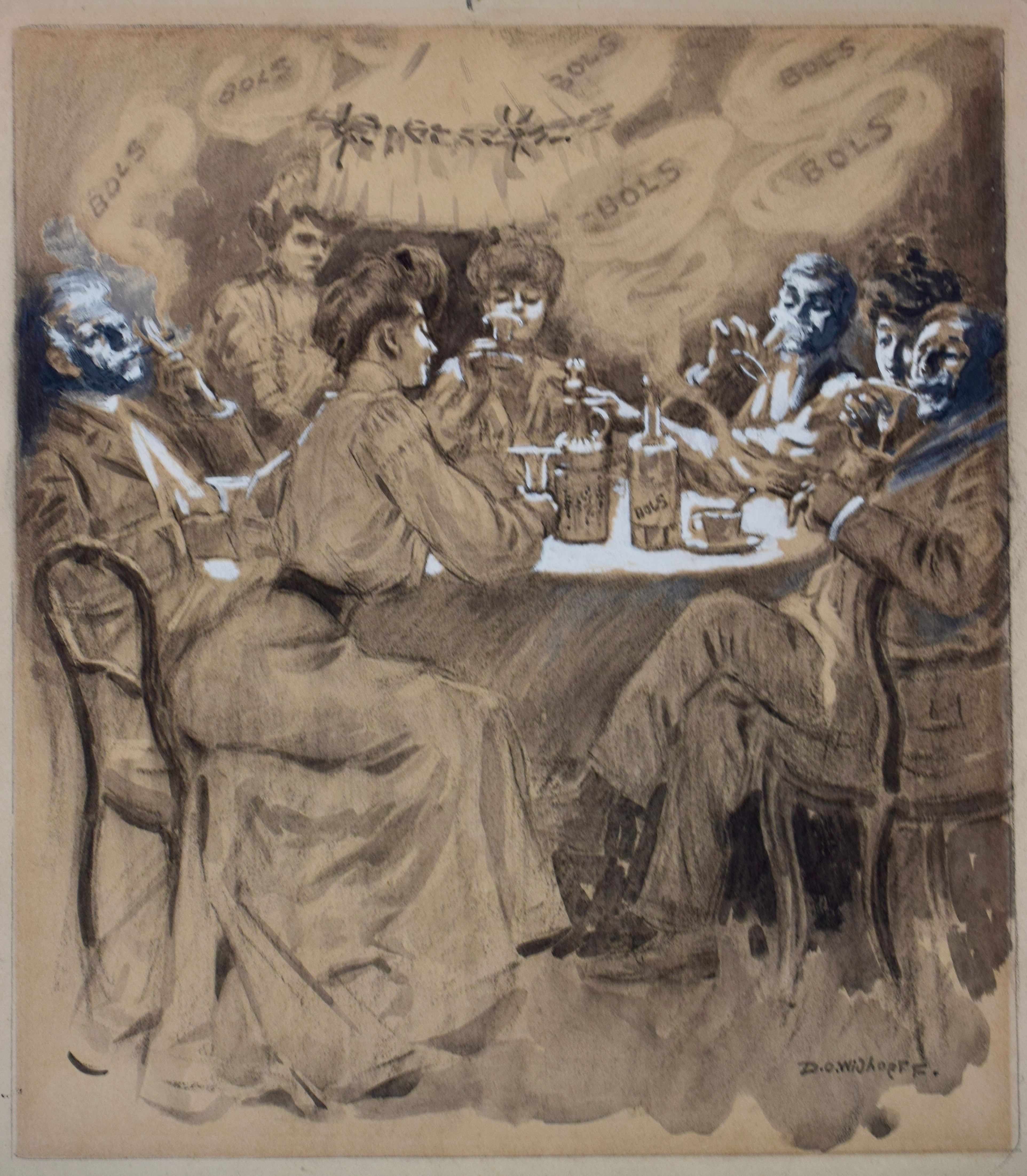
A glass of Bols

Jules Jacques Veyrassat-E

Paris, July 2nd 1828 – April 12th 1893, Paris 19°

Born into a family where nothing predisposed him to an artistic career, Jules Veyrassat trained for four years at the Ecole Royale gratuite de dessin, notably with Henri Lehmann (1814-1882) and Austin Besson (1815-1888), devoting himself, at first, to painting.
As soon as he could afford it, he rented a modest room in Ecouen and became a student and friend of Pierre Edouard Frère. In 1848, at the age of 20, he exhibited at the Paris Salon.
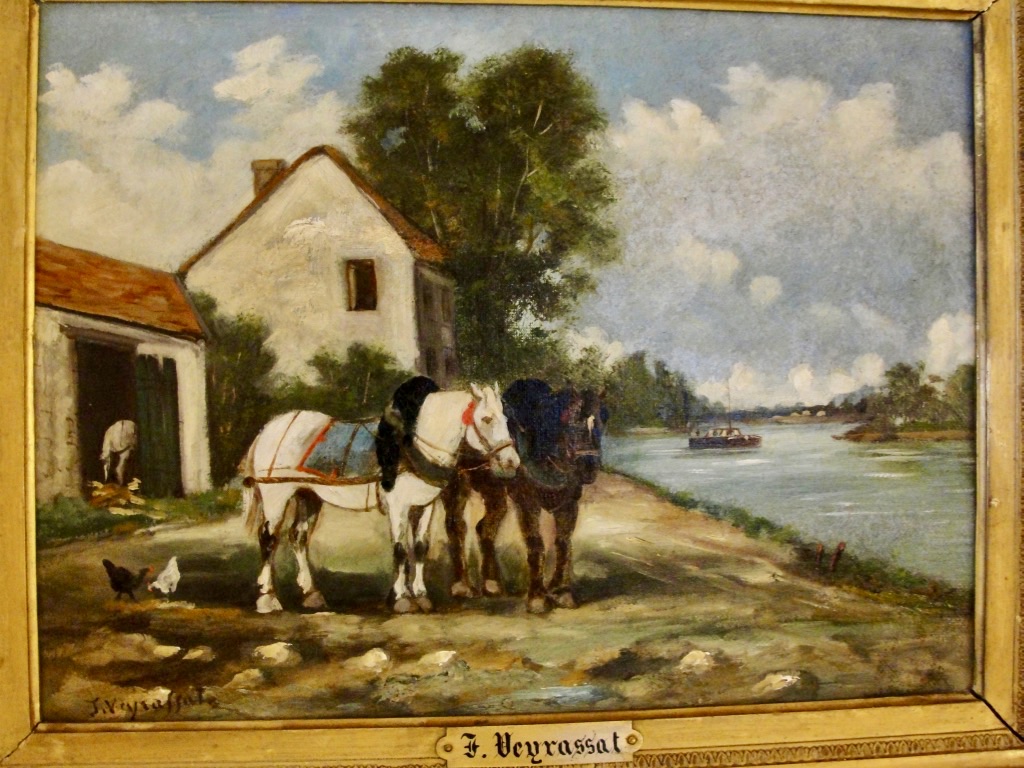
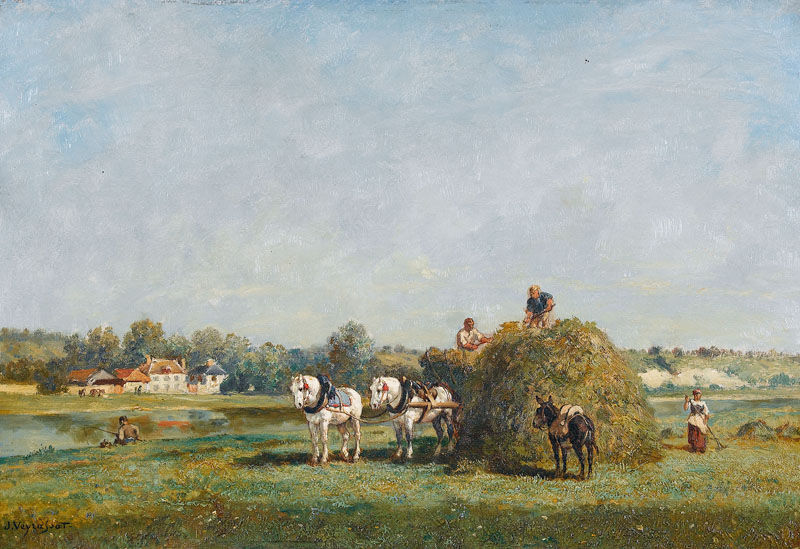
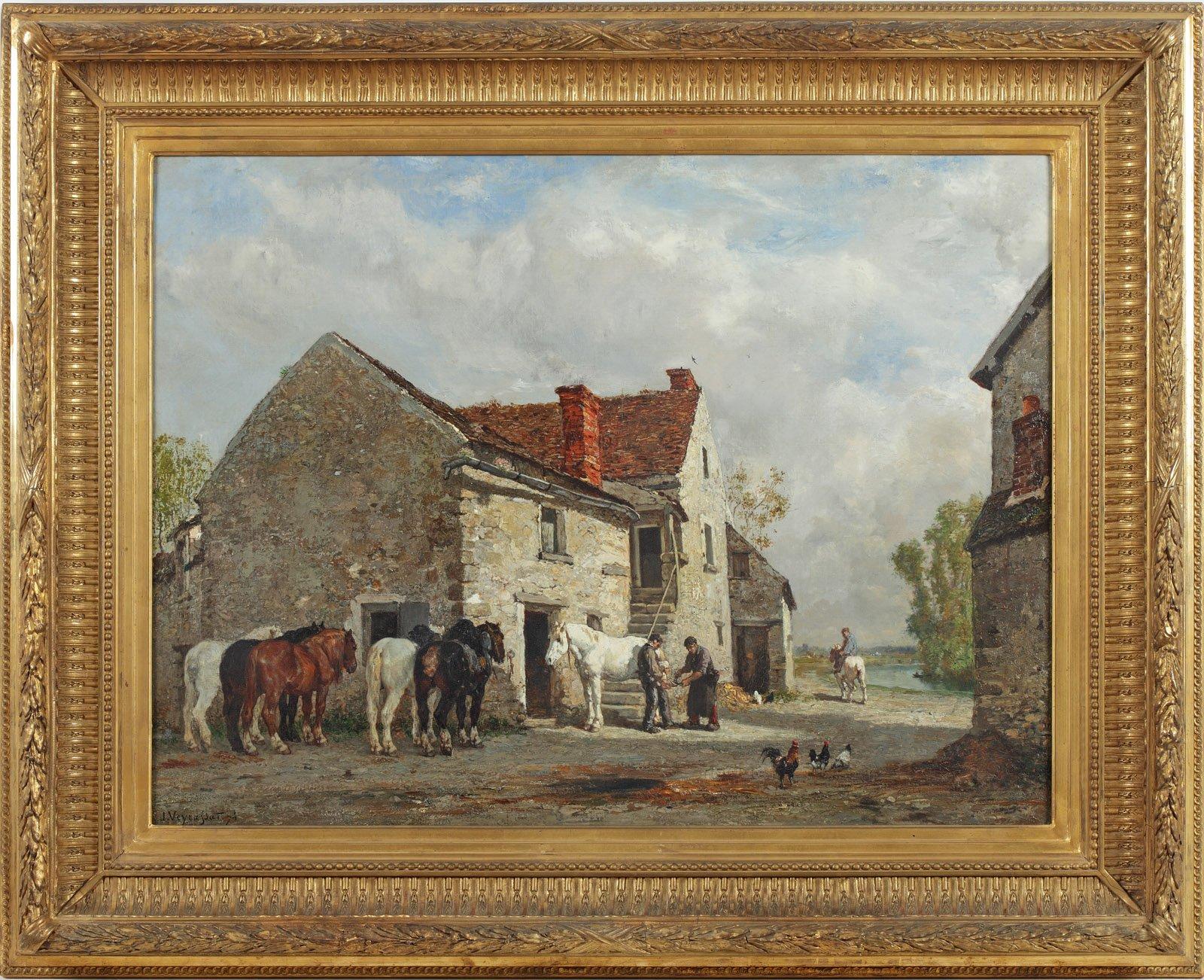
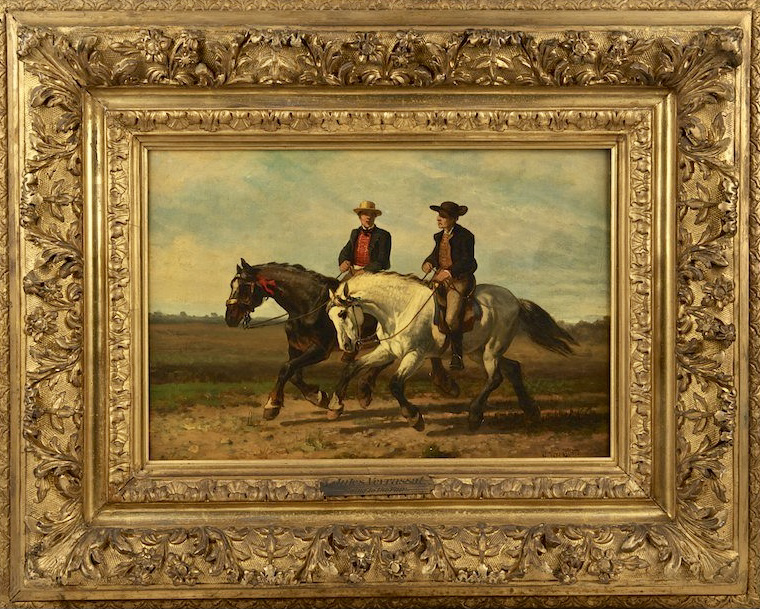
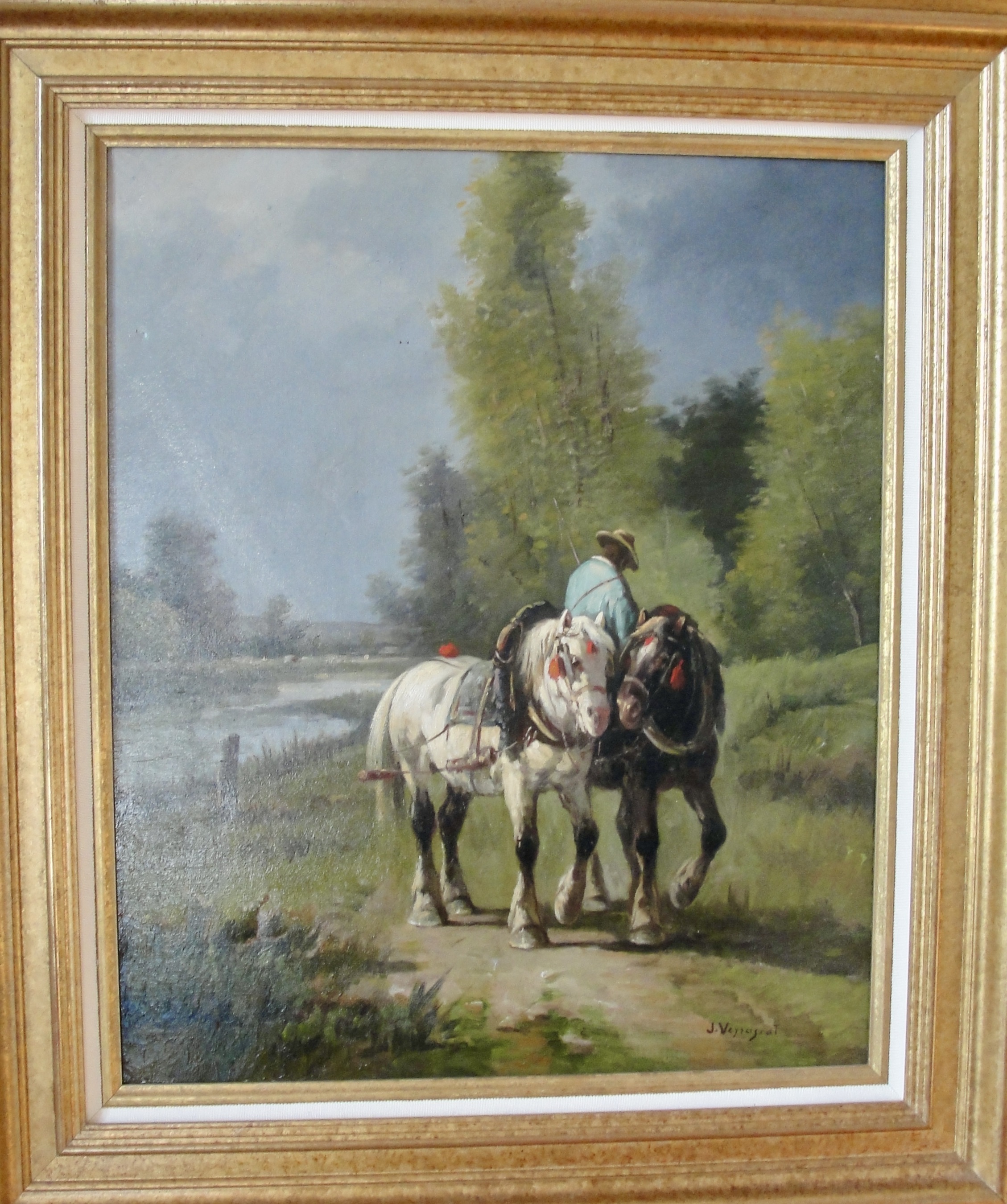
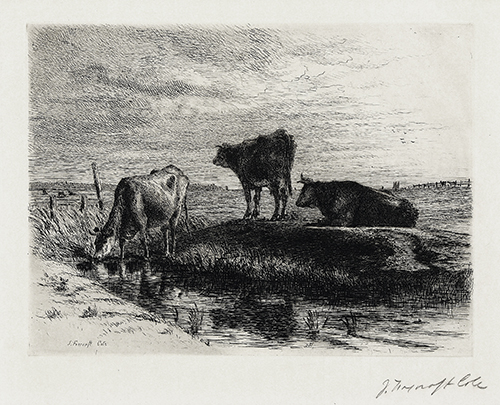
Veyrassat began to paint landscapes in which he emphasized scenes of provincial life, especially rural life. Although he lived in Ecouen, it was often in Fontainebleau and Samois that he showed the plough and draught horses that were his main source of inspiration. He was also interested in the tow horse and a certain number of works were dedicated to it. No one else knows better than him how to stage it with a « great truth of observation ».
His engraving work in 1866 and 1869 earned him several medals. On September 6, 1870, he was elected member of the commission in charge of the conservation of national museums, alongside Honoré Daumier (1808-1879) and under the presidency of Gustave Courbet (1819-1877).
Veyrassat accumulated successes both as a painter and as an engraver. Although he never left his country, his fame spread all over Europe and he was probably better known in Great Britain than in his native country. It is regrettable, however, that while his painting is now appreciated, his etchings are still unknown.

For further information, please read the book “L’Ecole d’Ecouen, une colonie de peintres au XIXe siècle” (bilingual French-English).
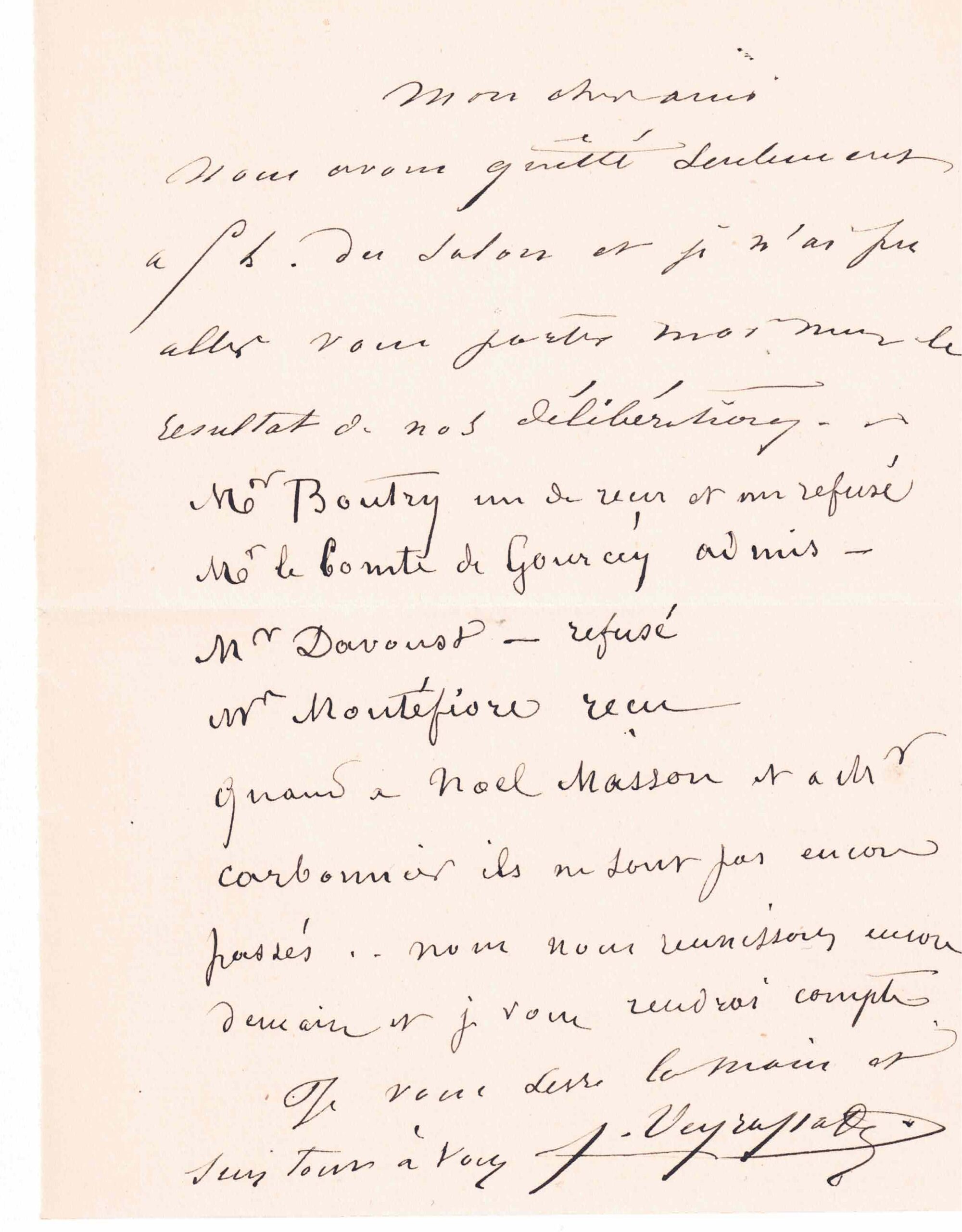
Veyrassat letter
Two horses next to the river
Going to the fair
Horses next to the river

Emile Louis Vernier-E

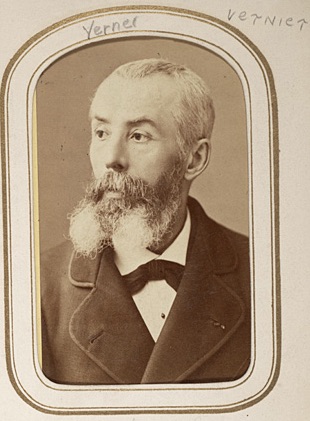
Lons-le-Saulnier, November 29th 1829 – May 23rd 1887, Paris

Emile Vernier first follows his father who holds a café, the Granvelle, in Besançon. His family had ambitions for him a military career. That is why he enters first the royal college of Besançon, with the project to integrate later the military school of Saint-Cyr. Uncomfortable with this prospect, he openly expressed his taste for art, which led his parents to have him attend the Besançon drawing school.
He then went to Paris where, in 1850, he entered the studio of a very famous lithographer, Alexandre Collette (1814-1876), with whom he worked for two years. This allowed him to discover Fontainebleau, Théodore Rousseau (1812-1867) and Henri Murger (1822-1861). He wanted to become a painter but had to work as a lithographer to earn a living.
In 1857, he exhibited at the Paris Salon, where he received a medal and, from 1860, he was considered one of the best lithographers. He engraved works of famous painters such as Jean-Baptiste Corot (1796-1875) and Gustave Courbet (1819-1877) who became his friend. In 1861, he married a Franc-Comptoise, Marie Vauthier. At that time, he made many stays in the vicinity of Paris, seduced by the countryside that he drew and painted with enthusiasm. His talent then asserts itself and brings him a notoriety in painting. His success at the Besançon exhibition of 1880 made a critic say: « This artist has the secret of a general grey harmony with silver and pearl tones which are of the best effect ».
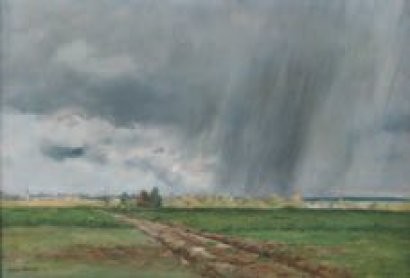
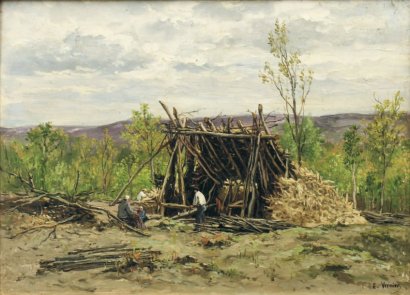
He left some endearing works of his stays in Ecouen: « Effect of rain in the countryside of Ecouen » and « Bucherons in the forest of Ecouen« .

For further information, please read the book “L’Ecole d’Ecouen, une colonie de peintres au XIXe siècle” (bilingual French-English).
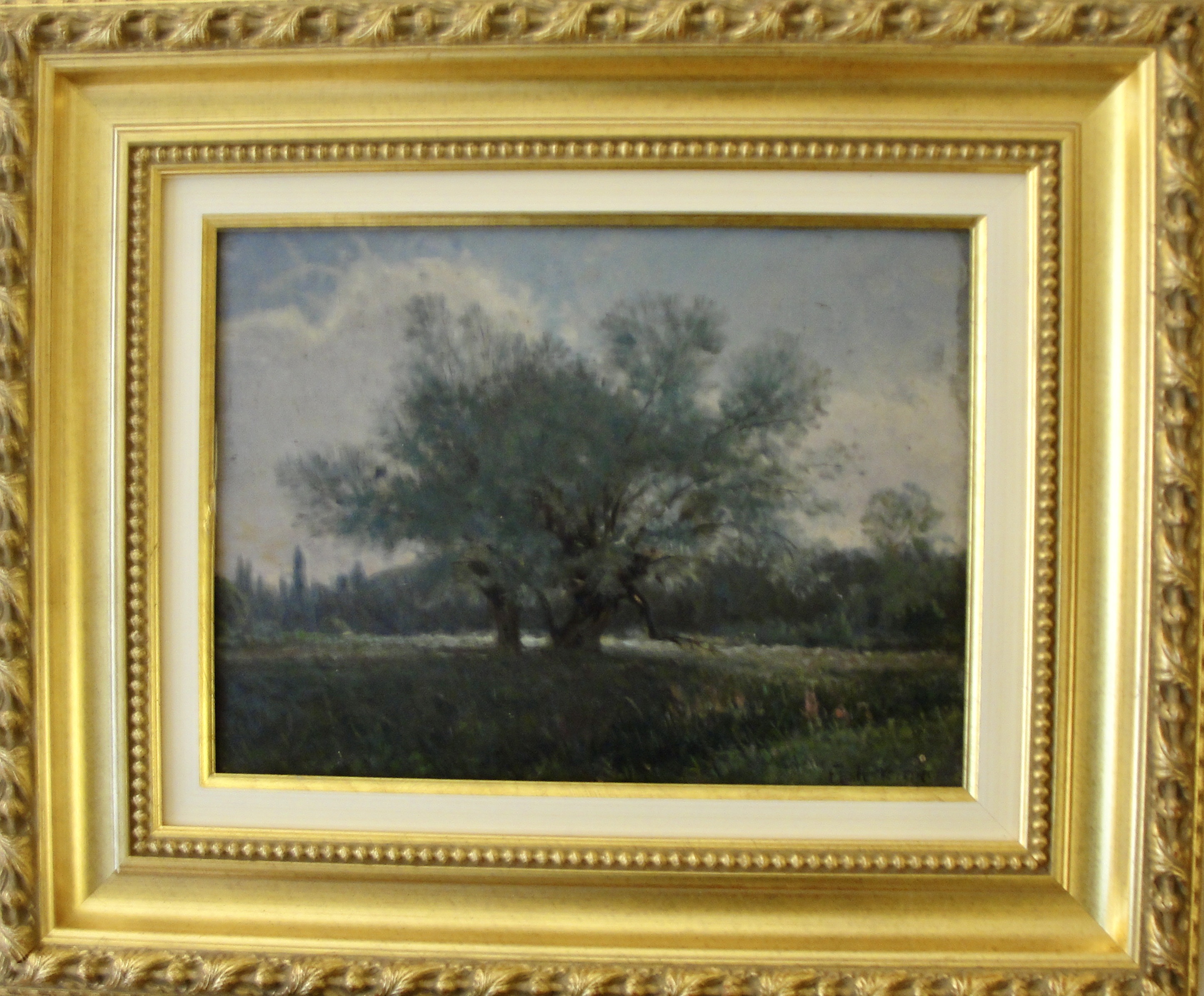
 A tree