Samuel Frost Johnson E

New York, 1835 – 1879, ?

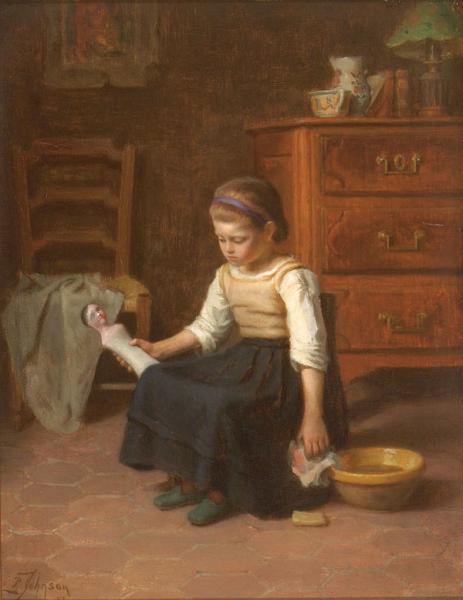
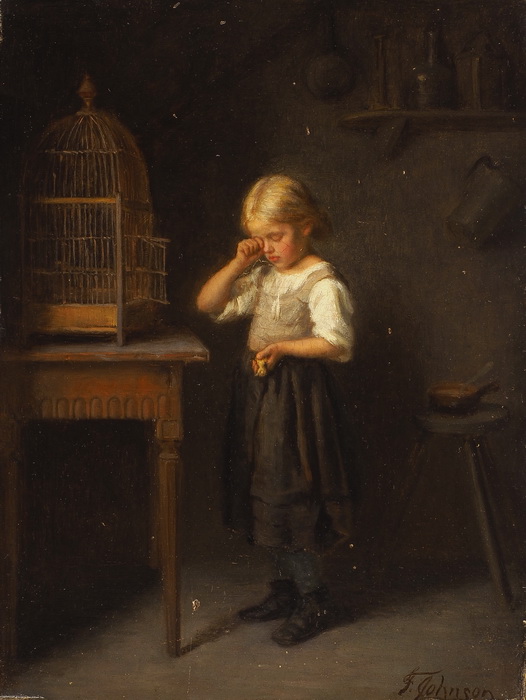
Originally from New York, Samuel Frost Johnson was an academic painter who spent several years studying and exhibiting in Europe, notably in Düsseldorf (Germany), Antwerp (Belgium), Ecouen and Paris.
Between 1865 and 1869, as a student of Pierre Edouard Frère, he lived in Ecouen at 22 rue d’Ezanville and exhibited « Pomme de terre » at the Paris Salon of 1869.
His works « The Interior » and « The Dilemma » were painted in Ecouen. His signature (SF Johnson/Ecouen) is also found on three other genre paintings.
In the 1870s he returned to the United States where he became a professor of art and science at Fordham University and the Metropolitan Museum of Art in New York.
At the same time, he exhibited at the National Academy of Design and the Brooklyn Academy of Art.
He died in 1879 in an unknown location.​

For further information, please read the book “L’Ecole d’Ecouen, une colonie de peintres au XIXe siècle” (bilingual French-English).

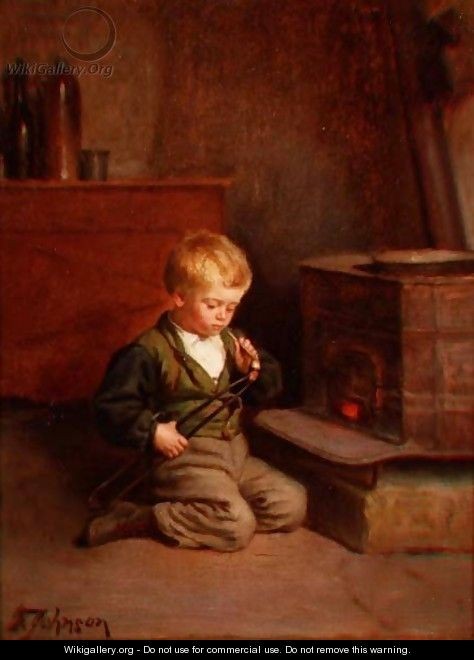
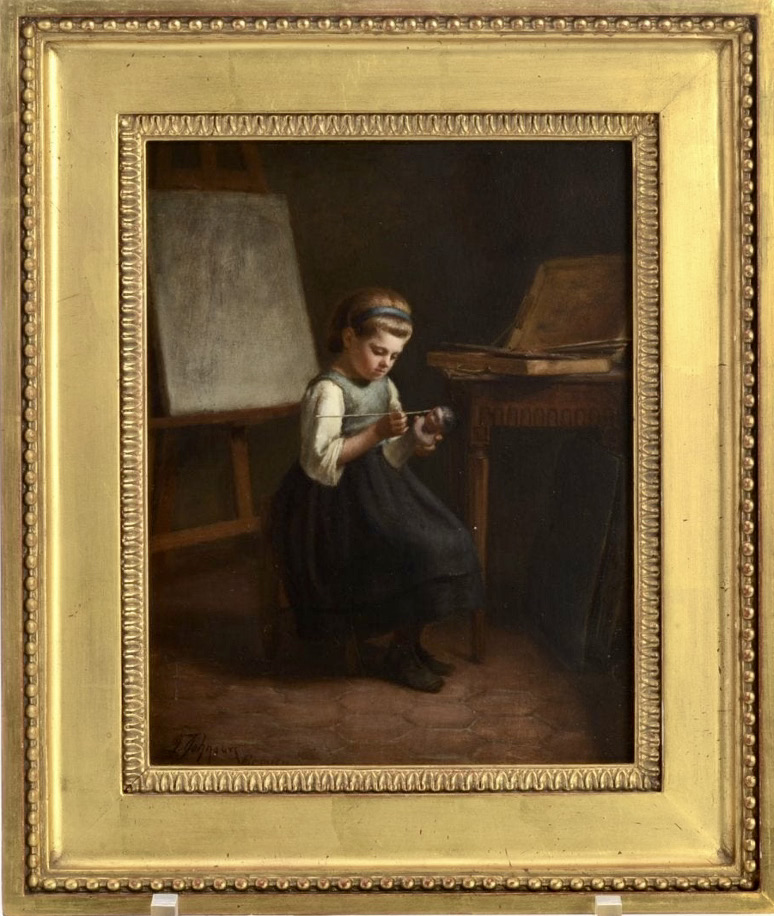
Child manufacturing a puppet

Samuel Frost Johnson

New York, 1835 – 1879, ?

Originaire de New York, Samuel Frost Johnson était un peintre de style académique qui a passé plusieurs années à étudier et exposer en Europe, notamment à Düsseldorf (Allemagne), Anvers (Belgique), Ecouen et Paris.

Entre 1865 et 1869, étant élève de Pierre Edouard Frère, il vécut à Ecouen au 22 rue d’Ezanville et exposa « Pomme de terre » au Salon de Paris de 1869.
Ses oeuvres « L’intérieur » et « Le dilemme » furent peintes à Ecouen. On trouve également sa signature (SF Johnson/Ecouen) sur trois autres tableaux de genre.

Dans les années 1870, il retourna aux États-Unis où il devint professeur d’art et de sciences à l’Université Fordham et au Metropolitan Museum of Art de New York.
A la même époque, il exposa à la National Academy of Design et à l’Académie d’Art de Brooklyn.
Il est décédé en 1879 dans un lieu inconnu.

Pour plus d’informations, nous vous invitons à lire le livre « L’Ecole d’Ecouen – une colonie de peintres au XIXe siècle »

Enfant fabricant une marionnette

James William Pattisson E

Boston, July 14th 1844 – May 29th 1915, Ashville

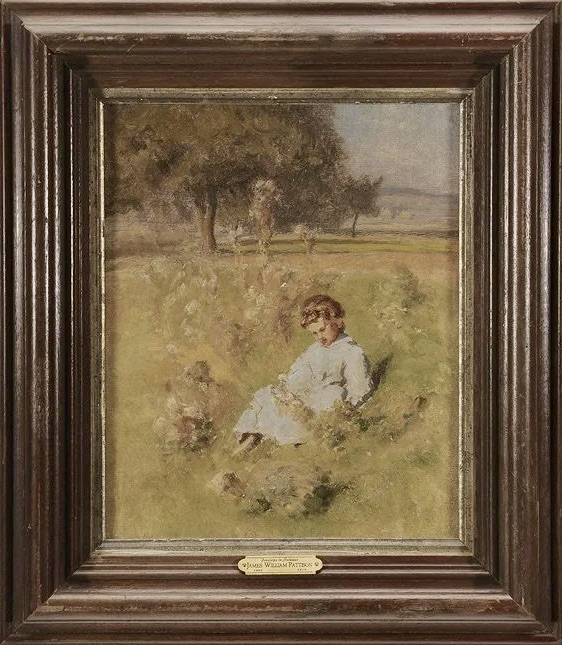
James William Pattison is the son of the principal of the Oread Institute, a college for girls in Worcester, Massachusetts.
Towards the end of the Civil War, he was drafted into the Union armies and published some drawings of the conflict in the weekly magazine Harper’s. At the end of the war, he began private art studies in St. Louis where he met his first wife. In 1866, in New York, he took courses in landscape drawing with Sanford, R. W. Gifford, the brothers William, James Hart and George Inness.
After five years as a professor at Washington University in St. Louis, James William Pattison went to Düsseldorf to further his education. In 1876, he remarried to Helen Searle.
Helen Searle (1834-1884) was the daughter of the well-known and very wealthy architect Henry Robinson Searle (1836-1882). She was born in Burlington VT. She lived since the age of ten in Rochester NY, in the « finger lakes » region of upstate New York, near Lake Ontario.
She began painting still lifes of flowers and fruit at an early age.
In 1864, she exhibited at the Buffalo Academy of Fine Arts. She taught painting and drawing at Mrs. Bryan’s Female Seminary in Batavia.
In 1866, she had her first major exhibition at the National Academy of Design in New York.
From 1867 to 1871 she studied at the Düsseldorf School of Painting with Wilhem Preyer (1803-1889). In 1870, her exhibition at the art dealers Bismeyer & Kraus was highly praised by the specialized press. It was in Düsseldorf that she met James William Pattisson (1844-1915).
In 1879, James William Pattison, his wife Helen and their two children moved to Ecouen. He studied with Luigi Chialiva. They lived at the hotel located at 9 Place de la Mairie.
James William Pattison exhibited « Two Children » and « Figures in a street of Ecouen » at the 1880 Paris Salon.

Returning to New York for two years, James William Pattison exhibited at the National Academy of Drawing and the American Association of Watercolorists. He became director of the School of Fine Arts in Jacksonville, Illinois. In 1896, again a widower, he moved to Chicago and lectured at the local Art Institute. He taught at the College of Art in Rockford, Illinois, being very active in the Municipal Art League and other local organizations. In 1907, the Municipal Art League of Chicago purchased his famous painting « Serenity ».
James William Pattison was a writer about the arts. He began in 1886 with a series « Art talks of Pattisson » in the Jacksonville Journal and the Chicago Journal. He published several books on painters from the Renaissance to modern times.
James William Pattison retired to Ashville, North Carolina and died at the age of seventy.

For further information, please read the book “L’Ecole d’Ecouen, une colonie de peintres au XIXe siècle” (bilingual French-English).

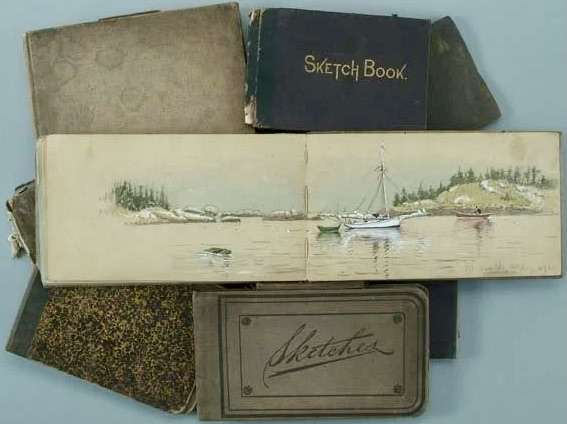
Sketch books
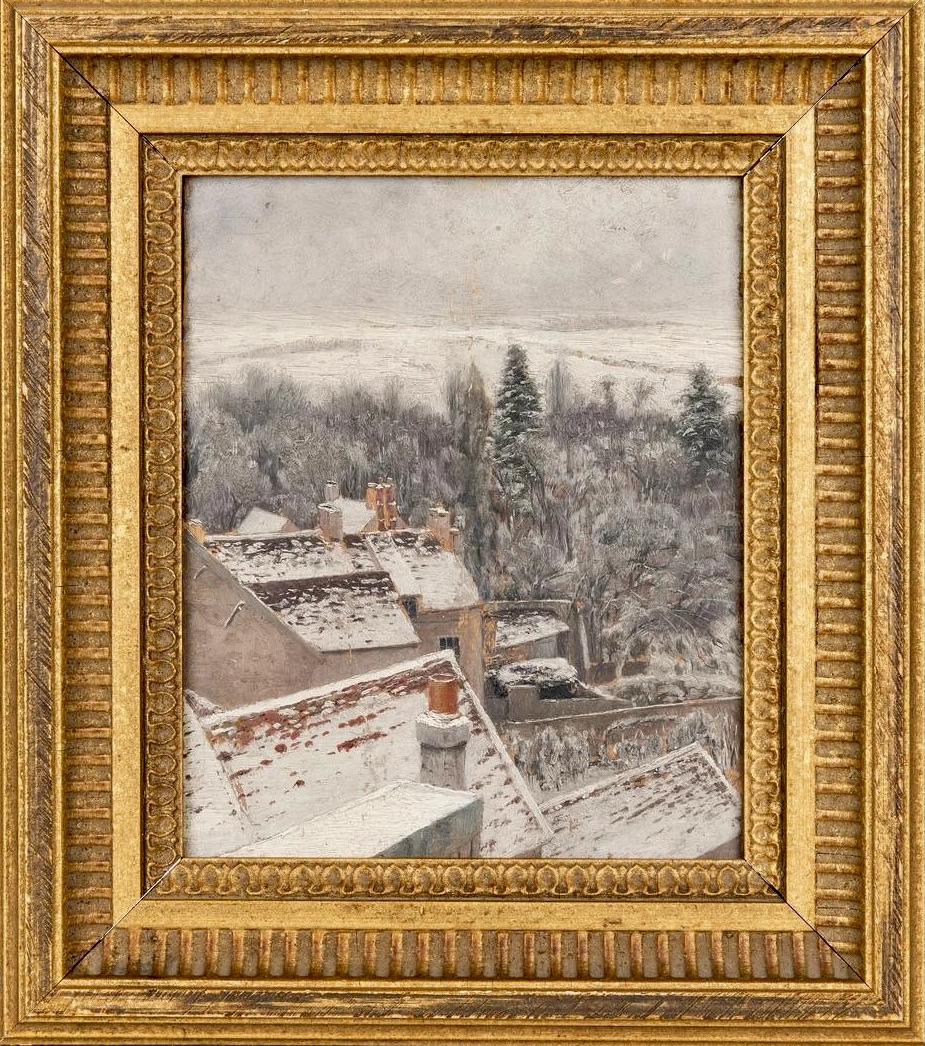
Snowy landscape
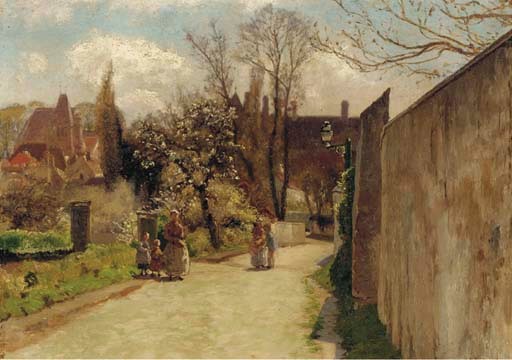
A street of Ecouen (Rue à Ecouen)
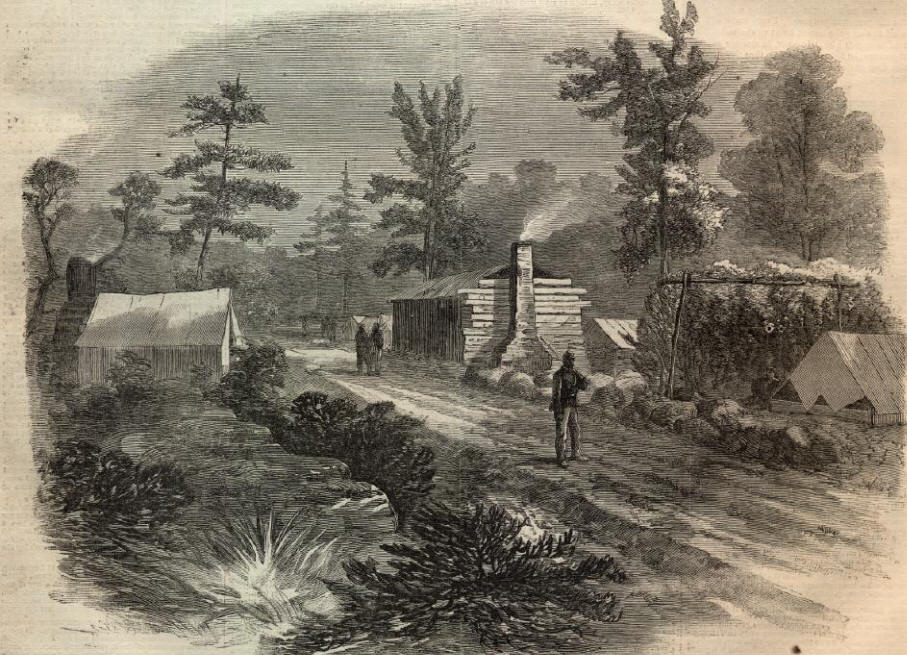
Before Petersburgh (Avant Petersburgh)
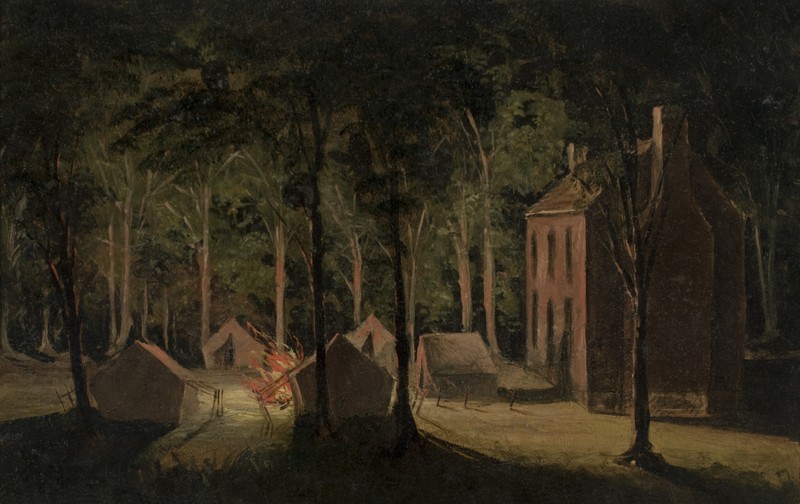
The siege of Petersburgh (Le siège de Petersburgh)
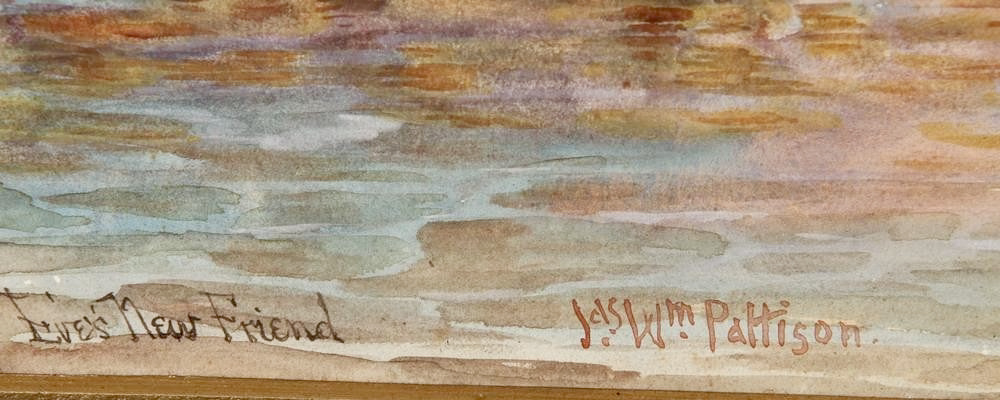
His signature
 Peneloppe Pattison

James William Pattisson

Boston, 14 Juillet 1844 – 29 Mai 1915, Ashville

James William Pattison est le fils du principal de l’Institut Oread, college pour filles de Worcester, Massachussetts.
Vers la fin de la guerre civile, il est enrôlé dans les armées de l’Union et publie quelques dessins du conflit dans le magazine hebdomadaire Harper’s. A la fin de la guerre, il commence des etudes d’art privé à Saint-Louis où il y rencontre sa première femme. En 1866, à New York, il prend des cours de dessins de paysages avec Sanford, R. W. Gifford, les frères William, James Hart et George Inness.
Après avoir été pendant cinq ans professeur à l’université Washington de Saint-Louis, James William Pattison se rendit à Düsseldorf pour se perfectionner. En 1876, il se remarie avec Helen Searle.
Helen Searle (1834-1884) était la fille du connu et très riche architecte Henry Robinson Searle (1836-1882). Elle est née à Burlington VT. Elle a vécu depuis l’âge de dix ans à Rochester NY, dans la région des “finger lakes” située au Nord de l’état de New York, près du lac Ontario.
Elle a, très jeune, commencé à peindre des natures mortes de fleurs et de fruits.
En 1864, elle exposa à l’Académie des Beaux-Arts de Buffalo. Elle a enseigné la peinture et le dessin au Séminaire féminin de Mme Bryan, à Batavia.
En 1866, elle fit sa première grande exposition à l’Académie Nationale de Design de New York.
De 1867 à 1871, elle étudia à l’Ecole de peinture de Düsseldorf auprès de Wilhem Preyer (1803-1889). En 1870, son exposition chez les marchands d’art Bismeyer & Kraus fut très appréciée par la presse spécialisée. C’est à Düsseldorf qu’elle rencontra James William Pattisson (1844-1915).

En 1879, James William Pattison, sa femme Helen et leurs deux enfants s’installèrent à Ecouen. Il étudia avec Luigi Chialiva. Ils habitèrent à l’hôtel situé 9 Place de la Mairie.
James William Pattison exposa “Deux enfants” et “Figures in a street of Ecouen” (Figures dans la ville d’Ecouen) au Salon de Paris de 1880.
De retour à New York pour deux ans, James William Pattison exposa à l’Académie Nationale de dessin et à l’Association américaine des aquarellistes. Il devint directeur de l’Ecole des Beaux-Arts de Jacksonville, Illinois. En 1896, à nouveau veuf, il déménagea à Chicago et donna des conférences à l’Institut d’Art local. Il enseigna au Collège d’Art de Rockford, Illinois, étant très actif à la ligue municipale artistique et autres organisations locales. En 1907, la Ligue municipale artistique de Chicago acheta son fameux tableau “Serenity” (Sérénité).
James William Pattison était un écrivain concernant les arts. Il débuta en 1886 avec une série “Art talks of Pattisson” (les discussions de Pattisson sur l’art) dans le Journal de Jacksonville et le Journal de Chicago. Il a publié plusieurs livres concernant les peintres depuis la Renaissance jusqu’aux temps modernes.
James William Pattison se retira à Ashville, Caroline du Nord et décéda à l’âge de soixante dix ans.

Pour plus d’informations, nous vous invitons à lire le livre « L’Ecole d’Ecouen – une colonie de peintres au XIXe siècle »

Paysage de neige
Pénélope Pattison
Rue à Ecouen
 Carnets de dessins
Signature
 Le siège de Petersburgh
Avant Petersburgh

Thomas Allen E

Saint-Louis, October 19th 1849 – 1924, Worcester

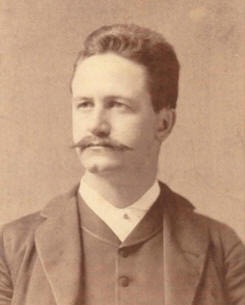
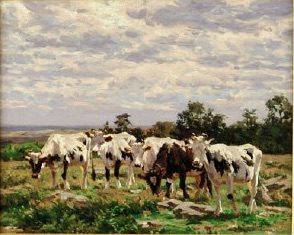
Thomas Allen was born in St. Louis, Missouri. His ancestors were among the founders of Windsor, Connecticut, in the wake of the Mayflower. The son of a railroad tycoon Congressman, he studied art in his hometown of St. Louis at Washington University and then traveled widely. It was a school trip to the Rocky Mountains with J.W. Pattison in 1869 that decided him to become an artist. He became an animal painter as well as a landscape artist and caricaturist.
In 1871, Thomas Allen came to Paris but found the weather was not conducive to his art because of the destruction caused by the war of 1870. He then visited Düsseldorf and in 1872 entered the local Royal Academy. He stayed there for four years. In 1877, his teachers declared him fit to open his own studio. He used his vacations to visit other cities and countries, such as Holland, Belgium, England and France.
In 1878, he resided in Ecouen at 36 rue de Paris with his wife, Eleanor Godard Whitney (married June 30, 1880, died in Ecouen on May 14, 1882 after giving birth to Eleanor Whitney Allen on April 18, 1882). He was part of the colony of painters of Ecouen with Luigi Chialiva, Pierre Edouard Frère, Auguste Schenck and others. He remarried to Alice Ranine (1862-1949) on October 23, 1884 with whom he had a son, Robert Fletcher Allen (1892-1903) and a daughter, Dorothy Fletcher Allen Preston (1898-1987).
He traveled to the American West and to Texas where he painted a work entitled « Evening at the Market in San Antonio » which received a medal at the Paris Salon of 1882. That same year he settled permanently in Boston, where he had a long and distinguished career.
He chaired the faculty of the Boston Museum School of Drawing and Painting and was also president of the Boston Museum of Fine Arts.
His paintings are on display at the Berkshire Museum, the Joslyn Museum of Art, the Boston Museum of Fine Arts, the San Antonia Museum of Art, the Metropolitan Museum of Art, and the Saint Louis Art Museum.

For further information, please read the book “L’Ecole d’Ecouen, une colonie de peintres au XIXe siècle” (bilingual French-English).